10304199936_dd6672716a_z
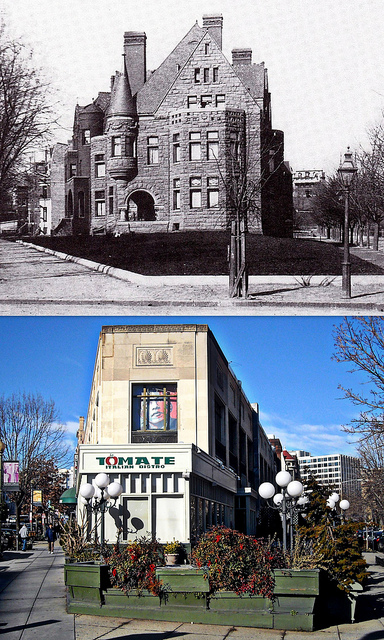
Photo by PoPville flickr user NCinDC

NCinDC writes:

“From an article by Paul K. Williams in The InTowner:
“Though a major commercial corridor today, Connecticut Avenue north of Dupont Circle and the Circle itself was originally developed as a fashionable residential neighborhood beginning in the early 1880s. The large triangular lot at the intersection of Connecticut Avenue, R and 20th Streets is today occupied by a distinctive triangular building built in 1922, now housing the popular La Tomate Restaurant. Before that, however, it was the site of a spectacular brownstone mansion built by Senator Philetus Sawyer in 1888…”


Byrd

Jeremy previously wrote about DC’s Best Wifi Network names.

I meant to write about Larry Byrd when I learned of his death in late June at the age of 90.

Larry was the first person I met when I moved into my former home on 4th St. NW, a few blocks east of the Convention Center, in February 2012. “Welcome to the neighborhood,” he said, seeing me lugging boxes up the stairs into the early 20th century row house I shared with several friends.

We chatted for a few minutes. To my surprise, our conversation quickly veered beyond small talk. He asked me about the masters program I was about to begin and my long-term career goals. He told me that he was legally blind, able only to see “orbs.”

He seems like a nice man, I thought. What I didn’t know is that Larry would become more than just a friendly next-door neighbor.

Well into his retirement, Larry spent his days perched on his steps or on a bench just inside his gate. As people walked by, he said hello and offered up one of his trademark phrases, telling people, “Have a wonderful day,” or, “Be good to yourself.”

And the neighborhood loved him. Not only was he a beacon of warmth and friendship, he was known for being a mentor to several men who battled drug addiction. (more…)


FH010006
September 29, 1988. Photo credit Carol Highsmith courtesy of Union Station Redevelopment Corp.

From a press release:

“On September 29, 1988, Washington Union Station reopened its doors with a gala celebration after a three-year transformative rehabilitation project. A collaborative public/private partnership funded the $160 million project per 1981 congressional legislation to restore the station to its historic grandeur. At the time, the project was considered the largest, most complex, public/private restoration project ever to be completed in the United States. Key improvements included: the creation of a mezzanine level within the Concourse, which provided expanded retail; the addition of dedicated areas for Amtrak seating and signage; restoration of the floors in the West, East, and Main Halls and exterior walls, doors, and windows; upgrades to the exterior lighting; the addition of two escalators connecting the ground level and mezzanine level outside the Main Hall; and the addition of an elevator providing accessibility to all three levels of the station.

Today, the bustling retail and multi-modal facility serves over 32 million visitors annually, and station partners continue to focus on enhancements. Recent renovations include improving vehicular and pedestrian circulation on Columbus Plaza, expanding the intercity bus terminal, rehabilitating the historic Main Hall, and introducing new modes of transportation resources.

In 2012, Amtrak and private developer, Akridge, released the Washington Union Station Master Plan in partnership with USRC, the commuter railroads, and other local stakeholders. The plan sets forth a new vision to again revitalize the station through a multi-phased approach, to gain increased passenger and rail capacity, add new station amenities and transit-oriented mixed-use development above the tracks. While work continues to refine the plan, early action items focus on passenger waiting areas and concourse expansion.”


mlk_library_dc

Book Talk and Signing: Historic Restaurants of DC:

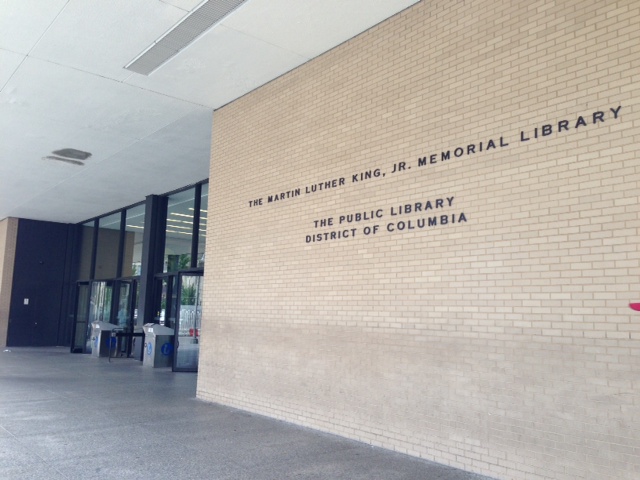
“Martin Luther King Jr. Memorial Library
901 G Street NW
September 24, 2013 7:00 pm – 8:00 pm

John DeFerrari, author of the Streets of Washington blog and “Lost Washington, D.C.,” will speak about his new book on the history of Washington restaurants. Washington’s first true restaurants—places where you could choose when to eat, select items from a menu, and be served at a private table—appeared here by the 1830s, not long after they got started in New York. From these early beginnings through the flowering of ethnic restaurants in the late 20th century, Historic Restaurants of Washington, D.C.: Capital Eats presents the sweeping evolution of the city’s eateries, from exclusive bastions of haute cuisine like the Rive Gauche and Sans Souci to beloved diners like Hot Shoppes and Little Taverns. DeFerrari will speak on a few selected aspects of the city’s restaurant history and will also have copies of the book for sale ($25, cash check or credit) and signing. Join us in the Washingtoniana Division (Room 307) for a lively and informative evening!”

Ed. Note: You can see all events here and you can schedule your own event listing here.


lincolns-cottage_petworth
Photo via Lincoln’s Cottage

“The original Civil War diary and personal artifacts of Albert Nelson See, a member of Abraham Lincoln’s Presidential Guard, will go on public display for the first time in history at President Lincoln’s Cottage this autumn. See’s eye-witness accounts detail President Lincoln’s life at the Cottage, Jubal Early’s attack on Washington at Fort Stevens, and the inner workings of the presidential guard. Visitors to the exhibit will discover an authentic perspective of Civil War life in Washington. The exhibit opens to the public on September 26th 2013 in the Robert H. Smith Visitor Education Center at President Lincoln’s Cottage, and will remain on display until December 31st, 2013 [UPSHUR ST AT ROCK CREEK CHURCH RD, NW].

“When President Lincoln and his family resided at the Soldiers’ Home, they moved closer to the action of the Civil War,” says Erin Carlson Mast, Executive Director of President Lincoln’s Cottage. “From greeting wounded soldiers en route to Harewood Hospital, to witnessing growing numbers of contraband camps and military burials, Lincoln’s life at the Soldiers’ Home connected him profoundly to the stark realities of the Civil War. As a member of his presidential guard, See lived on the Soldiers’ Home grounds and bore witness to the Lincoln family’s daily life, as well as Civil War events such as the battle at Fort Stevens in the summer of 1864. Lincoln himself left only a few written records of his life at the Soldiers’ Home, and See’s narrative offers an invaluable window into that period.”

The Albert Nelson See Diary was a gift to President Lincoln’s Cottage from Ms. Betty Kessler, the great granddaughter of Albert Nelson See. Having been passed down through several generations of the See family before being donated to President Lincoln’s Cottage in December of 2009, the diary underwent significant conservation efforts. It is now being displayed to the public for the first time.”

Ed. Note: You can see all events here and you can schedule your own event listing here.


adams_morgan
Photo by PoPville flickr user Faucetini

A big year for Adams Morgan anniversaries. First up was Millie and Al’s 50th, then Tryst’s 15th and now from a press release:

“The Adams Morgan Farmers Market is celebrating 40 consecutive years of sustainably grown produce with a special event on Saturday, September 28. From 10:00am – 1:00pm, on the corner of 18th and Columbia Rd NW, join the owners of the Licking Creek Bend Farm for music, food, and entertainment.

An HEIRLOOM APPLE TASTING will offer a rare opportunity to taste varieties like Wolf River, Orange Pippen, and Sheep Nose from 10 to 11 am. Ward 1 Councilmember Jim Graham and others will deliver remarks beginning at 11 am.

Michael Tabor owns and has represented The Licking Creek Bend Farm on the corner of 18th St. and Columbia Rd NW since 1972. “My philosophy has been, and still is, to bring healthy, affordable produce to all the neighborhoods in DC regardless of income level,” said Tabor.

Visiting the market on Saturday mornings has become a tradition for Washingtonians. “Our loyal customers have created a ‘village square’ atmosphere where neighbors come to shop for their week’s fruits and vegetables, chat about recipes, and see old friends,” said Tabor.

“With farmers markets as popular as they are now, it’s hard to imagine a time when they weren’t part of the community – but Adams Morgan was really at the forefront here in DC,” said Kristen Barden, Executive Director of the Adams Morgan Partnership Business Improvement District (BID).”


3rd_and_U_ledroit_park_renovation
1922 3rd Street, NW

Last week we admired the awesome transformation of the long vacant old house at the corner of 3rd and U St, NW. The architect of the project sent me an email with some interesting details about the place:

“In the 1940’s it was fully gutted and turned into 13 efficiency units for WWII housing. I was so fortunate to have found the original floor plan and front and side elevations of James McGill’s original design. From those, we restored the exterior to the way it originally would have been, while only adding on the sunroom and porch off of the rear (making it look like other neighborhood additions done in the 1920’s. As you can see, it was a massive undertaking and is still a work in progress. The landscaping is the next big plan. There is a lot to landscape! So, hopefully soon it will be fully finished.

Bill Smith
StudioSmith, LLC


Streets of Washington, written by John DeFerrari, covers some of DC’s most interesting buildings and history. John is the author of Historic Restaurants of Washington, D.C.: Capital Eats, to be published this September by the History Press, Inc. John is also the author of Lost Washington DC.

Though it receives little attention in the media, competitive canoeing ranks high among the city’s sports achievements. Washington has participated in competitive flatwater canoeing at the Olympics ever since the sport was first introduced in 1924, and much of America’s success has been due to the athletes of the venerable Washington Canoe Club, headquartered in one of the Georgetown waterfront’s most historic and picturesque structures, a 1905 boathouse at 3700 Water Street NW. The green wooden-shingled structure, perched on the edge of the flood-prone Potomac river, has deteriorated over the years and gradually fallen into disrepair. Its future is now largely in the hands of the National Park Service.

DSC_0424
Washington Canoe Club (photo by the author).

A hundred years ago, the Potomac river was the center of attention for summer sports and recreation, a place where refreshing breezes off the water could ease the swelter of un-air-conditioned city living. Many people would set up summer camps along either side of the Potomac from Georgetown to Great Falls and beyond, and hundreds would line the shores of the river or the railings of the Aqueduct Bridge to watch hotly-contested boat races. A June 1904 article in The Washington Post rhapsodized that “The beautiful stretch of water from the Analostan [Theodore Roosevelt Island] Boat House up to within a dozen furlongs of the Chain Bridge is the one most utilized by the oarsmen and canoeists, and the ever-passing throng makes the stream take on the appearance of the Grand Canal at Venice, with the gondolas left out.” (more…)


View More Stories