Biking around Town is written by Josh Nadas (@dcliterate), a daily bike commuter & avid rider who works for the National Park Service, and lives in Mount Pleasant.

I studied at the University of Maryland – that’s how I moved to this area. When I was a senior and of legal drinking age, I discovered Franklin’s – a brewpub and gift shop. It used to be so easy to get too by bicycle. From my house in Berwyn Heights, I could pick up the North West branch trail, and take it all the way there. It was pretty much perfect – I had easy access to fresh beer that I could port home in a growler.

Moving to the district made it harder to get to Franklin’s except by car, which is less than ideal because driving out to Hyattsville is annoying, and finding parking in DC when I get home makes the trip feel less worth it.

I wanted to find a reliable bike route to and from Hyattsville. So, I started experimenting with different routes, and eventually settled on what I am presenting today. There is debate as to the best route to Hyattsville from DC. Some people value U.S. Route 1 for it’s directness, but I don’t like how much traffic there is. Others prefer to use Michigan Ave, which turns into Queens Chapel Road and provides access to the bike path and other useful roads. I like to ride on Michigan, especially by the hospital, but when possible I prefer the bike path because there are no cars.

Continues after the jump. (more…)


From a press release:

On Tuesday, February 5 from 5 p.m. until 8 p.m., Lebanon’s first and only craft beer, 961 Beer will make its D.C. debut at ChurchKey (1337 14th Street NW). Founded in 2006 by Mazen Hajjar, the brewery began as an experiment among friends and has grown to produce 300,000 cases annually, including four “Regular” offerings and the first of what promises to be many “Brewmaster’s Select” offerings, their superior Lebanese Pale Ale. Hajjar will be on hand to meet, drink and answer questions with all attendees. Event will be pay-as-you-go.

961 Beer, named after the international dialing code for Lebanon, brands include: Lager, a Helles-style lager that is crisp and flavorful and just won “Best Lager” at the 2012 Hong Kong International Beer Awards; Red Ale, densely malt-y and reddish in color with an intensely fruity and aromatic flavor; Porter, brewed with dark roasted malts and hopped with traditional English varieties; Witbier, an unfiltered beer that is light and sweet with natural sediment; and Lebanese Pale Ale, based loosely on an English IPA with aromas inspired by the spice markets of the Middle East, brewed with 100% traditional Lebanese herbs and spices such as thyme, sumac, chamomile, sage, anise and mint.

961 Beer began as one of the world’s smallest microbreweries when Hajjar invited his friends to join him in brewing great beer in the country they love and call home. From 20-liter kettles on home stoves, the brewery has expanded to meet demand and now proudly brews nearly 300,000 cases annually. Focused on traditional techniques, quality ingredients and a deep love for their product, 961 Beer is one of the fastest-growing and most exciting craft breweries in the world today. The brewery is located in the foothills of Mazraat Yachoua, overlooking Beirut and the Mediterranean Sea.


From a press release:

Chocolate City Beer, Washington, DC’s very own craft brewery, announces the public release of its oak barrel-aged Imperial Stout, named “Mister Mayor,” for sale to the public this Saturday, February 2nd at its facility located at 2801 8th Street, N.E., in Washington, DC, from 12:30 – 4:30PM.

Brewed with Marion berries from Marion County, Oregon, Mister Mayor was aged for seven months in whiskey barrels from Copper Fox Distillery, located in Sperryville, VA. At 11.5% alcohol by volume (ABV), this medium bodied and roasted stout packs a tart, fruity taste. The barrel aging has also infused the beer with coconut and vanilla flavors for a round, mellow taste.

“We are excited about the release of this beer,” says co-Managing Member and Head Brewer Ben Matz of Chocolate City Beer. “This beer was the product of an idea that I have been developing for several years and seeing it come to fruition has been nothing short of amazing. The taste, flavors and smoothness of this offering should resonate with a lot of different types of beer drinkers. We look forward to its public release.”

A bottling session was held on Monday, January 28, 2013 at the brewery, staffed by employees and volunteers who assisted with the labeling, cleaning and packaging of over 1,000 bottles of this limited release brew. Rick Wasmund, CEO and Master Distiller at the Copper Fox Distillery, paid a visit to the brewery and spoke with staff and Head Brewer Matz, lauding the release of Mister Mayor and the small part his distillery played in its development. “Although Chocolate City Beer is not the first brewery to use our whiskey barrels in their operations, we are nonetheless pleased with their effort and the end result will be a success with beer drinkers all over,” said Wasmund. The beer will be sold in 22 ounce bottles (650 ml) at a price of $12 each.

Founded in 2009, Chocolate City Beer is located in the Brookland neighborhood in Northeast, Washington, DC. Along with its flagship Cornerstone Copper Ale, Chocolate City Beer also produces Cerveza Nacional de la Capital Dark Vienna Lager, 1814 ESB, First Coast Bohemian Pilsner, and a number of other seasonal and limited releases. Every Saturday the brewery is open to the public for free tours and tastings, as well as 64 ounce growler and other merchandise sales.


To my fellow Hopslam fans – they’ve arrived!

I got mine at D’vines in Columbia Heights. Limit one 6 pack per person. Anyone hear of any bars that has gotten a keg?


Photo by PoPville flickr user Lauren PM

Draft Magazine published their list of top 100 beer bars in America:

As craft beer has exploded, so has the number of incredible places that serve it. This list celebrates those special haunts with less than three locations and one passionate focus: beer. There might be darts and a jukebox or candlelight and a turntable; there might be five beers or 500. But in every spot on our list, you’ll find an excellent brew in your glass and people—staff, owners, barflies—who care about that as much as you do.

DC represented by Bier Baron and Churchkey:

THE BIER BARON TAVERN

A Washington institution, this cavernous beer hall and inn (formerly The Brickskeller) in the capital’s Dupont Circle neighborhood is as essential to visit as the Smithsonian: Its exhaustive 550-plus beer list spans brewing history, from ancient gruits to black IPAs and everything in between. 1523 22nd St. NW

CHURCHKEY

Everything beer guru Greg Engert touches turns to gold, but Churchkey remains his crowning achievement: A swanky bar with more beer than D.C. lobbyists, Churchkey’s the spark that started the capital’s craft beer revolution. 1337 14th St. NW

See the full list here.


Jack Van Paepeghem works at Meridian Pint and is a Certified Cicerone® You can read his previous post about travels in Sea Change Pale Ale here.

Cellaring

Last time we talked it was about drinking beer fresh and enjoying all those bright green, resiny, juicy, citrusy hops as if they were right off the bine. By all means, continue to drink your IPA’s, pales and other bitter bombs as soon as possible, but how about we celebrate the New Year with some old beers. Old, in this sense refers not to the stale, mistreated, and outdated ones, but beers that have been carefully put down with age and ready for consumption and true appreciation. The idea of a “new” or another year may have some worried as their days are numbered, but for beer, it can be quite the opposite. I want to address the question of why and how we should age beer, and when it is best for consumption.

So first off, if brewers have complete control over their ingredients, process, and final product, why shouldn’t we just drink their beers when they are released instead of aging them? This question has a couple leads. First, when we consider a beer as “fresh” it is also implied that a beer is made ready to drink. Several breweries may have a product ready for sale but instead choose to either hold the beer in bottles, barrels, stainless steel tanks, or other mediums so the beer may have time to come together and for higher alcohols to settle out. For example, the original IPA’s of Great Brittan were aged in wood barrels for up to a year before they were released to the public because they were so harsh and bitter that nobody would’ve cared for them “fresh.” Otherwise, brewers intend on creating beers which have favorable characteristics both when fresh and when aged. One of my favorites is Sierra Nevada’s Bigfoot Barleywine (that should be hitting the market any day now) which has a juicy, citrusy, piney hop aroma and flavor with a biting bitterness, but as they beer gets a couple years on it, the hops fade and the caramel and toffee malt flavors develop into something complex and warming.

This then begs the question of which beers are worth aging and which are potentially better fresh? In all honesty, it depends on each particular beer and the individual tastes of who is aging it, but one can apply the following guidelines:

-Look for beers with an ABV of 8% or higher. Alcohol is a natural preservative and keeps a potentially perishable product intact and helps the maturation process over time. Beers which do not follow this rule of thumb are generally Belgian Lambics and Gueuzes which are around 6% but contain live yeast and are bottle conditioned.

-Beers which are bottle conditioned contain living yeast in the bottle (whether capped or corked) which continue to ferment and develop flavors. Those ales made with Belgian yeast strains as well as wild yeast strain are perfect candidates for aging.

-Beers which have already undergone aging and/or fermentation in say bourbon or wine barrels can further benefit with time, as burnt oak or tannic flavors may develop and intensify or recede over time, depending on the beer.

-Many breweries produce “anniversary” or “reserve” beers which imply a special designation of a beer that is generally meant for aging and comparison against prior years.

-This ties in with the idea of having a “vertical” tasting, which is to say, a tasting of one particular beer from several different years. However, some breweries change up their particular “vertical” beers from year to year, but are still worth trying against one another.

-In general, look for styles which are all around “bigger” beers: think imperial stouts, barleywines, Belgian strong golden or dark ales, even double IPA’s with a large malt bill pick up an interesting character as hops subside. You probably get the picture. But also, don’t be afraid to throw an oddball or two into the mix, you never know what can turn out incredible 3 years down the road.

When cellaring beer, it is best to buy more than one of each beer that you are putting down in order to try it at different stages to determine its optimal condition for drinking. Again, each beer will have its nuances and evolve differently, but there are certain characteristics which can be expected with aging:

-Higher fusel alcoholic flavors and aromas (think nail polish remover) which were once considered “hot” become subdued and the alcohol becomes pleasantly warming. This is especially helpful for barleywines, old ales, and strong ales which are 12% and above.

-Upfront hop bitterness, flavor, and aroma will fade, but can transform and work with the malt and yeast character over time. Highly/over-hopped beers may benefit with a few months, even years. Dogfish Head 120 Minute, a hop-driven beer, is extra hot, astringent, and aggressive at first, but aged versions are reborn with an amazing barleywine-like character.

-No matter the strength of a seal, whether cork, cap, wax, or steel, all beers will become oxidized over time. This means that oxygen left in the bottle or keg, or that which enters in will transform what beer it is coming into contact with. Positive oxidation occurs when a beer picks up deep sherry or madeira-like notes whereas oxidation can leave some beers tasting like wet, stale, cardboard or paper. You will never forget this flavor once you’ve had it in high concentrations.

-Due to the conditions of a beer over the course of its life, the yeast may become overworked or just simply die out. This process is called autolysis and can leave a beer tasting meaty and like soy sauce. In some beers like old ales or imperial stouts this brings out the “umami” or savory character while in others it can overwhelm and spoil an otherwise great product.

-Sour ales may get sourer just as those beers with significant funk may keep on getting funkier, sometimes they become more nuanced, subtle, and smoothed out, but other times they may just die out completely. Some non-sour beers may even pick up a sour (sometimes desirable) or infected character (always undesirable) depending on the conditions of cellaring.

Continues after the jump. (more…)


View Larger Map

Atlas Brew Works will join three other DC breweries – 3 Stars, Chocolate City and DC Brau. We judged our favorites here.

From a press release:

Experienced homebrewer Justin Cox is teaming up with longtime friend and accomplished commercial brewer Will Durgin to bring the District of Columbia fresh craft beer from Northeast DC. Atlas Brew Works plans to install its 20 barrel brew house at 2052 West Virginia Ave NE and begin producing unique local brews in the first quarter of 2013.

Atlas Brew Works’ beer portfolio will include American style craft ales and lagers along with an extensive sour and barrel aging program. The beers will be crafted with careful consideration to food pairings and a flare for experimentation. Cox and Durgin became friends while attending Vanderbilt University as engineering students. While there, they developed a taste for the full flavor and complexity of American craft beer, and dreamed of one day opening a brewery of their own.

Continues after the jump. (more…)
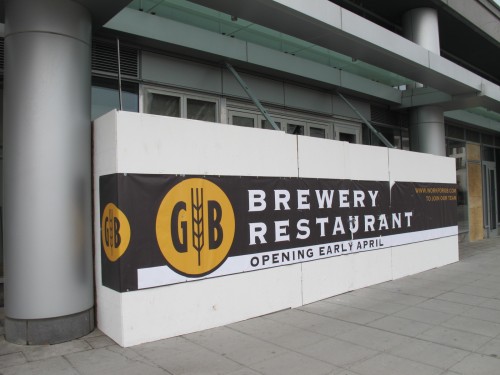


1st and M St, SE

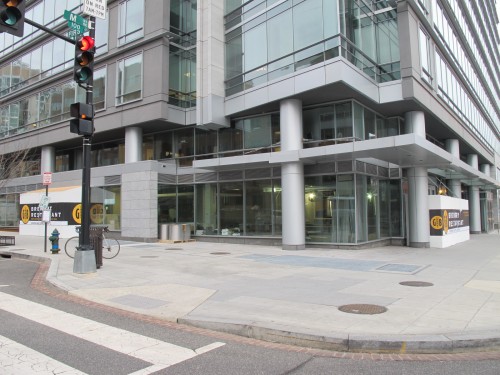
A Gordon Biersch Brewery Restaurant is coming to 100 M Street, SE near the baseball stadium and Navy Yard metro. The liquor license application says:

“New full service restaurant and brewpub with occasional live music. Serving American cuisine, including steaks and seafood. Total Occupancy Load is 346, number of seats inside is 326, number of Sidewalk Café seats is 26, and number of Summer Garden seats is 64.”

You can see their menu here. There is currently a Gordon Biersch Brewery Restaurant at 900 F Street, NW in Penn Quarter.


View More Stories