From the National Zoo:

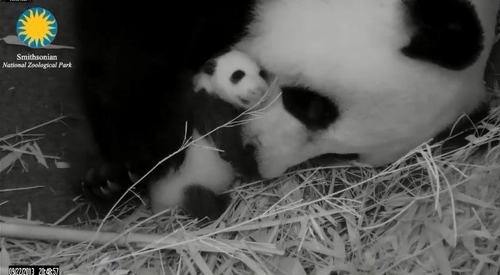
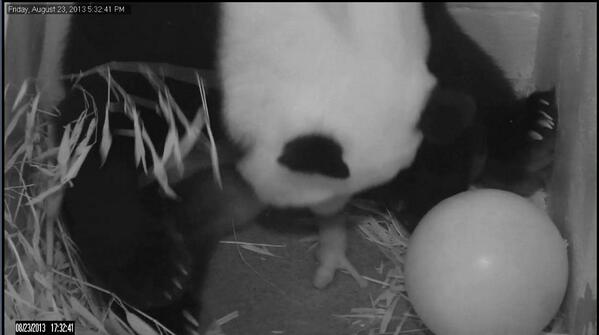
“Mei Xiang and her cub are still doing well! Keepers and veterinarians expect that Mei will begin leaving her den for longer periods of time soon. When she does leave the den for longer periods of time keepers and veterinarians hope to be able to perform another health check on the cub. In the meantime, keepers are continuing to do short training sessions with Mei in her den, and offer her small snack-sized treats for participating.

During the past several days the panda cams have caught some precious moments of Mei and her cub that we’ve pulled together.Thank you to Flickr user dparente for this screen grab of Mei and the cub!”

PandaUpdateSept11


Sep5-Tian
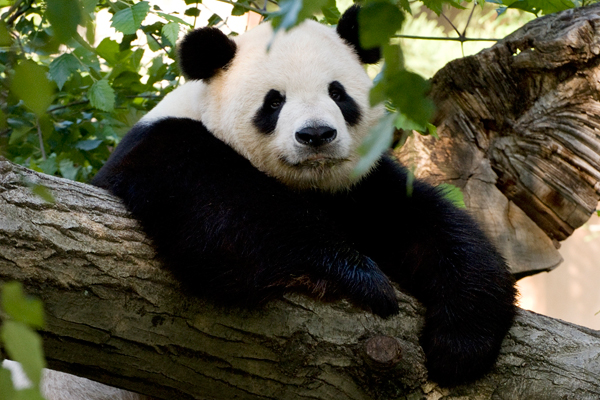
Photo of Tian Tian via the National Zoo

From the National Zoo:

“Scientists at the Smithsonian Conservation Biology Institute’s Center for Conservation and Evolutionary Genetics confirmed that our giant panda cub is female! A paternity analysis showed that the Zoo’s panda Tian Tian is the cub’s father. Scientists also confirmed the second, stillborn cub Mei Xiang delivered on August 24 was a female and also sired by Tian Tian. The cubs were fraternal twins.

Zoo scientists used two tests to confirm the sex of both cubs. The first test was developed by scientists in China and analyzes a fragment of the zinc finger protein gene. The second test, also using a shorter fragment of the same zinc finger protein gene, was developed by SCBI scientists and veterinarians. They used the second test to verify the results of the initial test.”


PandaUpdateAug28
Photo via National Zoo

From the National Zoo:

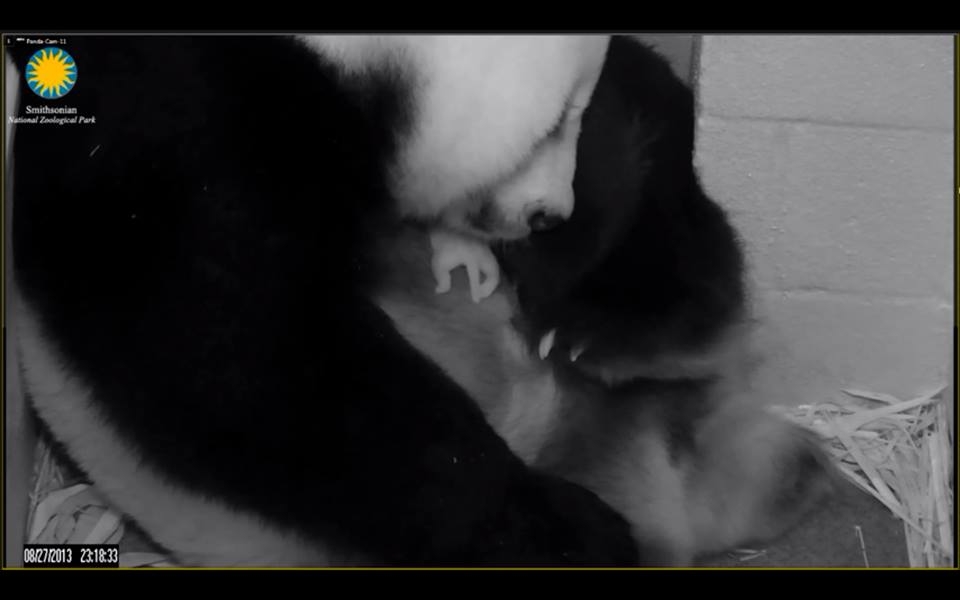
“This morning keepers entered Mei Xiang’s den to offer her food and water. They came with some of her favorite treats — diluted apple juice, a sweet potato and a pear. She licked the sweet potato but didn’t show much interest it in it or the pear. Although Mei wasn’t very hungry, she was thirsty and she drank some diluted apple juice. Female giant pandas usually do not eat or drink much in the weeks after they give birth.

The entire time Mei was drinking she didn’t put the cub down, so keepers didn’t get a very close look at the cub. But they could hear it squawking and it sounded healthy. They also got several good looks at the cub on the web cams this afternoon.”


baby_panda_born_washington_dc_national_zoo
Photo courtesy of the National Zoo

Update on the Giant Panda cub from the National Zoo:

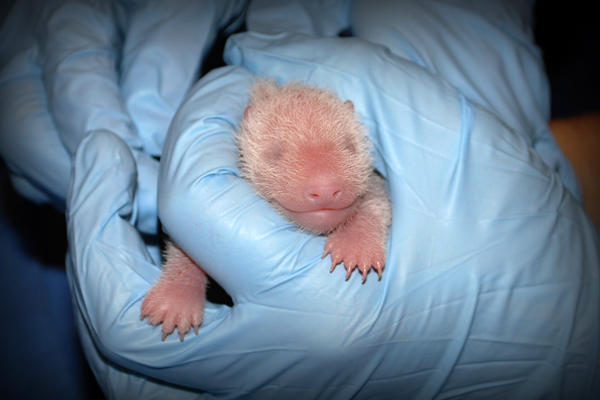
“This morning [Sunday], the panda team was able to give the cub its first neonatal exam. The cub is robust, fully formed, and is a bright, healthy shade of pink. It weighs 137 grams, which is about 4.8 ounces. Its heart rate is steady, and vets were able to hear breathing sounds from both lungs. It’s belly was nice and full, its mouth was normal, and it was obvious that the cub is both nursing and digesting. All signs are that we have a very healthy, active, vibrant cub.

We won’t know the cub’s sex or its paternity for two or three weeks.

At 7:29 p.m. yesterday evening, Mei Xiang gave birth to a second, stillborn cub. Keepers watching Mei on the panda cam saw her groom it for 17 minutes. When she stopped grooming, it fell from Mei’s body onto the floor of the den. It lay motionless and made no sound. Throughout, staff could see the first cub and hear it squealing. Mei never set it down. Staff retrieved the motionless cub with a grabbing device. It was immediately evident that the cub had developmental abnormalities and wasn’t fully formed. It was never alive. Mei’s first cub continues to do well.”


baby_panda_cub_dc
“A cub is born! First photo of the cub, born today at 5:32 p.m.” tweeted by @NationalZoo

From the National Zoo:

Giant panda Mei Xiang gave birth to a cub at the Smithsonian’s National Zoo 5:32 p.m. The panda team heard the cub vocalize and glimpsed the cub for the first time briefly immediately after the birth. Mei Xiang picked the cub up immediately and began cradling and caring for it.

Behavior watchers have been monitoring her 24 hours a day since Aug. 7 via the panda cams. The panda team began preparing for a birth when they saw her water break around 3:36 p.m. and she began having contractions. Mei Xiang started spending extended amounts of time body licking and cradling her toys Aug. 11, all signs that she could give birth.

For the first time this year scientists used another test developed by the Memphis Zoo which analyzed Mei Xiang’s levels of prostaglandin metabolite (a fatty acid) to narrow the window when she would give birth or experience a pseudopregnancy. Scientists at the Memphis Zoo performed the analysis and determined that if Mei Xiang were pregnant she would likely give birth during the last week of August. If she were not, her pseudopregnancy would have likely ended in early September.

“I’m glued to the new panda cams and thrilled to hear the squeals, which appear healthy, of our newborn cub,” said Dennis Kelly, director of the Smithsonian’s National Zoo. “Our expansive panda team has worked tirelessly analyzing hormones and behavior since March, and as a result of their expertise and our collaboration with scientists from around the world we are celebrating this birth.”


panda_pregnancy

From the Zoo:

“Scientists at the Smithsonian’s National Zoo have confirmed a secondary rise in urinary progesterone in Mei Xiang. The rise indicates that she will experience the end of a pseudopregnancy or give birth to a cub in 40 to 55 days.

Since the artificial inseminations the Zoo’s panda team has monitored Mei Xiang closely. Zoo scientists will continue to monitor her hormone levels through daily hormone analyses. Veterinarians are conducting ultrasounds regularly as Mei Xiang chooses to participate in them, to monitor changes in her reproductive tract and evaluate for evidence of a fetus. Giant panda fetuses do not start developing until the final weeks of gestation, making it difficult to definitively determine if there is a pregnancy. It may be too early to detect a fetus.

Keepers are also monitoring Mei Xiang’s behavior closely. She has begun nest building which is consistent with a rise in urinary progesterone. The area of the David M. Rubenstein Family Giant Panda Habitat closest to her den will close any day to provide quiet for Mei Xiang, who shows extra sensitivity to noise during the final weeks of a pseudopregnancy or pregnancy. Panda fans can watch Mei Xiang on the upgraded panda cams, sponsored by the Ford Motor Company Fund. The cams in Mei Xiang’s den, where she will be spending much of her time over the next month, have also been replaced with high-definition cameras.”


Screen Shot 2013-07-22 at 12.09.43 PM

From the National Zoo:

Giant panda fans can tune into the panda cams, sponsored by the Ford Motor Company Fund, at the Smithsonian’s National Zoo once again. The cams went dark for upgrades May 30 but will begin streaming live uninterrupted video today at noon.

The panda cam system upgrades were designed to maximize the viewer experience. Cam watchers can now stream live video of Mei Xiang and Tian Tian on any computer, tablet or mobile device without having to refresh the web page. Mei Xiang’s den cameras have also been upgraded to high-definition cameras. Panda fans the world-over can watch her more clearly than ever before as she builds her nest.

The Zoo’s panda team conducts behavior research using the panda cams, and remotely watch both bears. They will monitor Mei’s behavior especially closely after it has detected a secondary rise in her urinary progesterone. That rise will indicate the end of the breeding season is near, and she will experience a pseudopregnancy or give birth within 40 to 50 days. During that time she will spend increasingly more time in her den, and the panda cams will be the primary way for the panda team and panda fans alike to watch her.

Veterinarians are conducting ultrasounds regularly as Mei Xiang chooses to participate in them, to monitor changes in her reproductive tract and evaluate for evidence of a fetus. Giant panda fetuses do not start developing until the final weeks of gestation, making it difficult to definitively determine if there is a pregnancy. It is still too early to detect a fetus. But you can watch a video of Mei’s ultrasound from July 3.

Visitors to the David M. Rubenstein Family Giant Panda Habitat will see the renovated panda cam station with new larger flat screen monitors in addition to the pandas. Both pandas are on exhibit as usual today. Mei Xiang will receive a special panda-friendly frozen fruit cake today at 1:30 p.m. to celebrate her 15th birthday. Tian will turn 16 years old next month.


Rusty_red_panda
Photo via @NationalZoo

@NationalZoo tweets:

“We are looking for a missing red panda, a male named Rusty. He was last seen at 6 p.m. last night.”

The Adams Morgan Listserv adds:

Animal care staff have been combing the trees around the Zoo since 8 a.m. He could be sick & hiding, or someone could have taken him.

Please help us keep an eye out for Rusty. Remember: red pandas are wild animals, & will bite if cornered or scared.

Red pandas typically spend the warm daytime hours resting, so it’s likely Rusty is somewhere in or near the Zoo hiding in a tree.

Red pandas are arboreal, territorial animals, so it would be unusual for Rusty to wander far from his home range, in his case his exhibit.

If you do see Rusty, don’t try to approach him. Stay where you can safely keep an eye on him & alert the Zoo (202.633.4888)


giant_panda_pregnancy_dc_zoo
Photo by PoPville flickr user ep_jhu

From the National Zoo:

Spring has sprung and the giant pandas are breeding again at the Smithsonian’s National Zoo. Scientists detected a rise in urinary estrogens March 26, in its female giant panda Mei Xiang (may-SHONG). This rise and her behaviors indicated that Mei Xiang was in estrus and ready to breed. A team of Zoo scientists and veterinarians, including Tang Chunxiang, the assistant director and chief veterinarian of the China Conservation and Research Center for the Giant Panda at Wolong, performed an artificial insemination (AI) earlier this morning [Saturday] after keepers determined no competent breeding between Mei Xiang and the Zoo’s male giant panda Tian Tian (tee-YEN tee-YEN) had occurred overnight.

“We are hopeful that our breeding efforts will be successful this year, and we’re encouraged by all the behaviors and hormonal data we’ve seen so far,” said Dave Wildt, head of the Center for Species Survival at the Smithsonian Conservation Biology Institute. “We have an extremely small window of opportunity to perform the procedures, which is why we monitor behavior and hormones so closely.”

Mei Xiang was put under general anesthesia for the artificial insemination and will likely undergo a second procedure later today. During the artificial insemination, the team of scientists and veterinarians used a combination of fresh semen collected from Tian Tian early this morning and frozen semen collected from Tian Tian in 2003.

The Zoo’s plans for breeding Mei Xiang and Tian Tian were developed in accordance with the Giant Panda Cooperative Research and Breeding Agreement, which lasts until 2015. Tang traveled to the Zoo to assist with breeding as part of the agreement. He performed two artificial inseminations on Mei Xiang alongside a team from the Zoo in 2011.

Zoo scientists will monitor Mei Xiang’s hormone levels in the coming months and conduct ultrasounds to determine if she is pregnant. A pregnancy lasts between 95 and 160 days. Female giant pandas experience delayed implantation, during which the embryo does not implant in the uterine wall until a few weeks before birth and a fetus does not start to develop until the final weeks of gestation. It is impossible to determine from behaviors and hormone analyses alone if a female is pregnant or experiencing a false pregnancy (pseudopregnancy).

More details after the jump. (more…)


View More Stories