Thanks to a reader for sending last night:

“Knickerbocker Theater at 18th and Columbia. Happened on today’s date in 1922. 108 People died.”

From the History Channel:

“Accumulated snowfall from a blizzard collapses the Knickerbocker Theatre in Washington, D.C., on this day in 1922.

By Saturday night, things were beginning to return to normal, and some 300 people attended a movie at Knickerbocker Theatre, at the corner of 18th Street and Columbia Road. In the middle of the film, the accumulated snow on the theater’s roof collapsed the building and tons of steel and concrete fell down on top of the theatergoers. One hundred and eight people were killed, including five in a single family. Another 133 were hospitalized. Rescuers worked through the night to pull out the injured from beneath the rubble.

President Warren Harding issued his personal condolences to the families of the victims, which included a former congressman. A subsequent investigation by Army engineers blamed poor construction materials for the collapse.”


Streets of Washington, written by John DeFerrari, covers some of DC’s most interesting buildings and history. John is the author of Historic Restaurants of Washington, D.C.: Capital Eats, published by the History Press, Inc. and also the author of Lost Washington DC.

Just east of the hustle and bustle of Chinatown and the Verizon Center stands a great Italian Renaissance Revival pile of pressed red brick known as the Pension Building, home to the National Building Museum. The building is one of the city’s best venues for large events and has hosted inaugural balls for presidents going back to Grover Cleveland’s in 1885, before it was even finished. It’s dramatic, historic, and treasured now, but like many architectural landmarks it is ultimately a rather odd building, and it’s certainly had more than its share of detractors over its lifetime.

IMG_1648
The Pension Building today (photo by the author).

Pension Building 2
The Pension Building as it appeared in the early 1900s (author’s collection).

The building was the brainchild of Brig. Gen. Montgomery C. Meigs (1816-1892). By 1881, the brilliant, vainglorious, 65-year-old Meigs was rounding out a remarkable career of engineering accomplishments. Meigs was a man of exceptional drive, intellect, irascibility, and arrogance, who had been fascinated by engineering from an early age. When he was just six years old, his mother described him as “high-tempered, unyielding, tyrannical toward his brothers, and very persevering in pursuit of anything he wishes.” As a young man he designed Washington’s first effective water supply system, a complex reservoir and aqueduct complex that included the magnificent Cabin John Bridge in Maryland—the longest single-span masonry bridge at the time—as well as the graceful Georgetown aqueduct bridge over Rock Creek. He went on to become supervising engineer for the expansion of the U.S. Capitol, where he worked, often contentiously, with architect Thomas U. Walter to create the lavish, elegantly decorated building we know today. An accomplished logistician, he served during the Civil War as Quartermaster General of the Army and is perhaps best known as the man who decided to build a cemetery around Robert E. Lee’s mansion in Arlington so that it would never be usable again as a home. (more…)


lincolns_briefcase
Photo: Courtesy President Lincoln’s Cottage, a site of the National Trust for Historic Preservation © 2014.

From a press release:

“The briefcase that held Abraham Lincoln’s handwritten notes during the Civil War returns to Washington, DC, for a six month exhibit at President Lincoln’s Cottage at the Soldiers’ Home [2nd and Upshur St, NW]. While living at the Cottage with his family during the summers of 1862, 1863, and 1864, President Lincoln carried papers in the briefcase on his daily commute to the White House. A photo album made for Tad Lincoln by the 150th Pennsylvania Volunteers, a company stationed at the Cottage during the Civil War to guard the Lincoln family, will also be on view in the exhibit. The briefcase and photo album are on loan from the Abraham Lincoln Presidential Library and Museum in Springfield, IL, and will be on display at President Lincoln’s Cottage through the end of June 2014. (more…)


Streets of Washington, written by John DeFerrari, covers some of DC’s most interesting buildings and history. John is the author of Historic Restaurants of Washington, D.C.: Capital Eats, published by the History Press, Inc. and also the author of Lost Washington DC.

The recent closing of Famous Luigi’s after 70 years in business at 1132 19th Street NW brings to mind fond recollections of the many old-style Italian restaurants known as “red sauce joints” that used to offer Washingtonians pizza, pasta, and warm-hearted service in great abundance. DC has been home to Italian restaurants since at least the 1870s, but a handful from the first half of the 20th century stand out as pioneers. One of those was the place where Luigi Tito Calvi (1889-1963), the founder of Famous Luigi’s, got his start. It was Ciro’s Italian Village, at 1304 G Street NW downtown.

Ciro's (1932)
Circa 1932 postcard from Ciro’s Italian Village (author’s collection).

Ciro’s was creation of Ciro (pronounced “Cheero”) Gallotti (1883-1948), a feisty immigrant from Naples who had a lasting impact on the Italian restaurant scene in DC. Gallotti was an effusively outgoing individual (“one high-strung and ever exciting chum,” according to the Washington Post) who was well-suited to the role of restaurateur. He began not in the restaurant business but as a musician, a french horn player for the Italian Navy Band, according to a family history prepared by his nephew Marty Gallotti (1927-2013). Ciro loved music and played the horn since he was a boy. With his future wife Guilia, he emigrated to the U.S. in 1911, and the couple were married in New York City, where he got his first job with the Victor Herbert Orchestra before moving to Washington to live at the fashionable Raleigh Hotel (previously profiled here).

Ciro Gallotti (detail)
Undated photo of Ciro Gallotti (courtesy of Peggy Coyle).

In Washington, Gallotti played in the orchestra at the popular Knickerbocker Theater at 18th Street and Columbia Road NW in Adams Morgan. On January 28, 1922, a massive snowstorm dumped two feet of snow on DC roads and brought traffic to a standstill. As Gallotti tried to get to work that evening, he got stuck on 16th Street and decided he had no choice but to turn back home. That same night the Knickerbocker suffered one of the greatest disasters in the city’s history when the huge snowfall caused its roof to collapse onto a full house of moviegoers. Many of Gallotti’s fellow musicians were injured, and a few died. Gallotti took this as a sign that he should get out of the music business, and in October of that same year he opened his first restaurant, Gallotti’s Italian-American Restaurant, across the street from the Raleigh on Pennsylvania Avenue.

Jas Y Davis Bldg c 1919 28916u
1201 Pennsylvania Avenue NW in 1919. Gallotti’s first restaurant would open here 3 years later (Source: Library of Congress).

We’ve previously profiled the little two-story building where he rented space, a shop that hosted many businesses over the years. Modestly advertising his new eatery as “a good place to eat where prices are moderate,” Gallotti struggled at first. For the first two years, in summer months Guilia would supplement the family’s income by running a concession stand in North Beach, Maryland. But Gallotti’s eventually caught on, and Ciro stayed in business at this location for at least 6 years. (more…)


dc_house_history

From a press release:

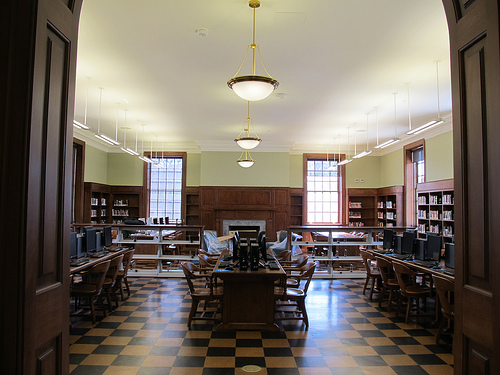
“The Humanities Council of Washington, D.C. (HCWDC) is pleased to announce its popular House history workshops return. They will be held Saturday, February 22, 2014 at the Martin Luther King Jr. Memorial Library, 901 G St. NW in the Washingtoniana Division (3rd Floor). Two workshop sessions will be held: Workshop I: 10:00 am – 12:30 pm and Workshop II: 12:30pm – 3:00 pm. This year’s House History Workshop will guide community historians, of any skill or knowledge level, through the DC Public Library Washingtoniana Division’s collections. Participants will learn how to research the history of their own home or any other historical property.

These workshops will feature presentations by professionals who will guide workshop participants on how to navigate the collection of maps, building permits database, photo archives, microfilm records and the council’s DC Digital Museum.

The House history workshops provide residents with an opportunity to explore the history of their homes including the date the home was built, architect, builder, dates of any improvements, former residents, and how the neighborhood evolved over time. House history research is powerful because it provides that personal connection to the past that few other types of historical research can; it allows anyone to forge a strong sense of connection with their neighborhood and their community whether they have called DC home for years, or just moved in last month.

Workshops are free and open to the public. Registration is required, to attend please sign up here.”


demographic_changes_dc
Graph via Urban Institute

Thanks to the folks from Urban Institute for sending this incredible study:

“Washington, DC, residents don’t need census data to tell them what’s obvious in their neighborhoods: the city is changing dramatically. But numbers can give us context. They can show us how shifts in population are reshaping the city and can help us prepare for changes to come.

In this series, we’ll home in on changes from the past decade—2000 to 2010—when DC’s population began growing again for the first time in 50 years. In this chapter, we look at demographic change, drilling down to wards and neighborhoods. Later, we’ll explore changes in housing, crime, education, and more, using data from NeighborhoodInfo DC to tell the story of our changing city.”

You can start checking out the background, graphs and maps here.


historic_preservation_dc

From a press release:

“After a year-long planning effort with community partners, the DC Office of Planning (OP) has released Enriching our Heritage, the 2016 District of Columbia Historic Preservation Plan. Developed by OP’s Historic Preservation Office, the generously illustrated 92-page document is an informative guide to help District residents learn about local history and see how Washington’s heritage is shaping the city’s growth.

Using timelines and graphics, the plan traces how Washington grew from modest beginnings into a dynamic multi-cultural city. It describes how the city’s magnificent architecture and beautiful neighborhoods have been nurtured over the years through official protections and the contributions of communities and civic leaders. Drawing on views expressed in public forums, it discusses current challenges in preserving the historic ambience and quality of life that is attracting so many new residents to the city. It also identifies key opportunities to enrich the city’s environment with new vitality and an appreciation of an increasingly diverse cultural scene.

The plan proposes several innovations in the city’s approach to historic preservation. It explores ideas about celebrating the upcoming 225th anniversary of the District’s establishment, and suggests how everyone can participate in community heritage events. It proposes a pilot project to test the concept of conservation districts, and financial incentives to encourage reuse of the city’s older housing stock for affordable housing. In all, the plan identifies thirteen key goals with specific action items and targets for each goal.

The Preservation Plan was developed with the assistance of a steering committee of community and business leaders from across the city, as well as guidance from non-profit organizations working to engage District residents in local history and community heritage activities.”

Full report in PDF:

Historic_Preservation_Plan_2016


11079790523_9f8e4b6b16_z
Photo by PoPville flickr user NCinDC

NCinDC writes:

“A commercial building located at 804 H Street NE in the Near Northeast (H Street corridor) of Washington, D.C. Built in 1890, the property originally served as a private residence. It was later converted into Peoples Drug Store No. 5 where apparently they always sold the best. (here’s additional historic photos of this Peoples location) The left photo was taken sometime in the 1910s by the National Photo Company (via the Library of Congress). The building on the far left in the old photo was replaced with a bank building in 1921 while the building on the far right was probably destroyed during the 1968 riots.”

When becoming a member of the PoPville flickr pool please make sure your settings allow me to download your photos. Join the PoPville flickr pool here and follow PoPville on twitter here on facebook here and you can now sign up for daily email summaries here.


OLYMPUS DIGITAL CAMERA

“Dear PoPville,

Bryson was a good friend and neighbor; a Petworth fixture; a long-term resident who worked tirelessly to ensure that our block was populated by friends…and not acquaintances.

As DC loses residents such as Bryson Latimer and Larry Byrd, we’re certainly diminished, but hopefully their warmth, generosity, and spirit of community won’t be forgotten.”

Bill shares his tribute:

“Bryson Latimer was a Petworth fixture.

When we purchased our house in 2010, Bryson would take a stroll each time we came by to look at the property. After we moved in, we asked him about it, and he said, “I just wanted to make sure you weren’t assholes.” We felt exactly the same way, told him so, and laughed with him about it in the years that followed.

We called Bryson “The Mayor” because he knew everyone and everything that went on in our little corner of Petworth. You couldn’t come home any evening in summer and not find Bryson out on his porch. He taught us about “porch culture”, and when we had our own impromptu porch party, Bryson was the first person to come over.

Bryson’s family moved to Petworth in the early 1950′s, one of the first black families on a block of 2nd generation German and Italian Americans. Although he moved away in the 1970s, he returned to Petworth during some of its worst years and stayed on, retired, and cared for his elderly parents—living in the same house that he was raised in and that his family has owned for almost 60 years.

Bryson was a kind, wise, intelligent, and thoughtful man who not only helped us understand our new neighborhood and neighbors, but helped them to understand us. He helped us make new friends of which he was the first. My wife referred to Bryson as “…our gift with purchase.”

Bryson Latimer died the evening of October 19th after a short battle with an aggressive form of lung cancer. He was 69. We miss him terribly. The neighborhood just won’t be the same without him.”


heritage trail

Museum Minute is written by Elle O’Flaherty. Elle lives in Mt. Pleasant and previously wrote about the African American Civil War Memorial and Museum.

This is a very special furlough edition of Museum Minute in which I tried to both go to a museum while many were closed and spend no money while most still in operation charged entrance fees. Thus, I bring you the Neighborhood Heritage Trail. We’ve all seen the large signs posted around town, but I hadn’t actually taken the time to walk one of the trails until suddenly Congress afforded me plenty of opportunity.

statue

I’m glad I did. I walked the Mount Pleasant Heritage Trail, which was interesting if you’re entirely too enamored of your neighborhood, which I am. It was also kind of nice to have a purpose to walk around on a beautiful day. The trail had all sorts of information about the architecture, famous former residents (and less famous, including a former presidential chauffeur), and interesting facts about MtP. There are 15 heritage trails throughout the city, a couple have free accompanying audio tours, and odds are there’s one for your neck of the woods. So, if you’re looking for a cheap way to learn more about your hood while taking a walk with your kid or dog, two thumbs up.

By the way, just in case you don’t think this furlough edition museum review isn’t up to Popville’s usual standards, I think we all know who to blame…


View More Stories