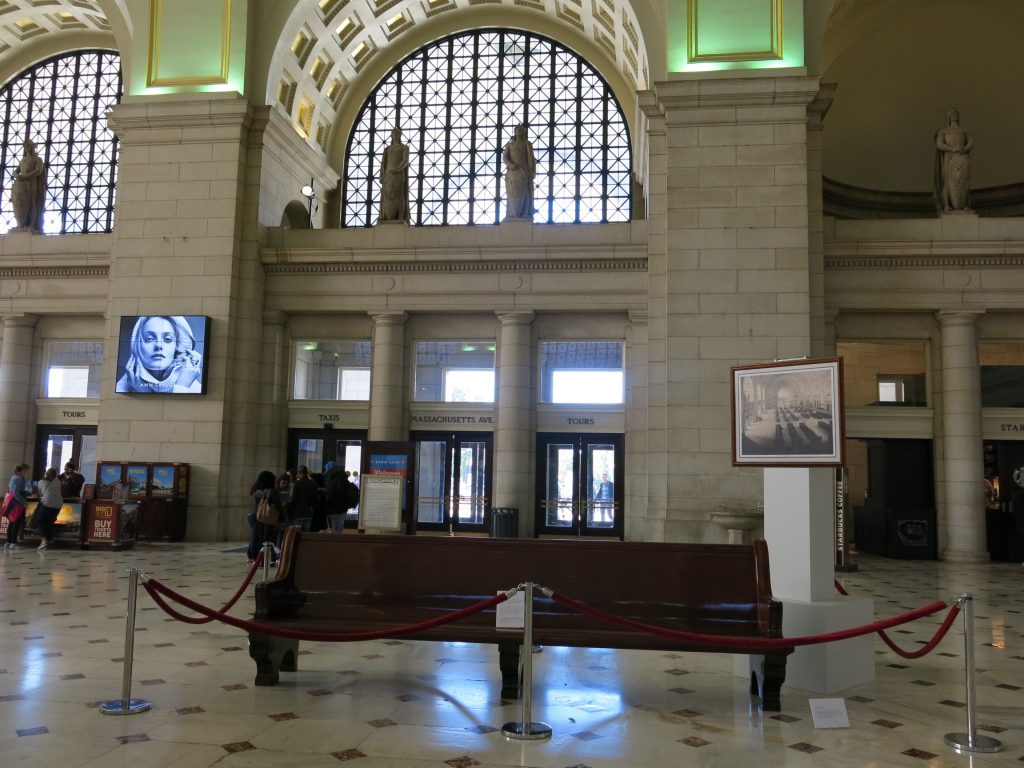
Last known old school mahogany bench from the main hall:
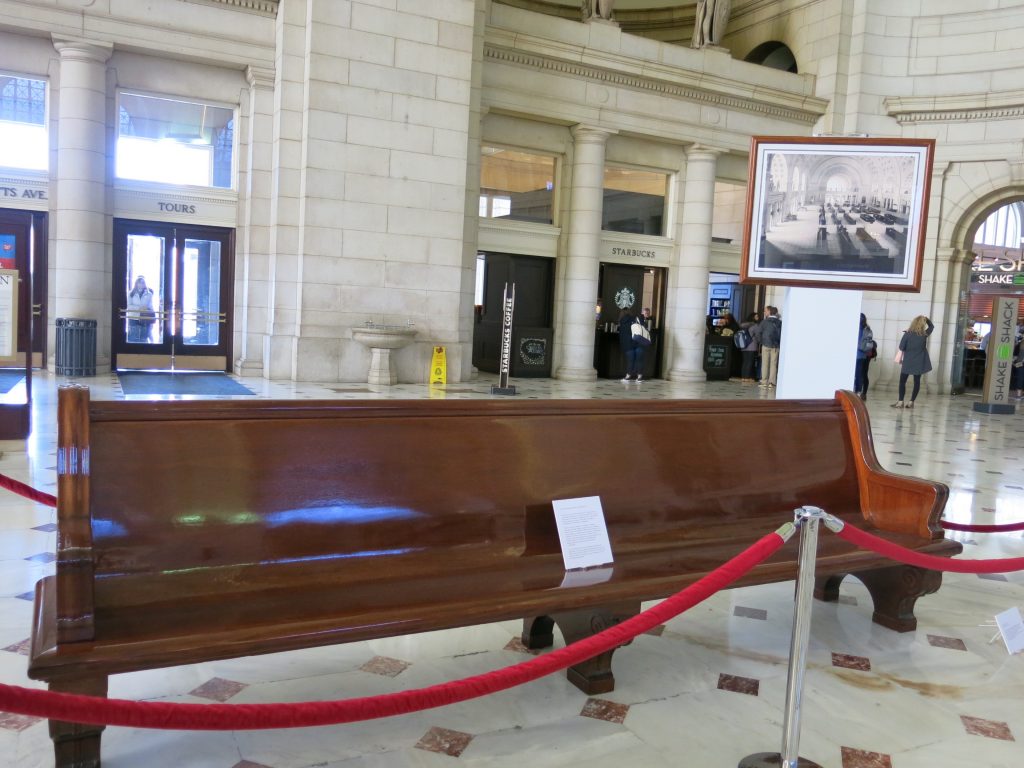
Details after the jump. (more…)


1777 Columbia Rd, NW
Back in 2012 a reader wrote in:
Check out the “old bones” that lie under the drywall, linoleum, indoor/outdoor carpet, and drop ceiling at the former Payless Shoes site on Columbia Road. More importantly, it’s the former Avignone Freres historic bakery, which furnished the White House with cakes and pastries.”
Now a remnant old sign is visible on the outside:

Stay tuned for a new mixed use development coming here:

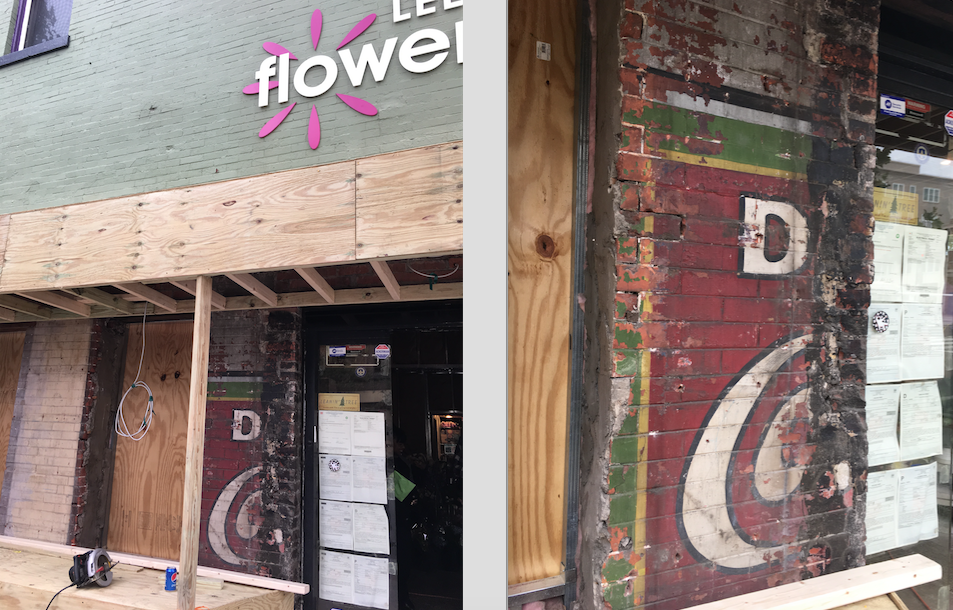
1026 U Street, NW
I love these stories – thanks to Kim for sending:
“Popped into Lee’s today and found these jewels amid their construction. According to the employees, while the shop has been around since 1945, the building was first a burlesque theater and then a tailor shop. The burlesque theater was discovered during the current construction. They believe the Coca-Cola ad and the tin ceiling date back to the theater. Lee’s is a special place; big congrats on their forthcoming renovation!”

501 8th Street, SE in 2009
There’s been a tremendous amount of change all over the city but I feel like people don’t remember what Barracks Row used to look like. Here’s that same space, home to The Chesapeake Room, below:


This is my favorite juxtaposition of all time and pretty much captured the essence of 18th Street at that time. Anyone recognize where this is today?
Photo Credit 1925: Library of Congress Photo Credit 2015: Google Maps
From Rent Cafe, Washington, D.C. Past and Present: A Visual Tour:
“Washington, DC is one of the nation’s most historic cities — but it has also undergone significant and striking transformations as its diverse neighborhoods have modernized throughout the twentieth century. These then-and-now images showcase the development of some of the city’s most iconic streets and structures, giving you a glimpse into Washington’s past and present.
7. The Arcade / DC USA
A century ago, The Arcade on 14th Street in Columbia Heights was one of the city’s premier multipurpose entertainment complexes, complete with a movie theater, pool room, bowling alley, and rooftop pavilion for dancing. The original structure was torn down in 1948, and the surrounding area later struggled to recover from the 1968 Washington riots, which hit the block where The Arcade once stood particularly hard. Forty years later, vitality and commerce returned to the very spot in Columbia Heights where The Arcade had been with the opening of the largest retail development in the city, the DC USA retail complex, in 2008.”
Check out the other 10 great comparisons here.

Brookland.


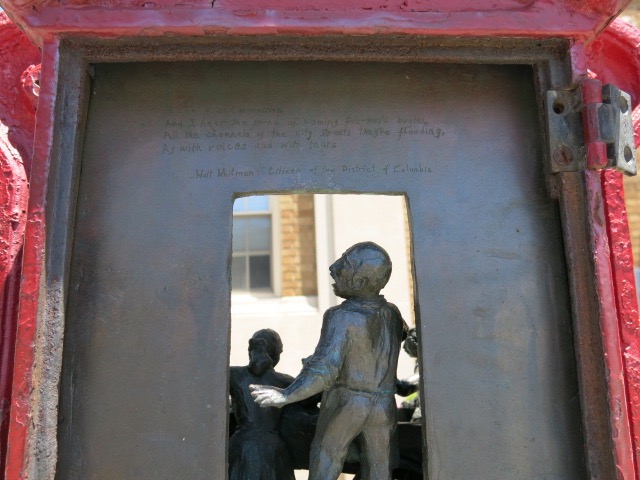
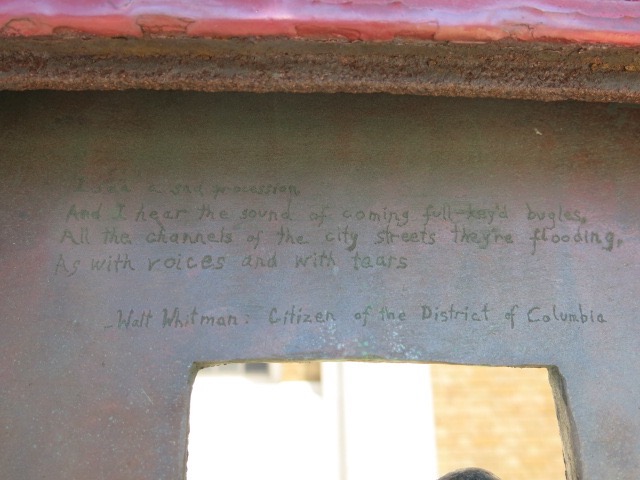
“I see a sad procession,
And I hear the sound of coming full-key’d bugles;
All the channels of the city streets they’re flooding,
As with voices and with tears.”
-Walt Whitman: Citizen of the District of Columbia
Streets of Washington, written by John DeFerrari, covers some of DC’s most interesting buildings and history. John is the author of Historic Restaurants of Washington, D.C.: Capital Eats, published by the History Press, Inc. and also the author of Lost Washington DC.

The 100-year-old former Columbia Hospital for Women as it appears today (photo by the author).
The Columbia Hospital for Women and Lying-in Asylum was founded in June 1866 as a “hospital and dispensary for the treatment of diseases peculiar to women, and a lying-in asylum [maternity hospital], in which those unable to pay therefor shall be furnished with board, lodging, medicine, and medical attendance gratuitously.” Located at 25th and M Streets NW, just off of Pennsylvania Avenue, the hospital finally closed its doors in June 2002, ending an eventful 136-year history of serving Washington women from all walks of life.
Hospitals in the 19th century were charitable institutions that supported those who could not afford to have doctors visit them in their homes. Washington at the dawn of the Civil War had virtually none, aside from the recently-founded Saint Elizabeths asylum for the mentally ill in Southeast. Providence Hospital on Capitol Hill, organized by the Daughters of Charity of Saint Vincent de Paul (and profiled in Lost Washington, DC), was the first general public hospital, but it took in mostly war-related cases and could accommodate very few D.C. residents. (more…)
Streets of Washington, written by John DeFerrari, covers some of DC’s most interesting buildings and history. John is the author of Historic Restaurants of Washington, D.C.: Capital Eats, published by the History Press, Inc. and also the author of Lost Washington DC.
Ed. Note: This was originally printed in 2011 but just came across my facebook last week, thanks to John for being kind enough to let us repost this great story here.

Mary Foote Henderson, circa 1923 (author’s collection).
The Gilded Age, from the 1870s until the 1910s, was a unique period in Washington’s history. The city attracted many nouveaux riches who were drawn by the fact that upper-class Washington society in those days was wide open to anyone with lots of money, a circumstance not found in other major Eastern cities. Of all the wealthy people who moved to Washington to exert power and influence in the Gilded Age, one of the most powerful and influential was a woman, Mary Foote Henderson (1846-1931), who turned her City Beautiful dreams into reality along upper 16th Street. (more…)