Danny Harris is a DC-based photographer, DJ, and collector of stories. In September, he launched People’s District, a blog that tells a people’s history of DC by sharing the stories and images of its residents. Every day, People’s District presents a different Washingtonian sharing his or her insights on everything from Go Go music to homelessness to fashion to politics.

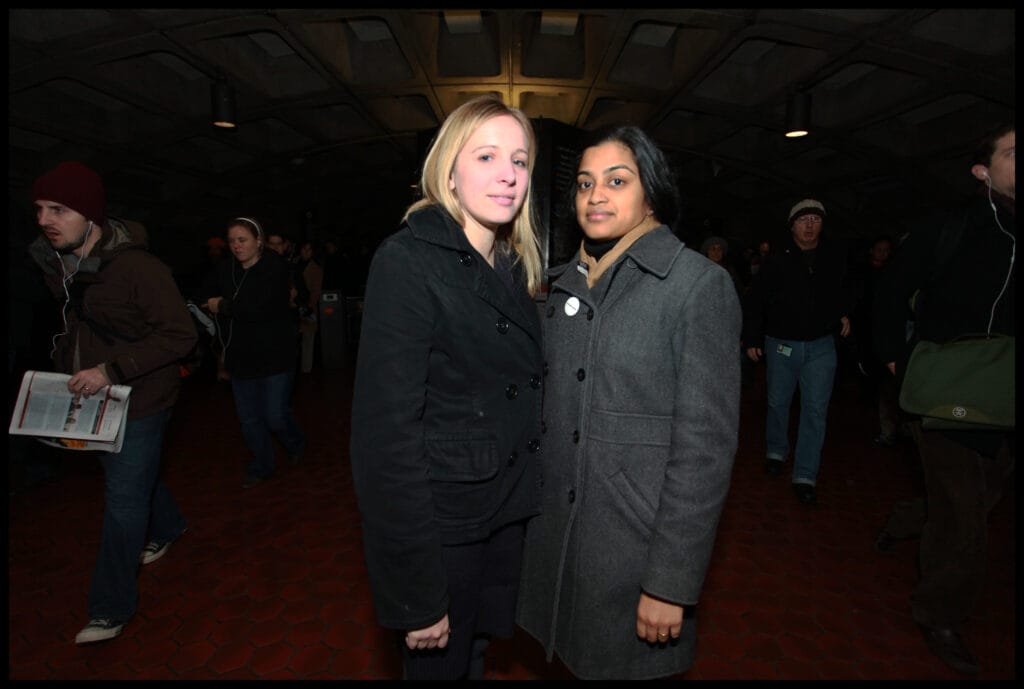
Shannon – “When I moved here from Atlanta and started taking public transportation and walking around the city, I faced gender based public sexual harassment at least once a day. It was really scary. Last fall, I decided to do something about it and I took the advocacy training program at the D.C. Rape Crisis Center. That’s where I met Chai. We started talking about street harassment and realized that there was no venue in D.C. for people to talk about these issues. A lot of people don’t know that D.C. has one of the highest rates of gender based violence in the country. We wanted to bring people together to think about community solutions to the problem of harassment.

“We were really inspired by Emily May who started Holla Back in New York. Her blog’s aim was to create a forum for women to share stories about harassment. We contacted her and she shared her model and the name with us. We set up Holla Back DC! as a place for people to share their stories about harassment in D.C. We also offer workshops and training on street harassment for women and those in the lesbian, gay, bisexual, transgender and queer (LGBTQ) community. We believe in addressing the roots of this problem so we are doing youth outreach, too. Now, we are working to bring RightRides to D.C., which provides free rides to women and those in the LGBTQ communities on Friday and Saturday nights. We are also working with businesses to develop safe streets and safe stores where the staff are trained in dealing with street harassment and it is just a safe place for one to get away from a harasser.”

Chai – “We recognize that the medium that we use is not accessible to all individuals who are victims to this kind of harassment. Now, a lot of the stories that people share are from Northwest, but that does not mean that it is confined to that quadrant. We know it happens everywhere. We are trying to engage the victims, harassers and bystanders all around the city to better understand the problem in D.C. and work together towards a solution. Still today, a lot of folks don’t know that it’s not cool to catcall a woman. We get a lot of people telling us that harassment is the cost of living in the city. But, we see it happen in rural areas, too. Regardless of where someone lives or her socioeconomic status, a woman can feel disempowered when somebody says to her, ‘Hey baby, I want to have sex with you tonight!’ People change their walking routes and talk about how they feel differently about themselves when they are harassed.

“Look, we’re not trying to say that if it is consensual and both parties are cool with it, it is wrong. For example, a highlighted wedding story in one of the Washington newspapers this summer talked about a man who met his wife by hollering at her on the street. He said, ‘Keep doing that catwalk!’ She said, ‘Oh, you like it?’ That is literally the way it was written. It was street harassment that turned into dating then marriage. Again, we are not here to judge, but a lot of people may have been offended or scared by comments like that. While few individuals end up in loving relationships due to street harassment beginnings, the vast majority are unsuccessful and offensive to women. Some men write into our blog and say that street harassment is just a natural part of the male evolution and they can’t help themselves. My response is that given how unsuccessful of a practice it is, it should have died out through the basic laws of evolution long ago!”

Learn more about Holla Back DC! here.
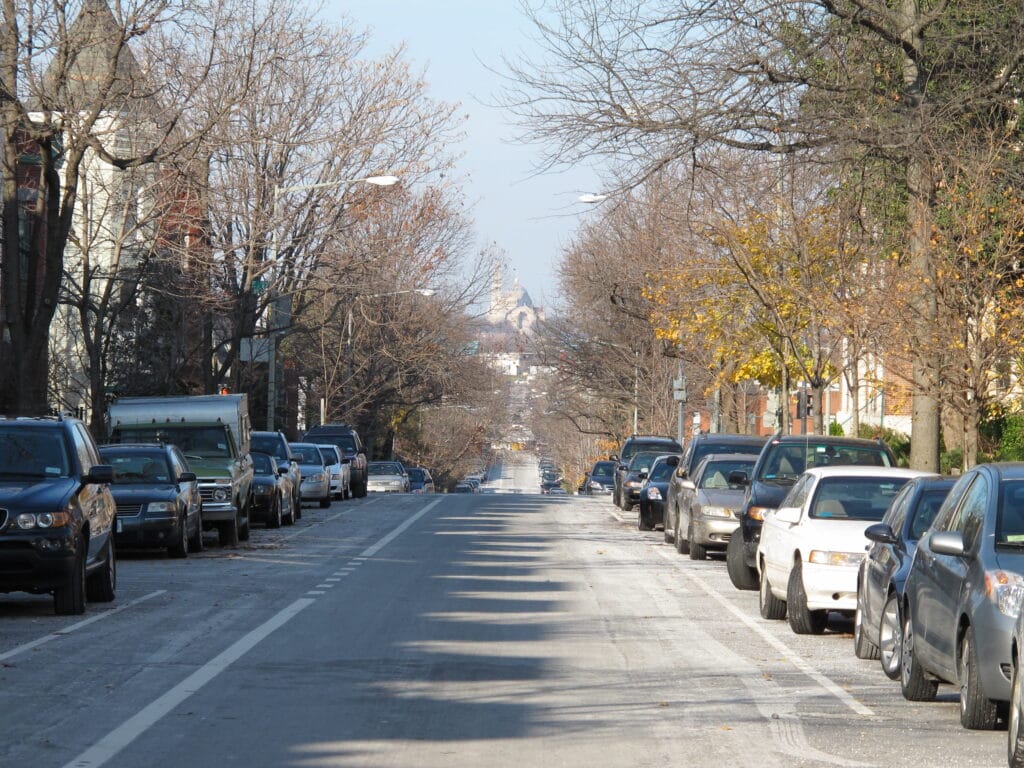

I didn’t think I’d find another sweet street scene until the Spring but I thought the Basilica in the background looked pretty awesome.


Danny Harris is a DC-based photographer, DJ and collector of stories. In September, he launched People’s District, a blog that tells a people’s history of DC by sharing the stories and images of its residents. Every day, People’s District presents a different Washingtonian sharing his or her insights on everything from Go Go music to homelessness to fashion to politics.

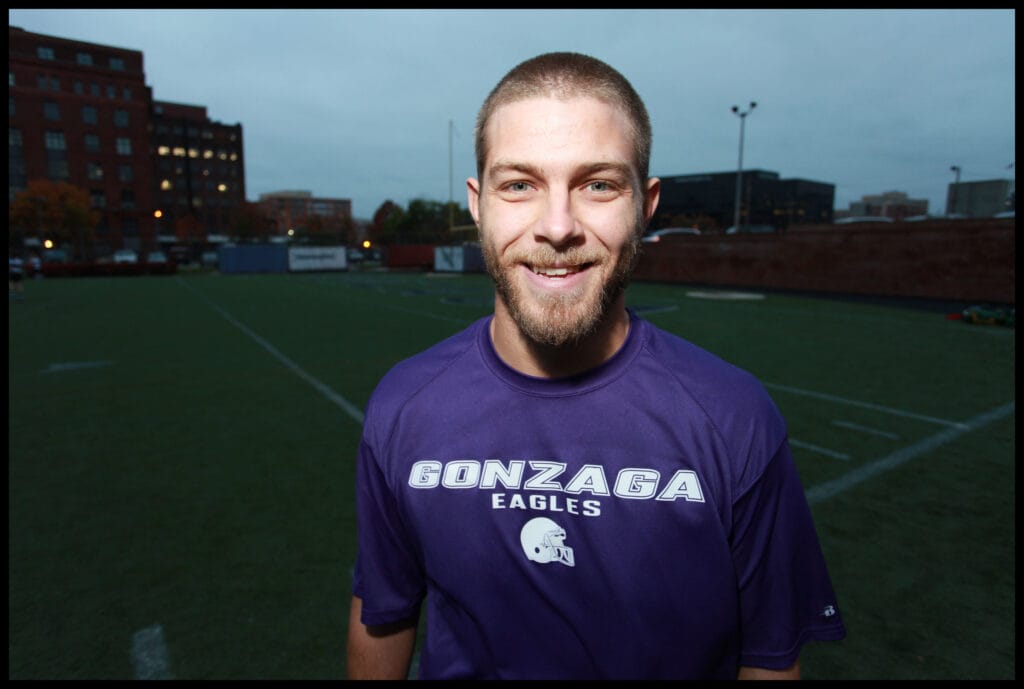
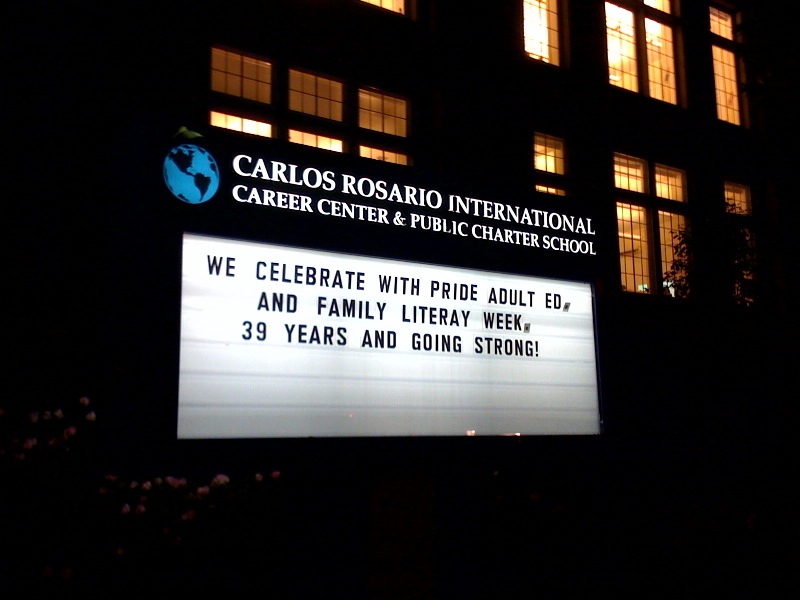
“I teach English and coach freshman football at Gonzaga High School. My older brothers and every male cousin, that’s ten of us, went to Gonzaga. It will sound crazy, but not only did my brothers and I go to the same high school, we also all went to Gettysburg College. Like me, my older brother Chris came back to Gonzaga to coach and teach after college. This place gets into your blood and you want to give back to it. I never thought I’d be a teacher, but when I got the opportunity to come back to Gonzaga, I jumped at it. This school did so much for me in terms of taking a narrow-minded suburban kid and opening up my eyes to the fact that there are people who don’t get all they need in life.

“For me, this school is a great representation of DC. We get a diverse group of kids: city kids, suburban kids, rich kids and poor kids. When you get them all together in this place, it sorta wakes up kids to the fact that there is a world outside of their suburban subdivisions or their inner city apartment buildings. And I think with this school being in a tough neighborhood, kids are forced to see the hardships of urban living. Gonzaga is not in some beautiful suburb. When these kids walk into school ever day, they are walking by guys asking for money who have nothing. There is a soup kitchen across the street. Kids don’t need to learn about poverty when they see it every day. All kids need to have a perspective like this. These are going to be the future leaders of the world. How can you lead if you think that everyone is like you and has the same problems and the easy life that you do?

“One of the reasons I got back into coaching is because athletics are the best way to teach kids how to deal with adversity. And a lot of the kids coming to this school, even if they come from the best economic situations, are all gonna deal with or are dealing with adverse situations. Athletics is also a great way to bring kids together. I’m the head freshman football coach. These guys, from such different backgrounds, they come together right away on the field. Out here, privilege doesn’t matter, everyone is on the same team. It’s hard to explain what I see happen to these kids. In a short time on the field, they grow up both physically and mentally and learn to trust and depend on each other. These relationships last and being an alumnus of this school, the friends I met that first day of football tryouts are still my best friends. They will probably be the groomsmen at my wedding and the Godfathers to my children. Now, I get to watch these relationships develop among my athletes. Coming back to Gonzaga means a lot to me. This is s a really special place for me.”


This is pretty funny. Back in Feb. ’08 I had a photo contest for free Wilco tickets. Yesterday I received an entry for the contest from someone who was searching google. I had to break the news that the contest was nearly two years old. But I really liked the entry so I’ll include it below. I’ve got to check out this cemetery.

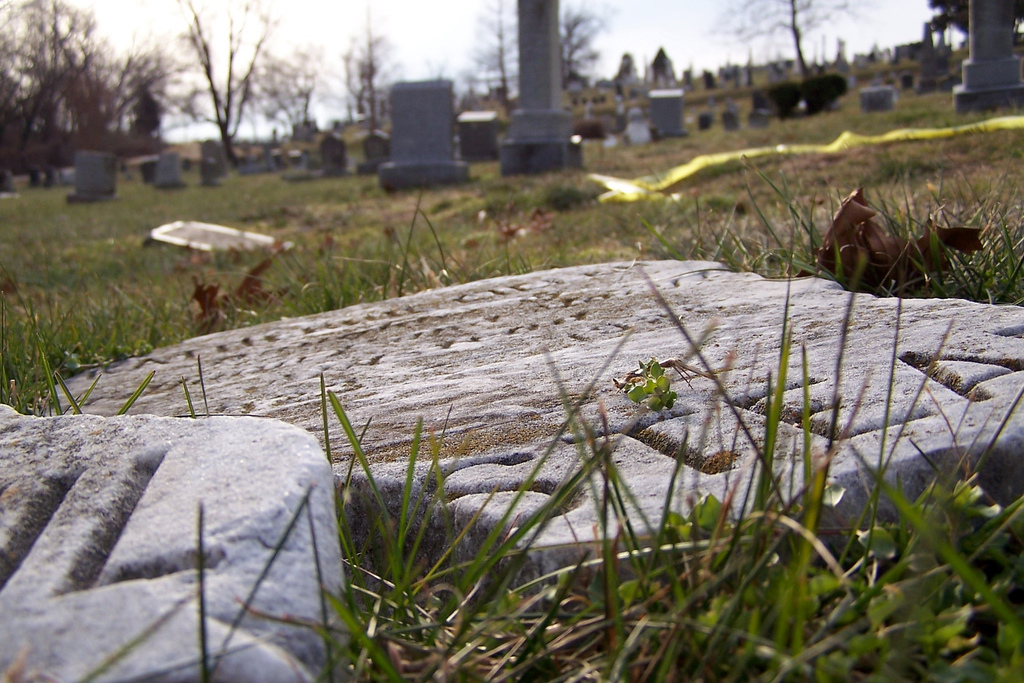
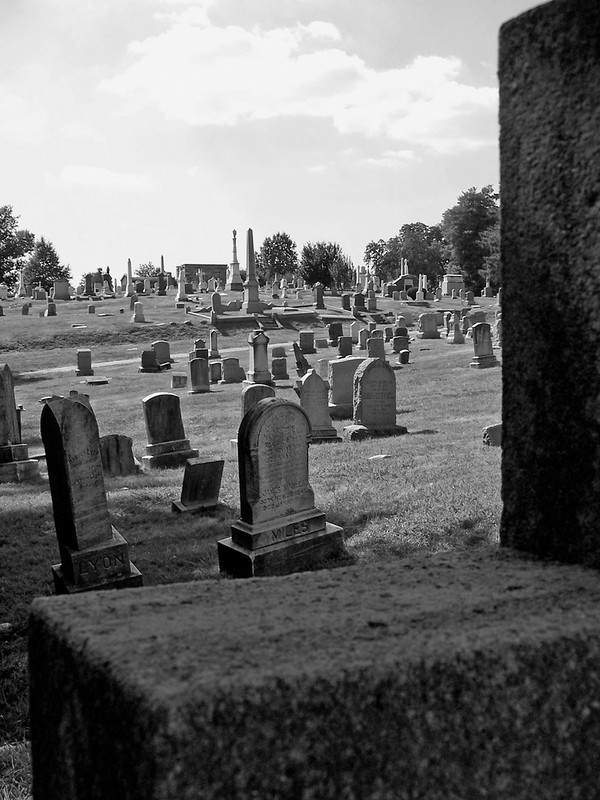
“The Congressional Cemetery, at 1801 E St. SE, has long been my favorite place in the city. At one time, it was the nation’s most hallowed ground, having served as the final resting place to crusading journalists, war heroes and statesmen. Among its most famous denizens are J. Edgar Hoover, John Philip Sousa and Matthew Brady. But now, Congressional Cemetery is largely unknown to most Americans, or most D.C. residents for that matter.

The massive cemetery fell into disrepair over the years, and today some parts remain dilapidated. But it’s making a comeback, thanks largely to a loyal group of dog walkers and volunteers who put time and money into maintaining the cemetery. Unlike Arlington Cemetery – with its orderly rows of identical headstones – Congressional Cemetery is beautifully diverse. Some memorials are nothing short of museum-quality sculpture. Others are barely noticeable. And no two corners of the site are identical. Congressional Cemetery is eccentric, diverse and beautiful, with parts in desperate need of repair – much like D.C. itself.”


Danny Harris is a DC-based photographer, DJ, and collector of stories. In September, he launched People’s District, a blog that tells a people’s history of DC by sharing the stories and images of its residents. Every day, People’s District presents a different Washingtonian sharing his or her insights on everything from Go Go music to homelessness to fashion to politics. You can read his previous columns here.

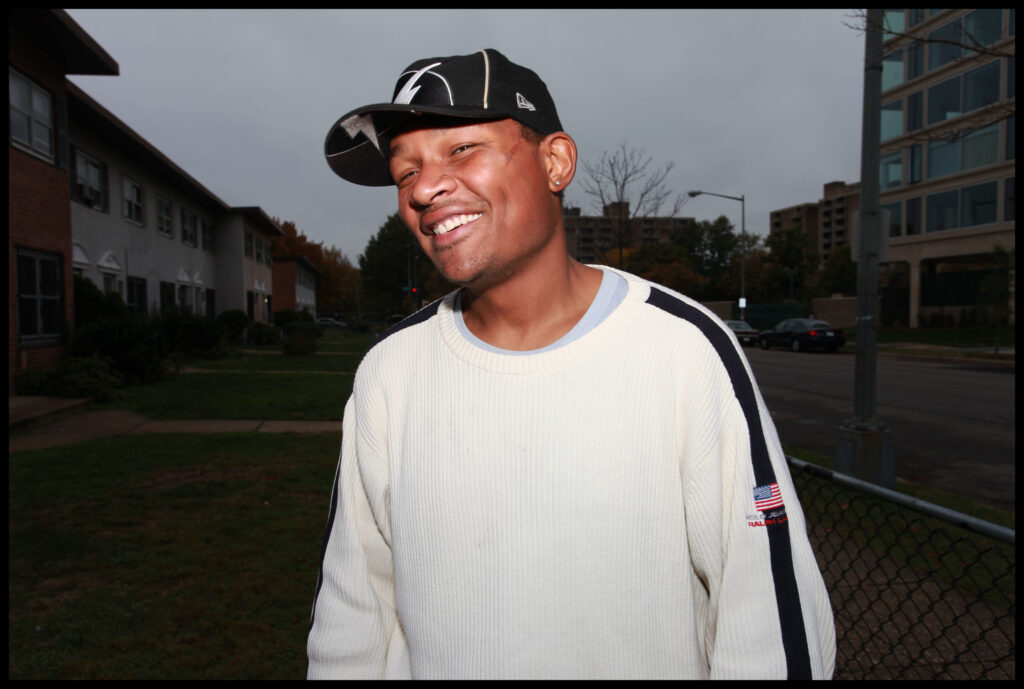
“I’m the stereotype of what all of you white folks think of black men in the ghetto. I’m 32, have five children who don’t live with me and served time for selling drugs. Don’t you judge me, though, because living here is hard as shit. I grew up in these projects in Southeast. Coming up in DC is fucking hard. There is a lot of racism and a lot of injustice. There’s a lot of fucked up shit going on, period. This is a political city and politicians need to care more about the people here and less about money. That’s how I feel.

“I ain’t justifying my actions, but unless you live this and spend every day on these streets, you can’t have no idea of what we deal with: drugs, police brutality, bad schools, no opportunities. That ain’t no way to live. People here become a product of their environment. You grow into what you see. It is hard for kids here to think that being a doctor, a lawyer or an entrepreneur is possible. The closest many people will get to success here is being a teenage mom or a drug dealer. That’s it.

“Every day is tough. If you’re not caught up in the loop, which is politics, you out of the game unless you want to sell drugs or get a lame-ass job that pays you nothing. You certainly not going to get nowhere if you play by the rules here. If you have setbacks and get into trouble, you really ain’t going to get nowhere. After jail, you are looked upon as if you can’t do nothing and there is no use for you other than being locked up again or out here selling drugs. I been in jail twice, first time when I was 20 for selling drugs. But now, I have a job and am trying to make right.

“People in DC need to care about what is happening on these streets and in these projects. For all of you in other neighborhoods, especially the white folks in Northwest, there ain’t no difference between us. It’s what’s in your heart that matters.”


Ojo Latino is a series by Néstor Sánchez Cordero. This week features dawns and dusks in DC. Néstor says, “Images are around, the secret is to catch them at the right moment and with the right light…

Three more shots after the jump. (more…)


Ojo Latino is a series by Néstor Sánchez Cordero. This week features the DC Hispanic Heritage Sports and Health Festival, hosted by the DCPR. Néstor says, “Images are around, the secret is to catch them at the right moment and with the right light…

More photos after the jump. (more…)


View More Stories