dsw_columbia_heights
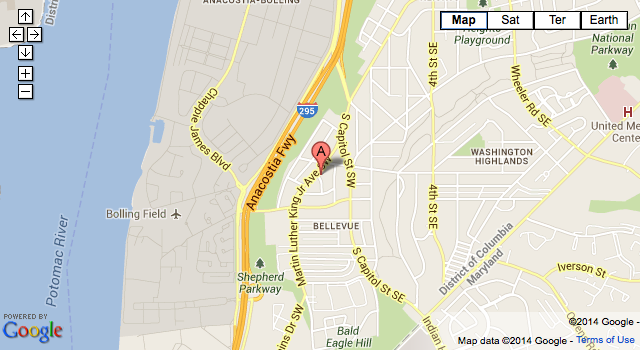
Irving Street, NW just west of 14th

Dear PoPville,

I was in DSW earlier and witnessed a poor bird trapped in the store. He kept flying into the windows trying to get out. It’s so heartbreaking.

I went to talk to the manager – he acknowledged that they have tried to call Animal Control ‘numerous’ times to capture the bird. In the meantime the have been trying to coax the bird outside, and they have been feeding him.

I tried calling 311 over and over again (apparently Animal Control is available 24 hrs a day). Not once did I speak to anyone in Animal Control. All I kept getting is a recording to not leave a message and to call back when the line was free. Huh?!?!

I did tweet @DOHDC with this earlier today – no response. I am not a DC resident so I am not quite sure what else can be done.

Any help/suggestions??


cicadas_dc

A reader sends word (and the photo above) that the cicadas have arrived in Petworth. I haven’t seen any yet. Have others spotted them too? I guess we’ll be hearing them soon enough…


Vulture protection

Urban Wilds is written by Lela S. Lela lives in Petworth. She previously wrote about bird migration.

Vultures!

I’m writing this post from Florida City, just outside the Everglades, where vultures have developed a taste for windshield rubber. Like New Zealand’s infamous kea, migratory black vultures stopping over near the park are known for their attacks on rubber and plastic parts of cars, ripping out window seals and peeling windshield wipers. It’s gotten so bad that the park offers visitors tarps to shield their car from attacks. We don’t know why the vultures do it especially since they don’t really seem to eat the stuff, just shred it. Maybe just for fun, or perhaps the delicious flavor of sun-warmed vinyl.

DC has plenty of these scavengers – both black vultures and turkey vultures – although in our area, at least, they haven’t turned to gnawing cars yet. Vultures don’t have syrinxes, the bird equivalent of vocal cords, so they don’t sing and limit their vocalizations to hisses and grunts. Both species in our area soar on thermals looking and smelling for lunch. (Black vultures have much poorer senses of smell, and often watch for turkey vultures to identify carrion so they can sail in and steal it. Vultures thrive around cities as well as in the country. In fact, the urban heat island effect generates strong, consistent thermal columns for them to ride, which other soaring birds like red-tailed hawks also benefit from. To tell our two species of vulture apart, look at the way a given bird is flying. Turkey vultures wobble in flight, where black vultures have a stronger, more forceful flight pattern punctuated by several wing beats. Black vultures have tails that look short for the birds’ size, and the underside of their wings appear almost totally black; turkey vultures’ wings are marked by a long stripe of paler feathers toward the outer edge. They’re found all over the DC region, throughout the year.


View Larger Map

From the DC Department of Health via the Cleveland Park listserv:

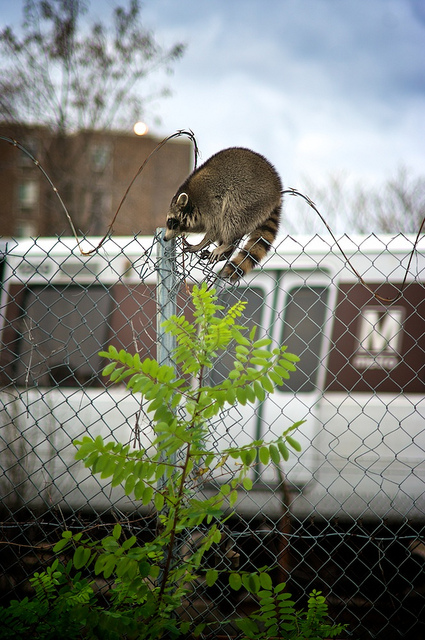
On Saturday April 27, a sick raccoon was seen in the 3100 block of Macomb St. NW which later was recently determined rabid by the DC Department of Health. The raccoon was a year old lactating mother covered with dog ticks that left her young ones behind and possibly also rabid.

The attached are flyers on Rabies and Animal Control Laws for the District. Both are for your information since this general area has been affected with wildlife rabies for some time now. The main message here is prevention and caution on approaching any suspicious animals including cats and dogs. Also, for the pet owners, allowing dogs to run at large in the woods is risky due to possible exposure to Rabies and Lyme disease, both of which can be transmitted to humans.

Moreover, the following is pertinent information to assist the residents with advise on exclusionary methods, such as securing trash cans and other food sources, repairing and patching holes in attics and block crawl spaces such as porches, sheds against intrusion of wildlife. Wild animals are attracted to food waste. Thus sanitation issues must be addressed. The city does not to remove the animal from its habitat, unless sick or injured. Therefore, it’s important for residents to read our flyers for tips to discourage the proximity of urban wildlife in their properties and learn about signs of abnormal behavior.

Please feel free to share above materials with area residents. You may call me or reply by e-mail if you have any concerns.

Thank you,

Maria Hille
Supervisory Biologist, M.S.
Animal Disease Control/HRLA
DC Department of Health


thrush_bird
Photo by PoPville flickr user Mr. T in DC

Urban Wilds is written by Lela S. Lela lives in Petworth. She previously wrote about luna moths.

Migration Season

Between April and June, cued in part by increasing daylight hours, migratory bird species turn from their winter territories and travel en masse to spring breeding grounds. In the Washington area, we see migrants returning from farther south: Kentucky warblers from the Caribbean, yellow-billed cuckoos from as far as Argentina. DC’s official bird, the wood thrush, overwinters in Central America and parts of southern Mexico. Not all birds migrate, and some species are only partly migratory: one population may migrate while another stays put. European Starlings are one of these: we have resident starlings all year, but some travel south for the winter. Spring migration is maybe the best time of year to go birding: this time of year, the migrants sport their often-gorgeous breeding plumage, making them easier to see than during the fall migration, and their sheer numbers make the odds better as well.

Most birds migrate at night, navigating partly by the stars and avoiding diurnal predators. Artificial lights, which now blanket most of the Atlantic flyway, appeared only recently from an evolutionary standpoint, and birds don’t recognize them as something to avoid. When birds fly past an illuminated building at night, they are drawn to the light inside, and can fly straight into windows or glass walls, injuring or killing themselves. A similar thing happens during the day when birds see the sky reflected in a building before them, and fly toward it. This can happen at any time of year, but is most lethal during migration, when huge numbers of birds are flying along routes that take them past some of our biggest and brightest cities. Up to a billion birds die this way every year in the U.S. alone.

A simple fix is to turn out unnecessary lights at night, especially in taller buildings. The volunteer-based organization City Wildlife runs a program called Lights Out DC that encourages Washington business owners to do just that. Volunteers for Lights Out (full disclosure – I’m one of them) walk routes downtown in the early morning during migration season to collect dead and injured birds, determining which buildings are the most dangerous. Turning out unused interior lights is a quadruple win – it saves energy and money, reduces light pollution, and protects birds – but like any behavior change, it happens slowly.

To learn more about City Wildlife, or to volunteer, visit www.citywildlife.org.

Ed. Note: We still have a few spots open for Bird Watching on TR Island May 4th. Please email me at princeofpetworth(at)gmail if you’re interested.


bird_watching_teddy_roosevelt_island
Photo by PoPville flickr user mosley.brian

On Friday I mentioned that a friend of mine works at The Nature Conservancy and they were taking us bird watching. We just had to decide where to go – it’s gonna be Teddy Roosevelt Island. We’ll meet at the Island (more details via email) at 8am Sat. May 4th. The tour should last until around 10am. The event is free but limited to the first 15 people who respond. Please email me at princeofpetworth(at)gmail with bird watching in the subject line if you’d like to go. Also if you have a car and are able to take others please let me know. And thanks again to The Nature Conservancy for making it happen.


8645353465_88025a98fe

Now that the cherry blossoms are no longer in full bloom – Red buds are my second favorite. They were bursting all over town. This one’s from outside the House of Sweden in Georgetown.

8646452614_41699b2458

And these turtles were chilling by the creek right next to House of Sweden.

8645353193_06ec36474e


bird_watching_dc
Photo by PoPville flickr user philliefan99

Long story short – a friend of mine works at The Nature Conservancy:

“The world’s largest environmental non-profit. In the last 60 years, with the help of over 1 million members, The Nature Conservancy has protected over 120 million acres, thousands of miles of rivers, and operate over 100 marine protected areas globally.”

They have been kind enough to offer a birdwatching tour to PoPville on Sat. May 4th. So we just have to decide where to go – the Arboretum or Teddy Roosevelt Island? Let me know where you prefer and I’ll announce the location on Monday. On Monday I’ll also pick the first 15 folks who want to go.

So where shall we go the Arboretem or Teddy Roosevelt Island?


Actias_luna_in_Florida
Photo by ggallice via wikipedia

Urban Wilds is written by Lela S. Lela lives in Petworth. You can read Lela’s previous post on raccoons here.

Insects are as close as we get to alien life on Earth – skeptics, just google “macro photo insect.” Their lives run on cycles and timing that can seem cruel or bizarre from a mammalian standpoint. We’re about to witness a big upswing in the insect interest factor when Brood II of the periodical cicadas hatches out after spending 17 years underground. Luna moths, among the most beautiful of insects, have a less dramatic but equally exotic life marked by a complex, colorful development and an early death.

The color of pistachio ice cream, with feathery antennae and long ‘tails’ at the bottom of each wing, Lunas are among our larger moths, with wingspans up to five inches. (You may recognize them from a pharmaceutical ad that aired a few years back.) These gorgeous animals, widespread in eastern North America, are hatching now in our area. Luna moths are similar to cicadas in that their adult phase is poignantly short. After hatching, a Luna caterpillar will go through five stages, or instars, as an increasingly large bright green caterpillar. Pupation takes about two weeks. After emerging from their cocoons, the insects immediately begin to breed. A female Luna sends out pheromones that males of the species can pick up, using their antennae, from several miles away, and glues her 200 or so eggs to host tree leaves. They have to move quickly, because Luna moths pupate with a cruelly efficient structure: they don’t have mouths. Once hatched from their cocoon, they only live long enough to breed and lay eggs, and die within a week.

Continues after the jump. (more…)


View More Stories