
11th and Monroe St, NW
A reader reports:
“I checked with folks in the park and it’s a memorial for one of the park regulars, a man folks called Scooby. He had been in the hospital for awhile for a heart problem.”


11th and Monroe St, NW
A reader reports:
“I checked with folks in the park and it’s a memorial for one of the park regulars, a man folks called Scooby. He had been in the hospital for awhile for a heart problem.”

1815 M Street, NW
There are no words. Thank you to Cat for passing on this tribute from Bub and Pop’s for their son/brother Peter Taub.
Thanks to Elayne for passing on the GoFundMe page for the family left behind.


1815 M Street, NW
Heart wrenching news from Bub and Pops:
“12/22/2015. My son, Chef Jon’s brother, Staff Sergeant Peter Taub was one of six killed yesterday in Afghanistan. The restaurant is closed for the rest of this week.”

Thanks to commenter crin for sharing this incredibly (Warning a serious time suck in the best of ways for those of a particular proclivity) awesome mapping tool:
“Click a building, see the original permit date and number.”
Streets of Washington, written by John DeFerrari, covers some of DC’s most interesting buildings and history. John is the author of Historic Restaurants of Washington, D.C.: Capital Eats, published by the History Press, Inc. and also the author of Lost Washington DC.
In 1857, radical conservatives of the “Know Nothing” party in Washington, imbued with contempt for Roman Catholics, mounted an extraordinary attempt to forcibly prevent the naturalized citizens of Washington from voting in local elections. The result was the infamous Election Day Riot on June 1 at a polling station just south of Mount Vernon Square. The New York Times called it “one of the most daring insurrectionary riots of bloodshed and murder that ever disgraced a city.” Six people were killed by a Marine detachment that was called in to quell the disturbance. While the troublemakers ultimately failed in their attempt to prevent voting by Catholic immigrants, the incident was deeply embarrassing for 19th century Washingtonians and gave them a tangible sense of the tragic consequences of religious intolerance in political affairs.

Marines firing on the mob at Northern Liberties Market, from Frank Leslie’s Illustrated Newspaper, June 29, 1857. (Source: Records of the Columbia Historical Society, Vol. 24, 1922).
Upheaval overseas—including the Irish potato famine and the Revolution of 1848 in Germany—led to large numbers of Irish and German immigrants to the United States in the 1840s and 1850s. These desperate people, willing to making the arduous journey to America in hopes of a better life, would enrich the country immeasurably in years to come, and many were happy to see them come. But to Anglo American “nativists,” they were foreign transgressors bent on destroying American society as the Anglos knew it. The nativists pointed to the increasing numbers of destitute and homeless immigrants crowding the nation’s cities—Washington’s notorious Swampoodle was an example—as evidence that the newcomers were bringing the country down. They began organizing themselves in secret to resist the immigrants and all they stood for, especially their predominant religion, Roman Catholicism. Supposedly if a member of this secret group were asked anything about the organization, he was supposed to reply “I know nothing,” and so they became known as the Know-Nothings. Secretly calling themselves the “Supreme Order of the Star Spangled Banner,” the group foreshadowed the growth of the Ku Klux Klan later in the 19th century. (more…)

1341 14th Street, NW
Back in September we learned that Barrel House was moving next door. It’s taken a bit longer than originally thought but I’m now told they’ll be making the move at the end of the month. Still not clear what will happen to the awesome barrel door…

1339 14th Street, NW

Original Freedman’s Bank courtesy Treasury
From a press release:
“The U.S. Treasury Department today announced that it will mark the 150th anniversary of the Freedman’s Savings and Trust Company (Freedman’s Bank) by naming the Treasury Annex building in Washington, D.C. the Freedman’s Bank Building. The building stands on the site of the original bank that was created to help newly emancipated Americans integrate into the nation’s economy.
“Naming the Freedman’s Bank Building recognizes an institution that symbolized a new future for African-Americans,” said Treasury Secretary Jacob J. Lew. “The legacy of Freedman’s Bank also serves as a reminder that we must continue striving for greater financial inclusion for all Americans – particularly those in underserved and minority communities – so that they can share in the benefits of our growing economy.”
On January 7, 2016, the Treasury Department will officially name the Treasury Annex building on Pennsylvania Avenue NW during a ceremony at the Treasury Department.
The Freedman’s Bank was established in 1865 to create an opportunity for wealth-building among the nation’s four million newly emancipated African-Americans. During its nearly 10-year existence, approximately 100,000 African-American individuals and institutions amassed $57 million in the bank’s Washington, D.C. headquarters and its branches in 37 cities across 17 states. Despite the closing of the Freedman’s Bank in 1874, it remains a significant part of American history and this event will highlight the historical significance of the bank and its original mission – to promote economic integration and financial inclusion.”

701 Madison Place
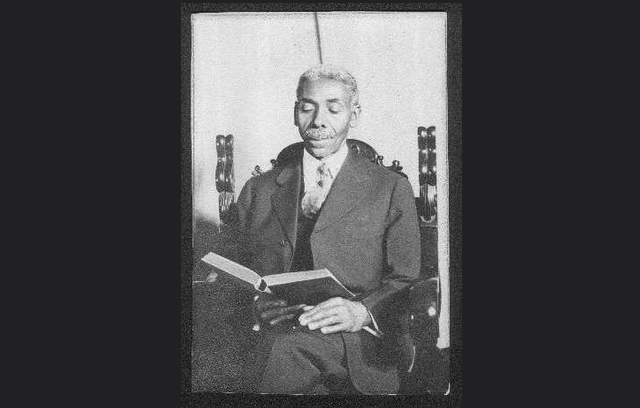
William S. Preston
“Dear PoPville,

Photo by PoPville flickr user Joseph Gruber
Joseph Gruber writes Saturday evening:
“Candlelight Vigil for Paris
Crowds gather at Lafeyette Square in a vigil to honor the victims of the attacks in Paris and show solidarity with France”

Photo by PoPville flickr user Joseph Gruber

Photo by PoPville flickr user Joseph Gruber

Photo by PoPville flickr user Joseph Gruber

Photo by PoPville flickr user angela n.
It is with great sadness that I have learned of the passing of Norm Ralston and Brie Husted. While Norm had moved back to Ohio he was a familiar face to many in the Adams Morgan community. He bartended for years at Angles and was not only a friendly face but he was a genuine friend. It seems cliche to say but when I was going through tough times of my own – Norm was one of the few constants who always turned my mood around. I think those that knew him will always remember his smile and his laugh which fortunately for those who needed it, came frequently. I can hear it right now.

Norm Ralston courtesy Gunnar Larson
One of Norm’s last Facebook posts over the summer said:
Have you ever had one of those days where the bills are paid, the lawn is mowed and gas in the car. Today is my day off. I’m sitting on my porch, a woman walks by (probably 90) and says you look content, I tell her my day. She says “enjoy, your day you’re allowed to have good days in life”.
You brought so many of us good days Normie. May you be content and at peace.

Brie Husted courtesy ‘Memories of Brie Husted’
Brie I did not know as well. But what I do know is that whenever her name was mentioned the person talking about her always glowed. Brie lived in Petworth and was an incredible architect who’s work can be seen all over town. Most recently Brie was part of the team bringing Timber Pizza to Petworth. To Brie’s friends and family you have my deepest sympathies.