Photo of Mandara & Kibibi back in 2009 by PoPville flickr user Pablo Raw

From the Smithsonian’s National Zoo:

“For the first time in nine years, primate staff at the Smithsonian’s National Zoo are making preparations for the highly anticipated birth of a critically endangered western lowland gorilla. With a breeding recommendation from the Association of Zoos and Aquariums’ Species Survival Plan (SSP), the parents to be–15-year-old female Calaya and 25-year-old male silverback Baraka–bred in summer 2017. Animal care staff used a common human pregnancy test to confirm that Calaya had successfully conceived. They are cautiously optimistic that she will deliver a healthy baby between late March and early May, 2018. However, just as with any animal pregnancy, there is a possibility that miscarriage, stillbirth or a complication could occur. The Zoo will provide weekly updates on Calaya’s pregnancy through Facebook, Twitter and Instagram using the hashtag #GorillaStory.


Calaya. Photo Credit: Ann Batdorf, Smithsonian’s National Zoo

“It is a rare and exciting event that we will soon have not one, but two, primate infants at the Great Ape House,” said Meredith Bastian, curator of primates. “Both Redd, our 1-year-old Bornean orangutan infant, and this western lowland gorilla belong to species that are critically endangered in the wild. Our growing primate family gives us an opportunity to highlight the differences between the biology, development and social nature of these amazing animals and inspire Zoo visitors to care about their conservation.”

Calaya came to the Zoo in February 2015 from the Woodland Park Zoo. (more…)


via Smithsonian’s National Zoo

From the National Zoo yesterday:

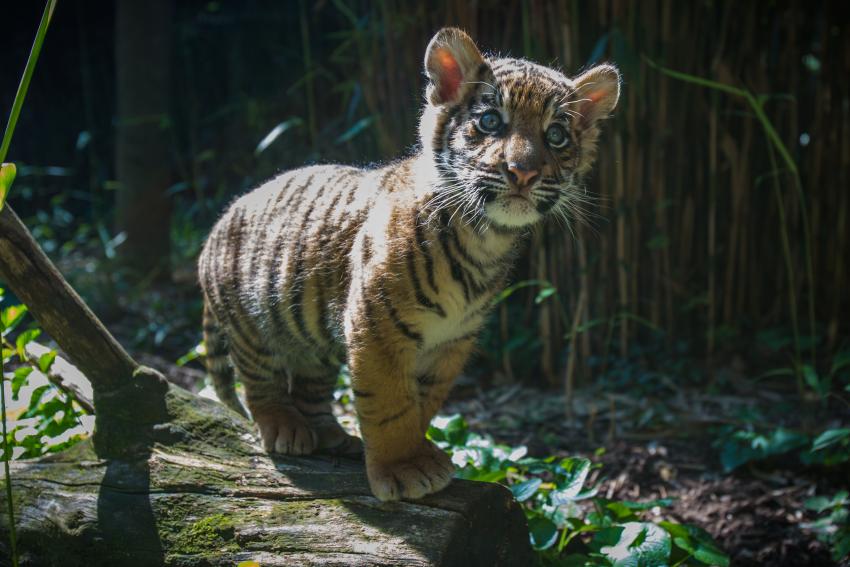
“The Smithsonian’s National Zoo is transporting its 9-week-old male Sumatran tiger cub to the San Diego Zoo Safari Park, where he will live and thrive with another young male tiger cub. Southwest Airlines is providing the transportation for Zoo staff and the cub on the non-stop flight, which departed at 8:25 a.m. EDT from Baltimore-Washington International Airport in Maryland. The Zoo will be sharing moments of the cub’s journey to San Diego on Instagram (@SmithsonianZoo) using “#TigerStory.” The San Diego Zoo Safari Park received a male tiger cub (genetic lineage unknown) Aug. 23 from the U.S. Fish and Wildlife Service. U.S. Customs and Border Protection officers found the cub while inspecting a vehicle that was entering the United States from Mexico. Due to legal restrictions, that cub is not permitted to leave California.

Since Aug. 2, the Zoo’s Great Cats team had been providing support to the Sumatran tiger cub born July 11 through supplemental feeding. When he was just 19 days old, his mother Damai began displaying aggressive behaviors toward him whenever he tried to nurse. It quickly became evident to animal care staff that Damai was either not producing enough milk or had stopped production altogether. (more…)


Photo by PoPville flickr user Brian Mosley

Calm down Dan. The important thing to note is that:

Beginning Aug. 18, the David M. Rubenstein Family Giant Panda Habitat will be partially closed to keep a quiet area around panda Mei Xiang’s den.

However, given how much joy a real pregnancy/baby panda would bring – I’m gonna treat this like buying a Powerball lottery ticket – until those numbers are drawn – I’m a multi-multi-millionaire in my mind. Hello baby panda!!!

More from the National Zoo:

“Although we are not able to confirm if she is pregnant, Mei Xiang is exhibiting expected and normal behaviors after the secondary hormone rise that are in line with both a pregnancy and pseudo or false pregnancy. She is building a nest in her den, has a decreased appetite, is sleeping more and reacting to loud noises. Paws-crossed! (more…)


Photo by PoPville flickr user Eric P.

From the National Zoo:

“The Smithsonian’s National Zoo and Conservation Biology Institute’s team of reproductive scientists, veterinarians and panda keepers performed two artificial inseminations on 18-year-old female giant panda Mei Xiang (may-SHONG) on May 25. The first procedure started at 2 p.m. and the second at 11:30 p.m. Scientists and keepers had been closely monitoring Mei Xiang’s behavior and hormones for the past several weeks. Daily hormone reports showed Mei Xiang’s estrogen levels peaked May 24, an indication that she was ovulating and able to become pregnant. Female giant pandas are only in estrus, or able to become pregnant, for 24 to 72 hours each year. (more…)


Photo by PoPville flickr user Eric P.

And you know what that means…

From the National Zoo:

“Mei Xiang, the Zoo’s 18-year-old female giant panda, is showing behavioral and physical signs of estrus. She has been increasingly restless lately and has been calling to the Zoo’s resident male, Tian Tian, who has also spent a lot of time lately looking for Mei Xiang and calling for her. Mei Xiang has been pacing and has also been sloshing about in a pool of water in her enclosure—typical of both males and females ready to breed. Aside from behavioral changes, scientists have also noticed that Mei Xiang’s external genital area is swollen and pink—another indicator of estrus. Her urine samples, collected daily, also show a rise in her estrogen levels which indicates she is close to ovulation.

Panda breeding can often feel like a race against time, as female giant pandas are able to conceive for barely 36 hours each year in the spring. In that brief window, panda staff hope to give Mei Xiang and Tian Tian an opportunity to breed naturally. “The pandas haven’t successfully bred in the past, but we still give them the opportunity,” says Laurie Thompson, assistant curator of giant pandas. Scientists also plan to artificially inseminate Mei Xiang with Tian Tian’s semen.

Then, it’s several months of waiting to determine if she becomes pregnant. (more…)


orang
Photo Credit: Roshan Patel, Smithsonian’s National Zoo

Welp, I guess today is all downhill from here but it was worth it.

From the National Zoo:

“The Smithsonian’s National Zoo’s nearly 7-month-old male Bornean orangutan infant, Redd, took his first trip on the O-Line April 4 carried by his mother, Batang. The 50-foot-high suspended cable track gives orangutans the choice and freedom to move between their yards at the Great Ape House and Think Tank.”


cheetah-cubs_miti-2017-sbi
Via Smithsonian’s National Zoo

From the National Zoo:

“The start of spring brought a cheetah cub boom to the Smithsonian Conservation Biology Institute (SCBI) in Front Royal, Virginia, where two large litters were born over the course of a single week. Three-year-old Happy gave birth to five healthy cubs on March 23. Seven-year-old Miti gave birth to seven cubs March 28 — two were visibly smaller and less active at the time of birth and died, which is common in litters this large. Both mothers are reportedly doing well and proving to be attentive to the 10 surviving healthy cubs, which have all been successfully nursing. Each litter includes two male and three female cubs.

“The average litter size is three, so this time we’ve got an incredible pile of cubs,” said Adrienne Crosier, SCBI cheetah biologist and manager of the Association of Zoos and Aquariums’ Cheetah Species Survival Plan (SSP), which matches cheetahs across the population for breeding. “In just one week, we increased the number of cheetahs at SCBI by 50 percent. Each and every cub plays a significant role in improving the health of the population of cheetahs in human care and represents hope for the species overall.” (more…)


View More Stories