unnamed

If you have a photo of a neat find from your house or place of work please send an email to princeofpetworth(at)gmail.com thanks.

Thanks to a reader for sending from his house reno near H Street, NE:

“Above:
Honest Measure
Full 1/2 Pint
W NEULAND
Restaurant
Cor. 8th & H St NE

Below:
E.R. DURKEE & Co.
New York

From bottom of the second:
Bottle Patented
April 17, 1877”

IMG_0094


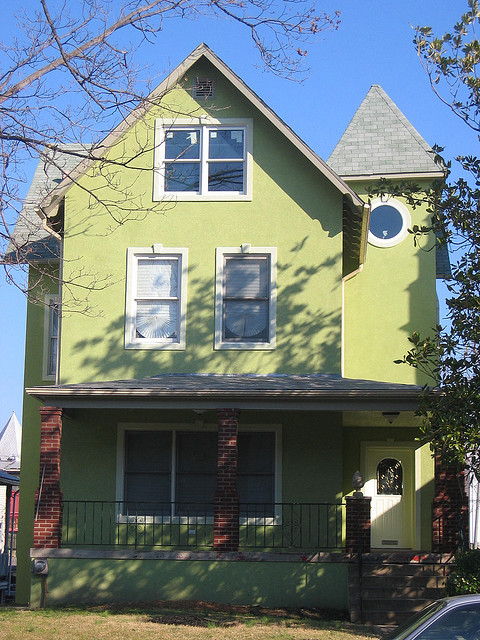
green_condo_13th_st_2008
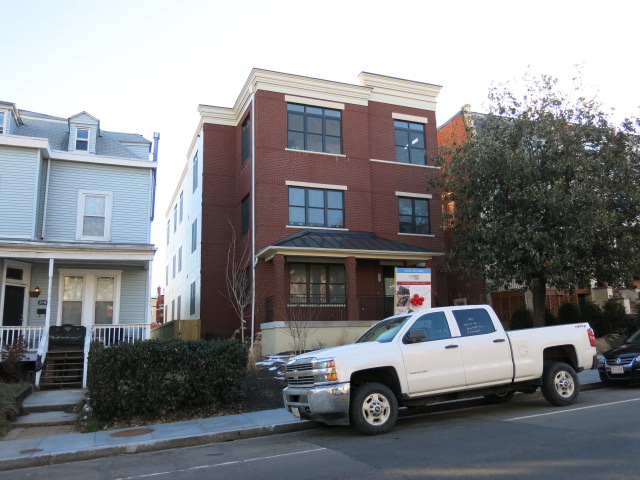
3579 13th Street, NW in 2008

Quite the transformation on 13th Street.

Regarding the request for interns – I’m absolutely overwhelmed by the response. There are so many good, passionate people who have emailed that I don’t know how the hell I’m gonna narrow this down but thank you, thank you, thank you to everyone who has applied. I promise to get back to you by Friday.

And about that green house above – today it’s the 13th Street Flats:

IMG_4760


madmen_silver_spring

If you have a photo of a neat find from your house or place of work please send an email to princeofpetworth(at)gmail.com thanks.

So cool. From the City of Takoma Park:

“Our Planner, Erkin, found some really great old brochures for the Park Ritchie apartments on Maple Avenue; guessing they are from when the apartment complex was brand new. They have a Mad Men-esque / mid-century modern vibe to them.”

madmen_ss_brochure


16401533306_9f1eae42fa_z

If you have a photo of a neat find from your house please send an email to princeofpetworth(at)gmail.com thanks.

Thanks to a reader for sending the second neat find from Stronghold:

“We found this bottle of whiskey in a wall when we renovated the kitchen in our house. The house was built in the early 1900s, 1918 I think, although we also found a newspaper dated 1911. Unfortunately, the bottle was empty”

The reader did a little digging and found:

” Kinsey, as best as I can tell was a whiskey distillery located in Linfield, PA. It had a long, complicated and at times confusing history that goes back to 1891 when it was founded by the 33 year-old Jacob G. Kinsey, includes a dark period during Prohibition, and concludes in 1979 when the bottling line shut down for the last time.”

IMG_0771


16377121286_98fa6d5525_z

Ed. Note: I’d love to make this a regular feature – so what’s the strangest/coolest thing you’ve found in your house? If you have a photo please send an email to princeofpetworth(at)gmail.com thanks.

“These two photos are of a medallion I found in my basement in the 1300 block of Corcoran St N.W. I found it in the middle of the floor and my guess is it fell from the old fireplace from the first floor. Anyway, it seems to be an advertisement for two hotels in Atlanta, Ga that were built in the 1880s and razed in the 1920s. I’ve had it for about 10 years and have always wanted to find out more about this type of coin but was never sure where to turn. The old medicine bottle reminded me I had it.”

Any history buffs want to take a shot at finding more info about this one?

16402179762_c4ddf2798e_z


Slim's_diner_bottle

Another awesome photo from the folks at Slim’s Diner coming to Upshur and Georgia Ave, NW this summer. Ach so freaking cool – Slim’s Diner shares this super cool find:

“During demolition we found this old bottle from Petworth Pharmacy – a previous resident of our building.”

I love the phone number – TA 9-3855.


Streets of Washington, written by John DeFerrari, covers some of DC’s most interesting buildings and history. John is the author of Historic Restaurants of Washington, D.C.: Capital Eats, published by the History Press, Inc. and also the author of Lost Washington DC.

Although the snowstorm that just struck the east coast was not as bad as forecasters feared, it’s worth looking back at one of the most devastating storms from the past. The great blizzard of March 11, 1888 wasn’t even predicted at all in Washington. The weather forecast that day was just for wind and rain, with clear skies to follow. Sure enough, the day began with heavy rains, but by late afternoon it turned suddenly to heavy snow. About a foot of snow fell through the night, followed by fierce winds. It turned out to be a cataclysmic storm, walloping the entire northeastern U.S. and dumping two to three feet of snow in New York and New England. Though Washington was not the worst hit, the storm’s effects had a lasting impact on the city.

Snow possibly from blizzard of 1888 3c09361u
A street-side snow hut made after the massive snow storm of March 1888 (Source: Library of Congress).

“The storm that visited Washington yesterday was one of the most remarkable known for years, The Evening Star reported on Monday, “In fact, the capital seemed to have dropped into the very center of a cyclone that brought with it a blinding succession of rain, snow, wind, and cold…. [T]he city was sheeted in a mantle of white that grew thicker every minute. As the night fell the heavily-laden telegraph wires began to come down, and in many places the streets were blockaded so that street cars had to turn around and make partial trips. The police wires were out of order, and to add to the discomforts of the night the electric lights began to fail. By midnight the city was almost in darkness, save for a few feeble gas jets that had flickered through the storm.” (more…)


Streets of Washington, written by John DeFerrari, covers some of DC’s most interesting buildings and history. John is the author of Historic Restaurants of Washington, D.C.: Capital Eats, published by the History Press, Inc. and also the author of Lost Washington DC.

Washington Circle is the westernmost of the many public spaces laid out in L’Enfant’s plan for Washington City, and it was designed as a circle from the start. To the south in the early days was the low-lying area known as Foggy Bottom, a desolate, semi-industrial neighborhood. Little of the land to the north was developed. While many Washingtonians passed through the circle as they traveled along Pennsylvania Avenue between Georgetown and Washington, few stopped here. Known as the “Round Tops” for the high cupolas on a pair of houses located just to the northwest, the neighborhood around the circle had a reputation for being dangerous. It is usually mentioned in early newspapers in connection with petty crimes. The circle itself was simply a large open area in the middle of the street.

IMG_0807
The statue of George Washington in Washington Circle (photo by the author).

Meanwhile, sculptor Clark Mills created a sensation with his tour-de-force statue of Andrew Jackson on a rearing steed, which was unveiled in Lafayette Square in 1853. Proud of this American-made monument, Congress responded by immediately commissioning Mills to create another statue to honor George Washington. Everyone expected the new memorial to be even more stunning than the Jackson statue. The princely sum of $50,000 was authorized to pay for it.

It’s unclear when or how the decision was made that the new Washington statue would be placed in the circle at Pennsylvania Avenue and K Street NW. Perhaps that decision led to the sprucing up of the circle in 1855, when a wooden fence was built around the central part of the circle, thus forming the city’s first traffic circle. But by all accounts the improvements were minimal; the circle remained a wasteland until the arrival of the Washington statue. (more…)


The Forgotten Space Below Dupont Circle from PBS Digital Studios on Vimeo.

From Unusual Spaces – PBS Digital Studios:

“Each day, thousands of residents, commuters and visitors traverse Washington DC’s Dupont Circle, one of the most historic and iconic neighborhoods in the nation’s capital. Below its well-traveled streets, however, lies a secret unknown to many who pass above: 75,000 square feet of abandoned tunnels that have remained inaccessible for most of the last 50 years.

Built in the 1940s to alleviate traffic concerns in the growing metropolis above, the tunnels allowed for trolley cars to pass under Dupont Circle and pick up passengers at two below ground stations. Following the closure of the DC’s trolley system in the early 1960s, the tunnels were abruptly abandoned. Apart from a brief, unsuccessful venture in the mid-1990s to install a food court on the western side of the tracks, the space below Dupont has been largely forgotten by the world above. In the mid-2000s, a new organization called the Arts Coalition for the Dupont Underground was formed to pursue a new use for the space as a cultural destination. After years of petitioning, the Arts Coalition signed a 5-year lease with the city in late 2014 that will provide an opportunity to test out possible future uses for the space.”

Ed. Note: Last month we spoke about the future plans for this space.


View More Stories