
Photo by PoPville flickr user StreetsofWashington
“U Street NW (c. 1925)
A rare postcard view of U Street NW facing east from approximately 13th Street.”
South side of the street today:


Photo by PoPville flickr user StreetsofWashington
“U Street NW (c. 1925)
A rare postcard view of U Street NW facing east from approximately 13th Street.”
South side of the street today:
Streets of Washington, written by John DeFerrari, covers some of DC’s most interesting buildings and history. John is the author of Historic Restaurants of Washington, D.C.: Capital Eats, published by the History Press, Inc. and also the author of Lost Washington DC.
The Prohibition era in Washington saw the rise of speakeasys and glitzy nightclubs, like Le Paradis on Thomas Circle, which we profiled last March. But the end of Prohibition in March 1934 did not bring an end to the supper club era. On the contrary, supper clubs flourished across the country, and Washington had plenty of them. Silken-voiced singers and lush orchestras continued to offer people an escape from the hard economic realities of the Depression. Exotic décor heightened the sense that one was fleeing to another place and time, to somewhere simpler and more romantic. These were the golden years of the supper clubs, a unique era when dining and entertainment were more closely linked than ever before or since.

Postcard view of the interior of the Mayfair, circa 1935 (author’s collection).
Fourteenth Street downtown hosted some of the biggest supper clubs, including the Casino Royal and Lotus Restaurant, but there were many others, including popular night spots at most of the city’s major hotels. One club that opened in 1935, the year after Prohibition ended, was the Mayfair Restaurant, nicknamed the “Café of All Nations.” It was located in a new office building at 13th and F Streets NW, in the heart of Washington’s theatre district. Within a block or two were the National and Warner theaters as well as the Palace and Capitol movie theaters. The restaurant quickly became one of the city’s most popular after-theater spots. (more…)

I love stumbling upon these. Not too many left around town.


From an email:
“On Tuesday 12/16, we shine the spotlight on Bloomingdale, past and present. The event takes place at Big Bear Cafe (1700 First Street NW), from 6.30-8.30pm.
Here’s the twist: Rather than tracing its evolution through percentages about rising rents and new businesses, we’ll focus on community voices. In addition to our amazing panelists (listed below), we’re inviting people to share their photos, posters, stories, little-known facts, etc — anything that addresses the evolution of Bloomingdale’s urban space and community.
We’re interested in the architecture, stories, traditions, and most of all, the multiple facets of lived experience that make up the neighborhood’s history. From childhood to churches, parks to parades, street art to community relations, we welcome an array of viewpoints about urban transformation. Photos (and stories) can be uploaded to the Council’s blog (http://hcwdc.blogspot.com/) or brought in that evening.
Natalie Hopkinson, Ph.D, author of Go-Go Live Ph.D, author of Go-Go Live
Saaret Yoseph, multimedia storyteller; director/producer of The Red Line D.C. Project
Scott Roberts, community activist and blogger of Bloomingdale
Autumn Saxon-Ross, Program Director, Joint Center for Political and Economic Studies
Stuart Davenport, owner and manager of Big Bear Café”

From the DC Campaign to Prevent Teen Pregnancy:
“THE FAMILY AND FRIENDS OF
Algernon (Jay) Cooper, III
CORDIALLY INVITE YOU TO JOIN US A MEMORIAL
CELEBRATION OF HIS LIFE AND WORK
DECEMBER 8 at 6:00 PM
BUSBOYS AND POETS
1025 5TH STREET NW
WE REQUEST YOU BRING YOUR THOUGHTS, PRAYERS, AND FONDEST MEMORIES OF AJ AS WE MOVE FORWARD
TOGETHER AND ALWAYS CHOOSE PEOPLE OVER POLITICS. WE WOULD LIKE TO THANK YOU FOR YOUR CONTINUED
SUPPORT TO OUR FAMILY AND YOUR CONTRIBUTION TO AJ COOPER SCHOLARSHIP FUND AT DC CAMPAIGN TO PREVENT TEEN PREGNANCY.
All I can say is that all of the emotions you are feeling need to be channeled into political power. Let that burning feeling in your gut be the fuel to power a movement. Otherwise when the smoke clears all we will have left are tears and ashes. – A.J. Cooper, December 2014
Funeral services for Algernon “Jay” Johnson Cooper, III will be held on Tuesday, December 9, 2014 at Nativity Catholic Church, 6001 13th Street NW, Washington, DC 20011; beginning with family visitation at 10:00 AM and Mass of Christian Burial at 11:00 AM. The family requests that in lieu of flowers or cards, contributions be made in Jay’s honor to DC Campaign to Prevent Teen Pregnancy, 1112 11th Street NW, Suite 100 Washington, D.C. 20001.
Friends are invited to join the family for a repast in the Nativity Catholic Church Community Room immediately following the service.”
Photos courtesy of the Executive Office of the Mayor:


Thanks to all who sent emails about the sad news (also discussed in yesterday’s rant/revel) – from the Washington Post:
“The death was confirmed by his mother, Brenda Rhodes Miller, who said he died “suddenly” Wednesday morning.
Last month, Cooper announced his intention to seek the Ward 4 council seat being vacated by Muriel E. Bowser, who will become mayor Jan. 2.
Cooper had become engaged to be married last week, according to a family statement.”
Streets of Washington, written by John DeFerrari, covers some of DC’s most interesting buildings and history. John is the author of Historic Restaurants of Washington, D.C.: Capital Eats, published by the History Press, Inc. and also the author of Lost Washington DC.
One of Washington’s perennial struggles has been to find suitable indoor venues for large public performances, conventions, and other events. The first convention hall was the one built at 5th and K Streets NW in 1875, which we profiled in 2010. It had many limitations, and by the beginning of the twentieth century, city leaders craved something more worthy of the nation’s capital. As we saw last June, Susan Whitney Dimock (1845-1939) tried unsuccessfully to have a grand George Washington Memorial Hall built on the mall. But even as the cornerstone for that project was being laid in November 1921, the city’s business leaders decided—wisely—not to wait for it. Instead they raised funds entirely on their own to demonstrate the business community’s independent ability to build a large, elegant new auditorium to meet the pressing need. But the beautiful and expensive theater they built would entertain Washingtonians for just ten years before being taken over by the federal government for office space.

The Washington Auditorium in 1926 (author’s collection).
The effort to build the Washington Auditorium, as it was called, was headed by “Colonel” Robert Newton Harper (1861-1940), a native of Leesburg, Virginia, who was president of the American National Bank. Harper broke fundraising up by commercial sector, with 100 different committees of business leaders in charge of raising $5,000 each. True to their business roots, the organizers decided to offer subscriptions to the project as investments, equally split between stock and bonds, rather than charitable contributions. Philip King, president of the Merchants and Manufacturers Association, pledged to head one of the fundraising committees, and in a letter to Harper he summed up the rationale for the new auditorium: “Not merely from the standpoint of the dollars that come to the community from a big assemblage but more particularly from the better understanding and educational factors, do big conventions appeal to me as an admirable acquisition to the community. Great gatherings of tradesmen, of the professions and all classes of people generally tend to the refining and betterment of all who come within the range of such gatherings.” (more…)
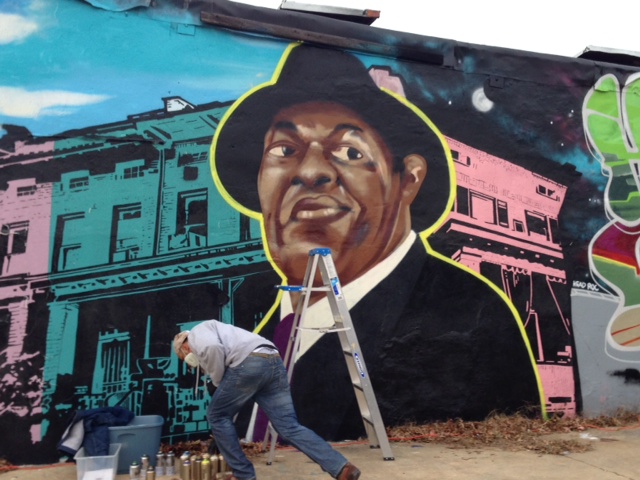
From a press release:
“Mayor Vincent C. Gray, D.C. Council Chairman Phil Mendelson and representatives of the family of Marion S. Barry, Jr. today released the details of memorial event for the late Ward 8 Councilmember and former Mayor of the District of Columbia.
“From his days as a leader on the front lines of the civil rights movement to his work to fight poverty and advance Home Rule for the District, Marion Barry leaves behind an incredible legacy,” said Mayor Gray. “It is fitting that we come together as a city to celebrate this legacy and allow the entire District to say goodbye to the ‘Mayor for Life.’”
The schedule of memorial events is as follows:
Thursday, December 4 to Friday, December 5
9:00 a.m.: Brief ceremony to receive Mayor Barry’s casket at the Wilson Building, where his remains will lie in repose for 24 hours.
John A. Wilson Building
1350 Pennsylvania Avenue NW
Friday, December 5
10:00 a.m.: Mayor Barry’s body to travel to one of the churches he regularly attended
3:00 p.m. – 6:00 p.m.: Musical and video tribute celebrating Mayor Barry’s 40 years of public service
6:00 pm – 9:00 p.m.: Community memorial service
Temple of Praise
700 Southern Avenue SE
Saturday, December 6
8:00 a.m. – 3:00 p.m.: Thousands to attend a celebration of Mayor Barry’s life and legacy
Walter E. Washington Convention Center
Halls C & D
801 Mount Vernon Place NW
8:00 a.m. – 11:00 a.m.: Viewing
11:00 a.m. – 3:00 p.m.: Memorial Service
Private burial immediately following.”
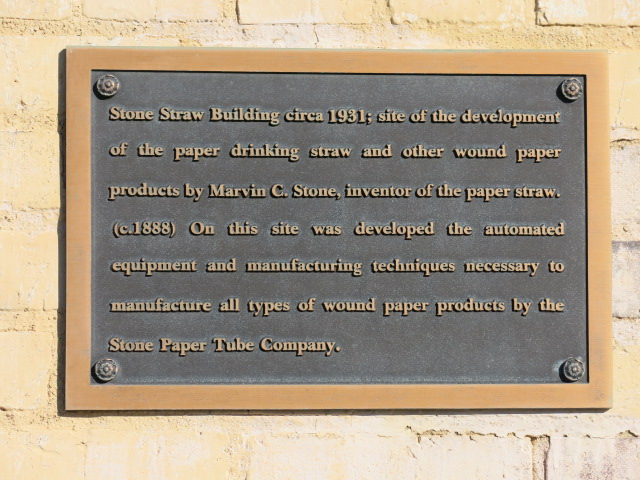
Spotted this on my way to check out Right Proper’s new brewery in Brookland:
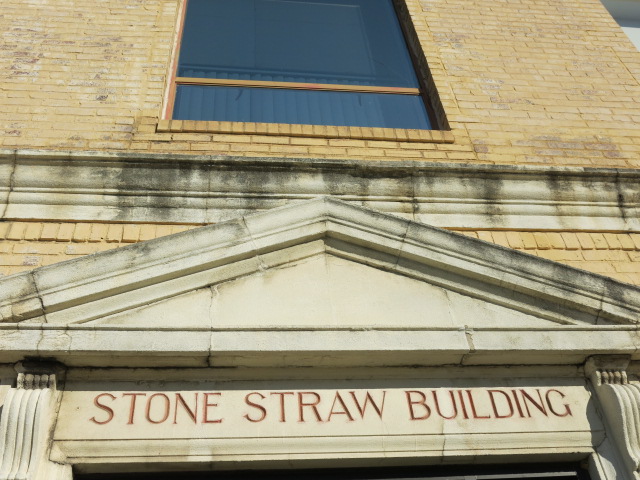
Now home to Metro Transit Police Training.
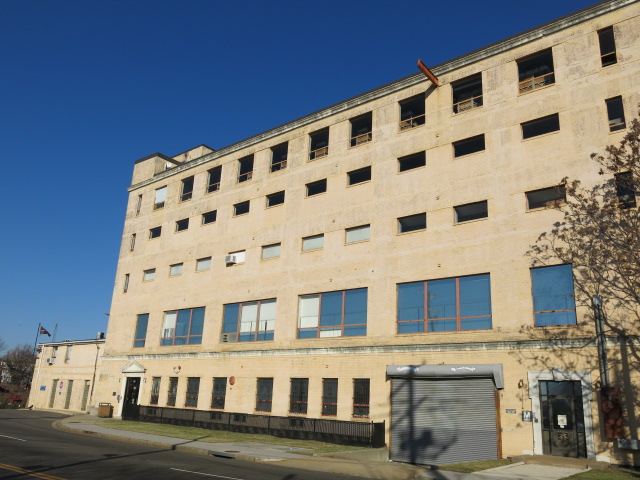
900 Franklin Street, NE