Photo by PoPville flickr user fromcaliw/love

“Dear PoP,

We’ve had a pile of small interactions with our landlord that have added up to a major headache for our basement unit, so I took the advice from the last Griffin&Murphy column featured and checked with the Department of Housing and Community Development Rental Accommodations Division to see if my landlord is properly registered with the city (he’s not).

What’s the process that happens after you report a landlord who is renting illegally to the city? My house is zoned incorrectly, my landlord doesn’t have a Basic Business License, and I’m assuming he hasn’t been paying any taxes from rental income to the city this entire time. I don’t want to move out, or force my roommates to, but I do want my landlord to realize he doesn’t have authority to treat us disrespectfully or ignore our issues with the unit. I’d like to flex what muscle we have and I don’t think it’s fair that some home owners go through tremendous amounts of work to get their units up to code and approved by the DCRA while others simply ignore the law.”

Unfortunately the legal column has gone on hiatus due to time constraints but in the past readers have often been helpful providing advice as well. Does anyone know what next steps should be taken by the reader?


“Dear PoP,

I don’t normally comment on blogs or contribute but our current situation has compelled me to see what other people think, good or bad about our somewhat “interesting” rental situation. We relocated in June because of work and had to find a place pretty quickly. We looked at upwards of 30 places in DC and MD. Upon my initial visit to the current property, the person showing the property lived in the basement unit. The owner lives in California. I asked how issues were handled and was given the response that we would let him(basement resident) know and then he would let owner know and get whatever needed to be done and paid for. The place was not “clean” when I went through but was assured verbally that it would be cleaned before we moved in. There was also an issue with the bathroom that he was upfront about and told me that it was in process of being taken care of and I believed him.

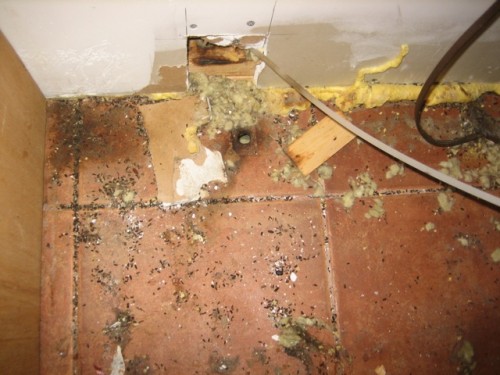
After we arrived ahead of our things which were being transported by a moving company, we noticed the place had not been cleaned AT ALL, and probably hadn’t been cleaned ever in years. We moved some furniture that had been left behind and found piles of rodent feces and their “attempts” at catching said rodents. I alerted basement guy and he acted shocked and said “he had no idea”. I won’t go into details but we spent 3 days cleaning, scrubbing, etc. to even get the place livable and spent an extra night in a hotel because we didn’t have time to unpack anything the first day. I demanded the owner’s phone number and called him immediately. We spoke and he assured me that all the issues which start with:

Continues after the jump. (more…)


Photo by PoPville flickr user AWard Tour

“Dear PoP,

I’m writing on behalf of a friend of mine. She is Ethiopian and lives in an apartment on 13th St., NW. She has been having problems with bedbugs and contacted her landlord. She tells me that her landlord responded that it wasn’t his responsibility and that only his Ethiopian tenants had problems with bedbugs. I don’t know about that but it seems he does have a responsibility to take action on the bug infestation. What would you advise?”

We learned how devastating bed bugs can be last week. I would think that it is absolutely the responsibility of the landlord to attempt to treat this problem with regular extermination visits. Does anyone know what government office should be contacted for this situation? DCRA?


Photo by PoPville flickr user BrennaLM

“Dear PoP,

I recently moved out of a rental that I had lived in for two years. It wasn’t in the best condition (i.e. mold on the walls) and getting anything fixed was a prolonged battle (for example, it took about two weeks for my heat to get fixed last winter). I have a feeling my landlord is going to try to keep my security deposit (she’s just that wonderful of a person).

I’m fully ready to sue her for it (as I had to with my two previous landlords), but I was wondering about something else. I’m pretty sure that she never got the proper permits/licenses to rent the place. It didn’t show up on DCRA’s online database, plus the condition of the house would indicate that an inspection never took place (it was a really good location/price). I’ve heard that if she does not have everything in order that I could get my rent for the past two years returned to me. Is this true?”

Hmm, I’d be surprised if you could get your rent returned, that seems unrealistic. Has anyone else dealt with a situation like this?


Photo by PoPville flickr user fromcaliw/love

“Dear PoP,

Last week, during the brief but heavy thunderstorm, a solid 3/4 of my room was swamped with rain water. Nothing of value was ruined but, after the landlord’s inspection, it seems the issue is being blamed on me. Why? My window, which holds an air conditioning unit, had a half-inch gap on the left and ride panels of the window frame which hold the air conditioning unit. This window, the same window that has been open that very same half-inch between the AC unit and window panel throughout the entire spring / summer, has yet to allow even a drop of rain water into my room (I should know, I sleep right next to it). Yet, somehow, these 2 tiny gaps now have the power to allow nearly all of my 14×16 bedroom to become drenched with rain water. What makes this accusation even more shocking is that there is another row house, standing tall, no more than 6 feet directly in front of my window that extends around and is also 10 feet to my window’s right…which pretty much means the only way any water would have slammed through those small cracks was if someone literally stood there and dumped gallons upon gallons into my room.

My point is, I believe it is something structurally wrong house itself that caused this flooding, which the landlord is choosing to ignore for now (I was told to wait a week and let everything dry). So, assuming I were to sit back and do nothing (which I do not plan to do), I would be stuck with soggy floors, a smelly room, and the potential for mold.

My main question for you – is this a leasebreaker? There is nothing specific mentioned in my lease terms regarding any sort of structural damage not caused by the tenant. Are there laws against a landlord refusing to fix a flooded apartment / bedroom / basement / any form of rental property that is inhabited by a person?”

Anyone dealt with a similar situation? Who needs to take the responsibility here?


Photo by PoPville flickr user a.w.miller

“Dear PoP,

When a landlord determines that there has been damage that needs repair, what is his or her responsibility to defend the expenditure of the security deposit? Must he or she provide documentation of the damage caused and the repair costs? What if any laws are in place to protect tenants from landlords who abuse their security deposit and to ensure the deposit is used only for legitimate repair purposes?”

Anyone ever dealt with landlords using your security deposit before?


Photo by PoPville flickr user AWard Tour

“Dear PoP,

Wondering if I could pick your brain (or your readers’ brains if you decide to post this) on lease-breaking in the city? I moved into my apartment just south of Dupont Circle on January 15. I am legally obligated for rent until January 31, 2011.

I’ve recently had a ‘come to Jesus moment,’ and decided that I’m quitting my six figure government job to pursue a writing internship out West. I intend to leave work in September and move on October 1. This would leave 4 months of an unexpired lease for which I am legally obligated. Since I harbor no fantasy of just splitting, what is the likelihood that this can end up a win-win for the landlord and I (for the record, the landlord is corporate, Keener Management, but is managed by a very nice property manager on-site)?

My initial instinct is to simply tell the landlord on July 1, and ask what the win-win solution he recommends is. In this city, is it simply that a) I would need to find someone to fill the remaining 4 months, and then the lease is legally turned over b) that we would need to find someone to sign a full year lease starting in October or c) I need to sub-let and manage it myself?”

I’m guessing if you or the company found someone to take over your lease they wouldn’t have a problem with it. Anyone ever face a situation like this?


Photo by PoPville flickr user AWard Tour

“Dear PoP,

I’m moving out of the condo that I rent at the end of the month, and the building management is charging me an unreasonable (I think) amount to do it. They’re asking for $150 as a “move out fee” and $85 to cover the costs of a security guard who will supposedly guard the unlocked front doors (to the building) while the move is taking place.

The $150 fee is not for covering costs in case my furniture damages their elevator or door. They’re requiring me to give them a $750 security deposit check for damages, which they’ll return to me at the end of the move.

This is their policy — I had to pay it when I moved in as well, but it’s been several years since then, and I’ve had more time to stew over it. It also was not in my lease; my landlord only casually mentioned that there were move-in fees for the building.

So my question is — does anyone know if I’m obligated, legally or otherwise, to pay these people just to remove my belongings from their building? I feel like it’s a hostage fee!”

I think if it’s their policy and if it’s in the lease then, even though it sucks, you gotta pay it. What do you guys think? Is this an unreasonable fee?


Photo from PoPville flickr user District Shots

“Dear PoP,

We live in a large rowhouse served by a downstairs heating system (first floor: kitchen, dining and living rooms) and an upstairs heating system (bathrooms and all 5 bedrooms). The upstairs heating system (a heat pump) failed three weeks ago. The downstairs heating system has experienced problems but is running at the moment. Without the upstairs system, the bedrooms are about 55 degrees. I can get mine to 62 if I run my space heater full time. The downstairs is usually a balmy 65 degrees (setting the thermostat higher causes the system to run constantly due to the house’s poor windows and insulation).

The landlord contacted a contractor after the system failed. The contractor has made several visits, each time a different technician. Each technician claims to know what is wrong and how to fix it, usually with a new part. We wait a week for the part to arrive, then another technician comes and installs it. Nothing so far has fixed the system, and each technician finds something else wrong with it. First it was a sensor problem, then a different sensor problem, then a circuitboard, then the thermostat, then the fan motor, then something else. The blizzards didn’t help the matter. The last technician to come indicated the system is somehow clogged by the snow.

We continue to communicate with the landlord. She says she is unable to come to the house to meet the technicians, so one of us roommates has to scramble whenever the contractor calls to say their van is on the way. We all work full time and cannot keep leaving our jobs in the middle of the day. Another contractor visit is scheduled for later this week, but if it fails to get the system running again, we’re approaching a month with 55 degree bedrooms and bathrooms while paying full rent (and the landlord just raised rent 4% in October). We are considering withholding some or all of our rent to protest the conditions and ensure the landlord has a concrete incentive to get the system fixed. Does anyone have experience with doing this? Could it backfire, and if so, in what ways? What does the law say about situations like this, where the house is technically livable but unpleasant? Any other suggestions about how to deal with the problem?”

Should they withhold rent? Anyone face a similar situation?