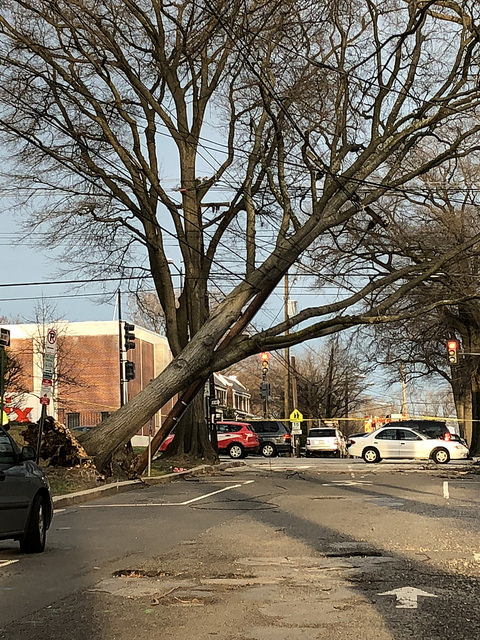
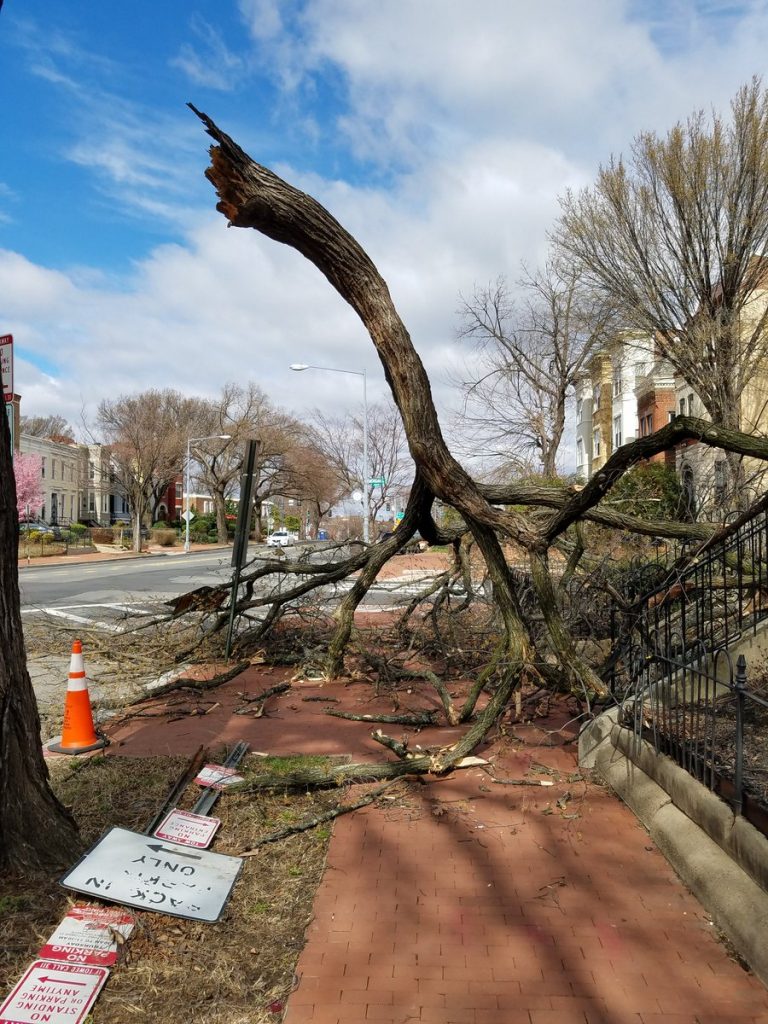
Photo by PoPville flickr user Pablo Raw

The following was written by by Robert Robinson Chair, DC Consumer Utility Board. PoP-Ed. posts may be written about anything related to the District and submitted via email to princeofpetworth(at)gmail please include PoP-Ed. in the subject line.

Ed. Note: DC Water has tweeted: “Each of our customers pays the Impervious Area Charge (IAC) on their bill. Here’s the history behind it.”

“For years DC’s Combined Water and Sewer (CSS) system spewed sewerage into the Anacostia and Potomac Rivers and Rock Creek during heavy storms or snowmelts.

For years, beginning in the 1980s, my DC water bills informed me that I was paying charges to replace the CSS.

I doubt that any of that work was done before 2005.

Now there’s hell to pay.

Low-, middle-, and fixed-income families, senior citizens, churches and nonprofit organizations, and small businesses are paying the lion’s share of the clean-up costs–with ever-rising water bills.

So, kudos to NBC4 Investigative Reporter Jodie Fleischer for for shining a light on DC Water rates that threaten to drive residents off of their property.

At the heart of the problem is D.C. Water’s $ 2.6 billion system to stop the Combined Sewer System’s overflows from contaminating the Anacostia and Potomac Rivers and Rock Creek, by containing the effluent in a mammoth two-tunnel system and sending it to DC Water’s 153-acre Blue Plains wastewater treatment facility.

The system is funded by the Impervious Areas Charge (IAC) under a Clean Rivers Project created by a 2005 Consent Decree.

But why does St. Paul’s Rock Creek Parish Church cemetery — thick with trees and graves and few impervious roads — pay a $200,000 impervious Area Charge annually, comparable to the $209,000 paid by the Washington, DC Nationals Stadium?

It’s not like the cemetery’s dead are producing stormwater runoff, drinking water, showering, flushing toilets and doing laundry at the rate of a 44,000-seat stadium that operates 19 parking lots. (more…)


Photo by PoPville flickr user Pablo Raw Raw

From an email:

“PoPville’s post on our geysering DC Water bills, and the comments it garnered, helped convince ANC 4D a community Water Forum was needed to support productive discussion on the city’s increasing water challenges.

Hello, neighbors,

Strange and frightening charges are turning up on our water bills.

And, as the heavy rainstorms last summer proved, DC residents are experiencing more-frequent dangerous flooding in our homes and streets.

As DC careens into a new, wetter climate era, what do these alarming trends portend for us? And what can we do about them?

Ask your questions, and get answers at the ANC 4D Water Forum:

Tuesday, Oct. 24, 6:30-8:30 pm

Washington Latin Public Charter School

5200 2nd St NW (between Ingraham and Hamilton)

This will be a calm, respectful, yet candid engagement with DC Water and DOEE representatives aimed at getting the real story behind all the bill increases and the environmental challenges ahead. We will also hear how City Council is researching these issues and what it is considering to do in response.

Best regards,
Nancy E. Roth,
Commissioner, ANC 4D”


Photo by PoPville flickr user Rob Cannon

“Dear PoPville,

Do people have experience with the Customer Choice options to Washington Gas? We are moving and will have gas in our new home (woo hoo!), but am curious if we should go with the Washington Gas standby (which has awful reviews on Yelp), or opt for one of the other options available. Any advice is much appreciated!

From DC’s Public Service Commission website:

Currently, three competitive suppliers and WGL accept new residential customers. They are:

Gateway Energy Services (877-893-6374 or e-mail [email protected])
NOVEC Energy Solutions (888-627-7283 or e-mail [email protected])
Washington Gas Energy Services (888-884-9437 or e-mail [email protected])
WGL (703-750-1000 or e-mail [email protected])”


Photo by PoPville flickr user Eric P.

“Dear PoPville,

From Councilmember Todd’s newsletter which features a message from DC Water (see excerpt below). The “retroactively charging” is extremely concerning and raises more questions than it answers. How far back will they go? Could a homeowner be responsible for a previous owner’s “underpaid” water bills? I think this is definitely something readers would be interested in given past posts about people experiencing high water bills.

“While it may be frustrating to now see your bill increase, we feel pretty strongly that it makes the overall system better to have everyone paying for precisely the water they use – no more and no less. And in most cases we are retroactively seeking payment for the water that we undercharged customers for.”


Ed. Note: hahaha

“Dear PoPville,

I was wondering if folks could help me out with a question I have. I was looking at long-term trends on my PEPCO bill to see what my household could be doing better and found this interesting pie chart in my account info.

Besides the obvious takeaway that we should turn down the heat on our house’s water heater, I was wondering what the heck the pool charges might be referring to. We live in a Columbia Heights row house. Definitely no pool that we know of. Anyone have any ideas so we can do better by the environment and for our bill? Thanks!”


Photo by PoPville flickr user Pablo Raw

“Dear PoPville,

In early February, DC Water sent our 4-unit condo building in Shaw/Logan Circle a $15,611.19 water bill, claiming we used more than one million gallons of water. This is not humanly or scientifically possible. The bill itself even eludes to that, noting that the $15,611.19 charge is based on their estimate of our water use – because they’d discovered our building’s meter wasn’t working properly.

Our condo building quickly sent DC Water a formal response via email seeking answers – ranging from why DC Water didn’t notify us there was a problem with our building’s meter, to why 45-days is considered appropriate notice when requiring a building to supposedly pay for over a year’s worth of water usage, to what’s the protocol to set up a meeting with DC Water to discuss the matter and so on. We received an automatic reply from DC Water saying our letter was received, but there was no further correspondence from DC Water.

Receiving no response, we resent the email and once again received an automatic reply acknowledging receipt. This time, we wised up and also sent our formal response letter via certified mail to DC Water. Thanks to USPS, we knew that was also delivered and received by DC Water…. And you guessed it, no response. (more…)


“Dear PoPville,

DC Water started construction on the First Street Tunnel project in Bloomingdale in 2014. Before construction began, they visited most homes in the neighborhood to perform pre-construction surveys and document existing home conditions. We completed this survey because the construction of the tunnel would happen less than 100 feet from our house.

Over the course of the construction of the tunnel, our home started to exhibit cracks in the dry wall that were indicative of foundation damage. The addition to our home, built in the early 2000s started to pull away from the original house. A structural engineer and a foundation repair company both confirmed the damage, which was not present in the pre-construction survey nor in our home inspection completed in 2013.

At the conclusion of the project, DC Water sent requests for claims associated with the construction to be managed by their insurance company, ESIS. I filled out the claim, provided documentation and they followed up with site vists from not one, but THREE engineers of their own. (more…)


Silver lining: By Monday we oughta cool down to 92 degrees. Oof. Thanks to Andrew for sending:

“Pepco turning off electricity for customers around the Sherman and Irving area. Shutting off my whole building at 3101 Sherman. Heard other neighbors shut off as well.”


View More Stories