Original Hamilton-Burr Dueling Pistols on Rare Public Display
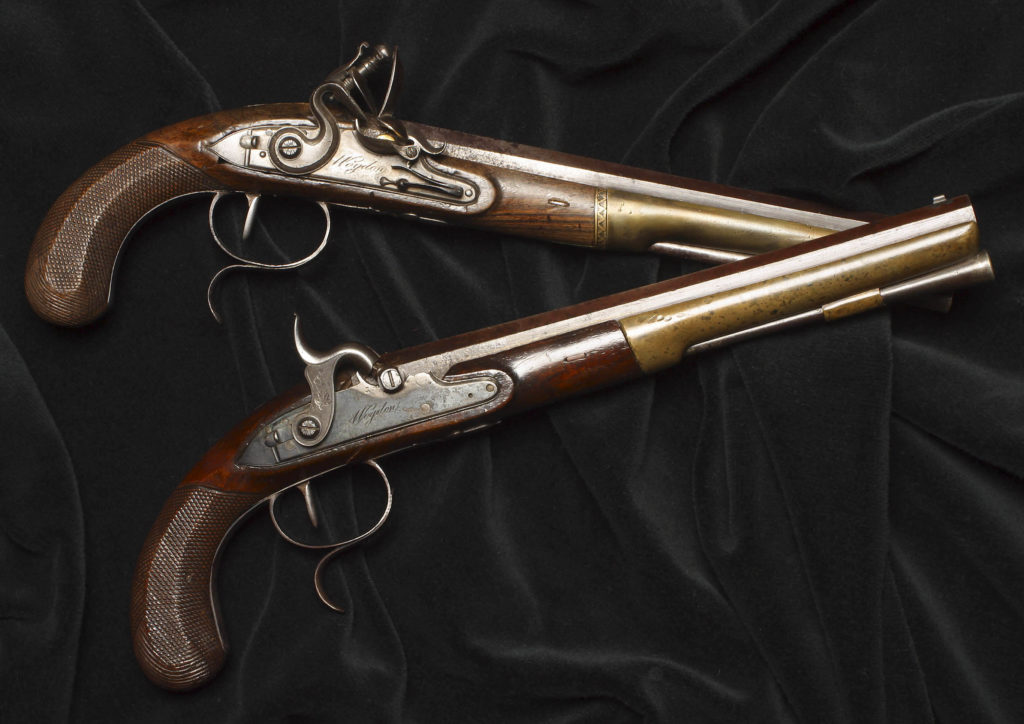
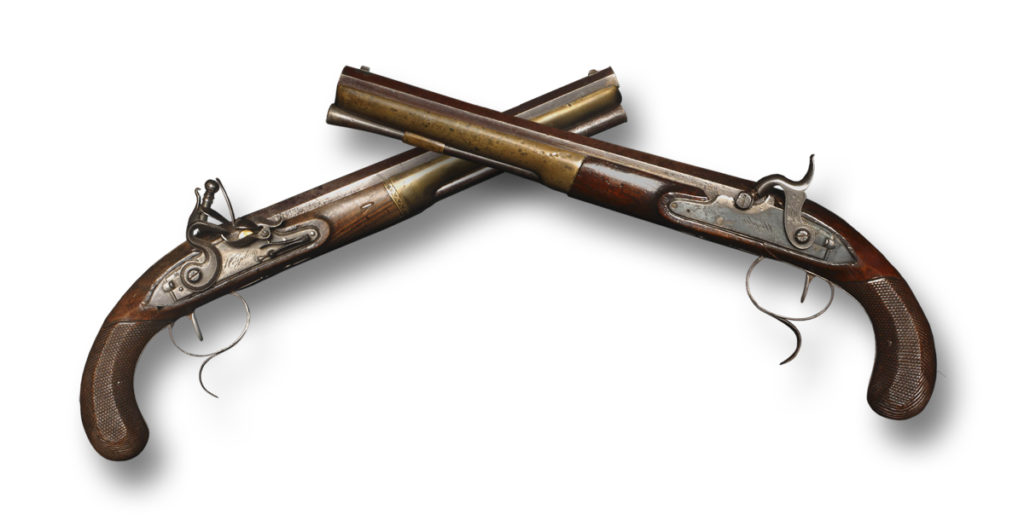
The original pistols used in the infamous 1804 duel between Alexander Hamilton and Aaron Burr are now on display at the Smithsonian’s National Postal Museum.
The rare public showing represents the first time the pistols have been on public display in the Washington area.
They are featured in the exhibition “Alexander Hamilton: Soldier, Secretary, Icon,” along with mail, portraits and postage and revenue stamps reflective of Hamilton’s life and career as the first U.S. treasury secretary.
The full exhibition remains on view through next March. Its opening coincides with the June opening of the hit Broadway play, Hamilton: An American Musical, at the Kennedy Center in Washington, D.C.
The original dueling pistols used by Hamilton, former secretary of the treasury and retired two-star general, and Vice President Aaron Burr in the duel that resulted in Hamilton’s death are on loan to the museum from JPMorgan Chase & Co.
Hamilton was born on the British Caribbean island of Nevis in 1755, deserted by his father at age 11 and raised by his mother who died when he was 13. Shortly after his arrival in New York in 1772, long-simmering tensions between Great Britain and its North American colonies erupted into open war.
An orphan with few influential connections, Hamilton saw the American Revolution as an opportunity for rapid social advancement. He committed to the revolution and decided he and America would sink or swim together.
In a scene that is scarcely imaginable today, on July 11, 1804, Burr killed Hamilton in a duel. Burr had lost the U.S. presidential election of 1800 and the New York governor’s race of 1804. He blamed Hamilton’s outspoken opposition for both losses — especially a letter attributed to Hamilton and published in the Albany Register that referred to Burr as “despicable.” Burr then issued the challenge to a duel, which was set for a location outside New York City in nearby New Jersey.
In the 215 years since his untimely death at 39 in the duel with Burr, Hamilton has become an American icon. Stamps, money, movies, television miniseries, and now a hit Broadway musical, commemorate his meteoric rise and his sweeping vision for America’s future.