

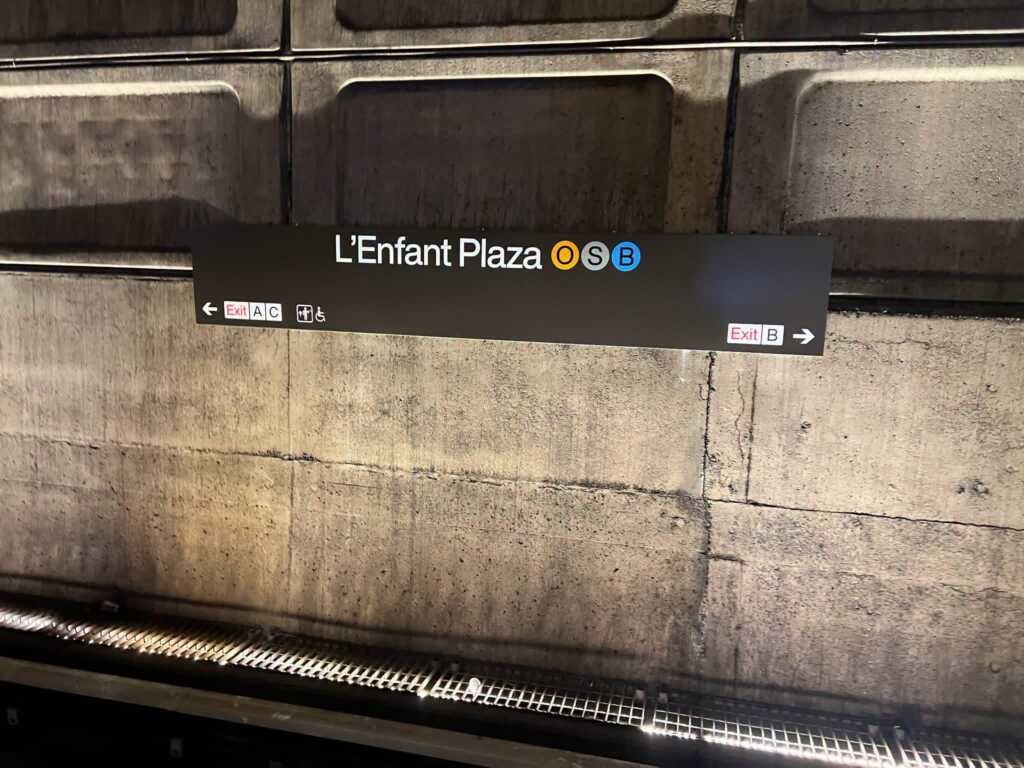
An upgrade or downgrade?
All the info from WMATA:
“A new way to find your way
Metro is introducing a new Metro Rail wayfinding system designed to make traveling clearer and more consistent. It has been carefully designed to honor the legacy our region inherited 50 years ago.
The new system begins rolling out with the first signs installed at L’Enfant Plaza in September 2026. By the end of October, customers will see a fully restored station with updated signs and navigation information.
Metro plans to bring the new wayfinding system to five more stations over the next six months.
The redesigned system gives customers the right information at the right point in their journey, whether they are entering a station, finding a platform, transferring between lines, locating an elevator, or choosing the correct exit.
What customers will notice
The new wayfinding system is more than a redesign of individual signs. It creates a consistent visual language across both rail and bus systems, so that customers can recognize information and decide where to go with increased confidence and ease.
The new system considers the full path through a station and places information at key decision points.
These improvements will help customers:
Recognize the correct station entrance
Identify the correct rail line
Find an accessible route
Choose the correct platform
Confirm the train’s direction and stations ahead
Transfer between services
Select the correct exit
Continue to a street, landmark, bus, airport, or regional connection
By treating these steps as one connected experience, Metro can provide consistent visual cues throughout the trip and avoid repeating information where it is not needed.
Clearer, simpler signs
Signs will focus on the information customers need when they need it. Simplified, structured, and consistent layouts reduce visual clutter and make directions easier to scan. The system uses progressive disclosure, providing information at the point in the journey when customers need it rather than placing every possible message on every sign.
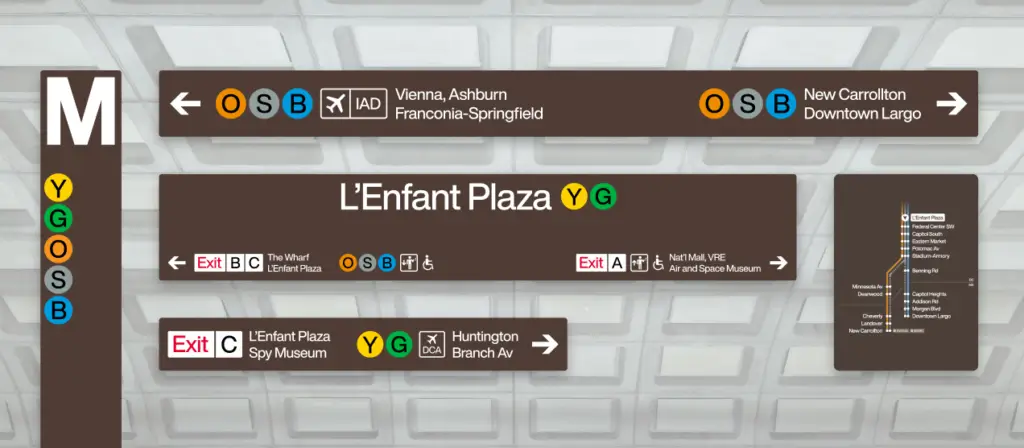
Tested before rollout
Metro has used several methods to develop and evaluate the new system, including:
Customer surveys
In-station paper testing
Task-based virtual-reality testing
Design stress tests
Observation during pilot installations
These methods allow Metro to examine specific questions, then test and observe realistic customer navigation tasks in the station.
What to expect during installation
Customers may see crews working in the station, temporary signs, or individual signs being replaced at different times. Not every element in a station will change at once.
What to expect over the next five years
The entire system update is expected to take place over the next five years.
As the work progresses, Metro will provide updates, and we look forward to receiving customer feedback.
Built to be consistent and easier to update
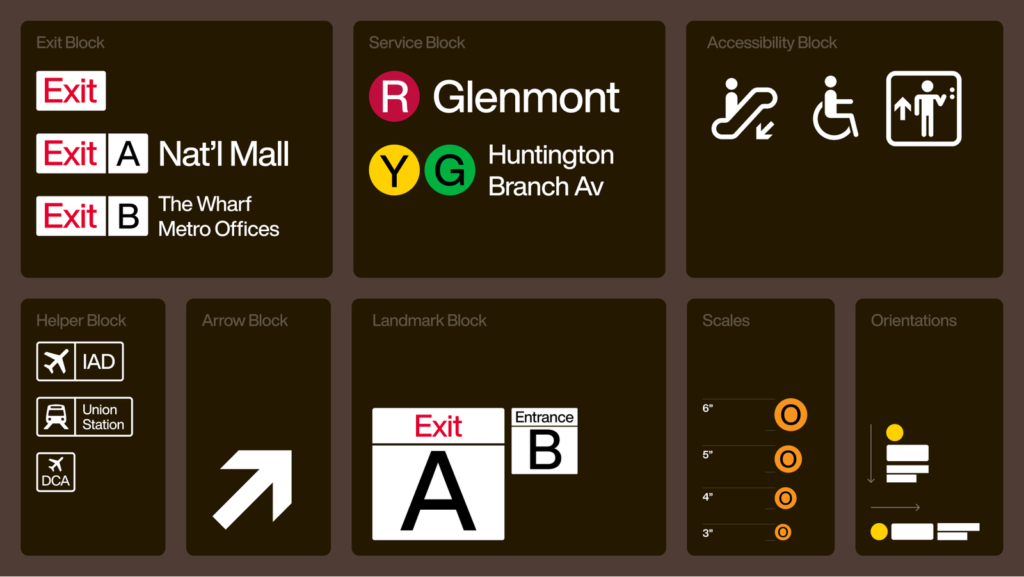
The new system separates the graphic design of a sign from the physical sign hardware. Metro can apply a shared library to existing sign types, with limited hardware changes where needed.
Signs are assembled from modular graphic components. This approach supports a more consistent yet flexible system that can accommodate the variety of signs in our system and allows signs to be produced and updated more efficiently.
Over the course of this project, vault wall sign hardware will be made more consistent systemwide. This change will enable maintenance teams to replace signs when needed without spending as much time in the field confirming as-built conditions. Time saved is money saved, enabling teams to maintain the system quicker and to a higher standard for our customers.
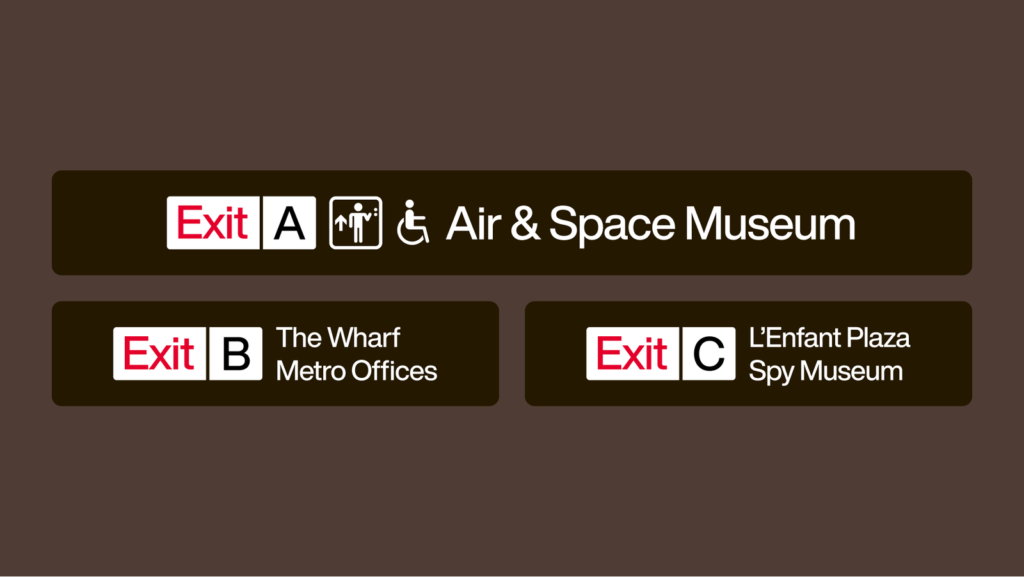
More prominent exit lettering
Lettered exits help connect station directions with destinations outside the station. Points of interest are displayed in a stacked format that is easier to scan.
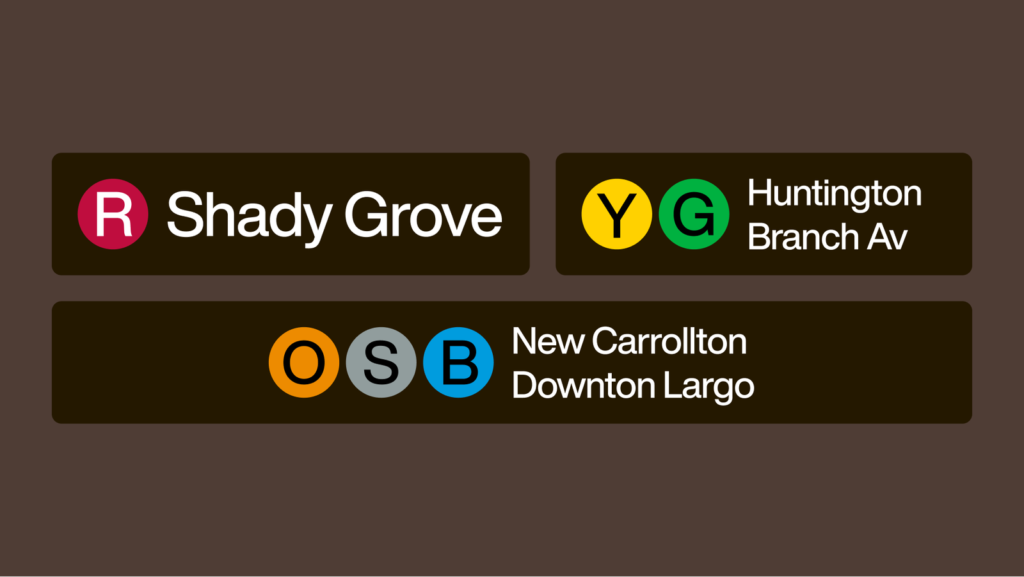
Rail information groupings
Rail line discs and terminal destinations will be grouped consistently for stations served by multiple lines. The groupings have been designed to deliver information in a progressive manner, while also being more resilient to service changes. This approach achieves operational efficiencies that will save the Authority time and money allowing quicker updates and more consistently accurate information.
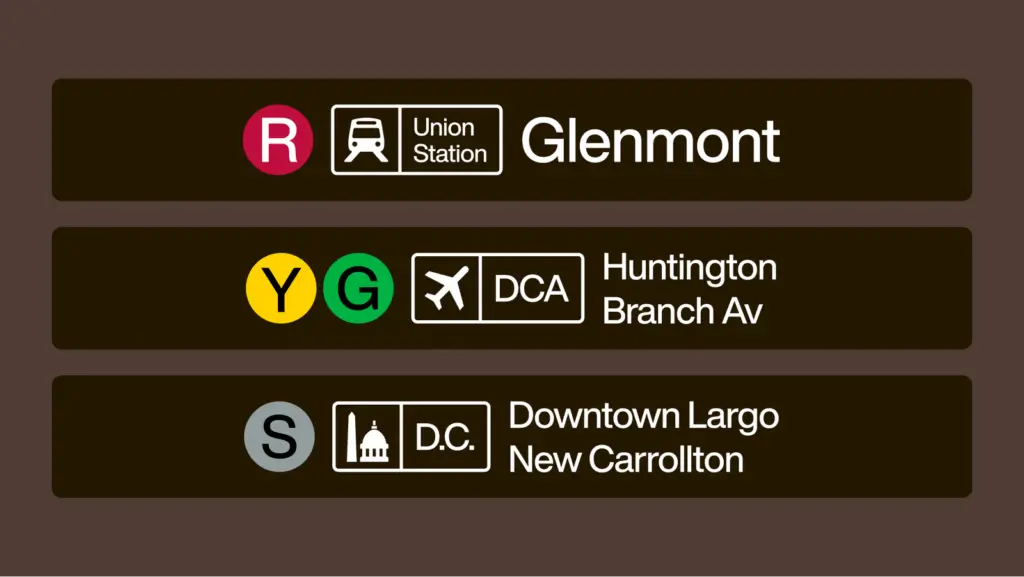
Directional helpers
New directional helpers pair familiar places (the airports, the National Mall, Union station), with rail service information to help customers who are less familiar with our system navigate like a pro. Their distinct appearance helps customers recognize them at a glance, while flexible combinations can reflect the station and the system.
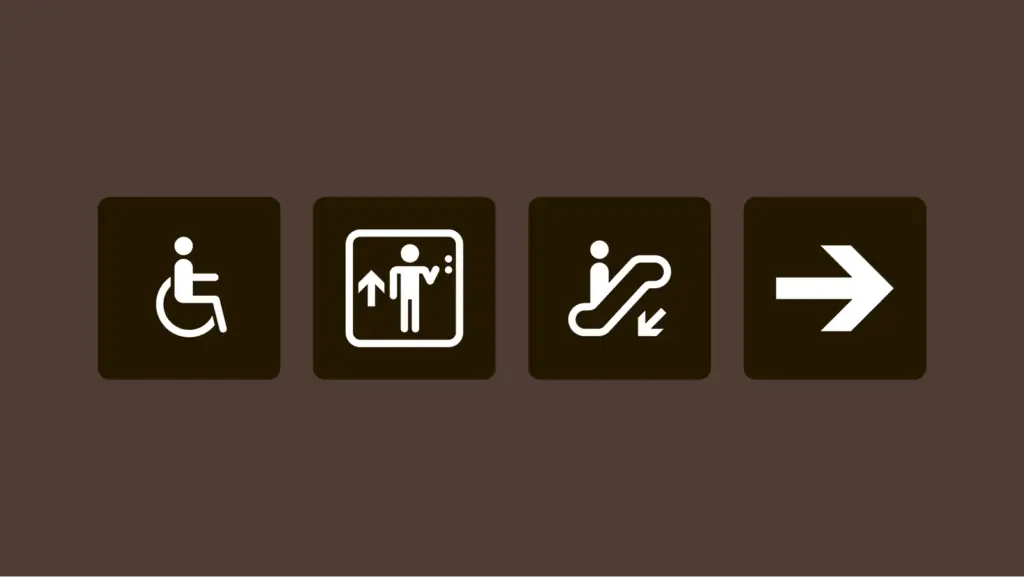
Refreshed icons
A refreshed icon library creates a more consistent appearance for elevators, escalators, accessibility, and connections.
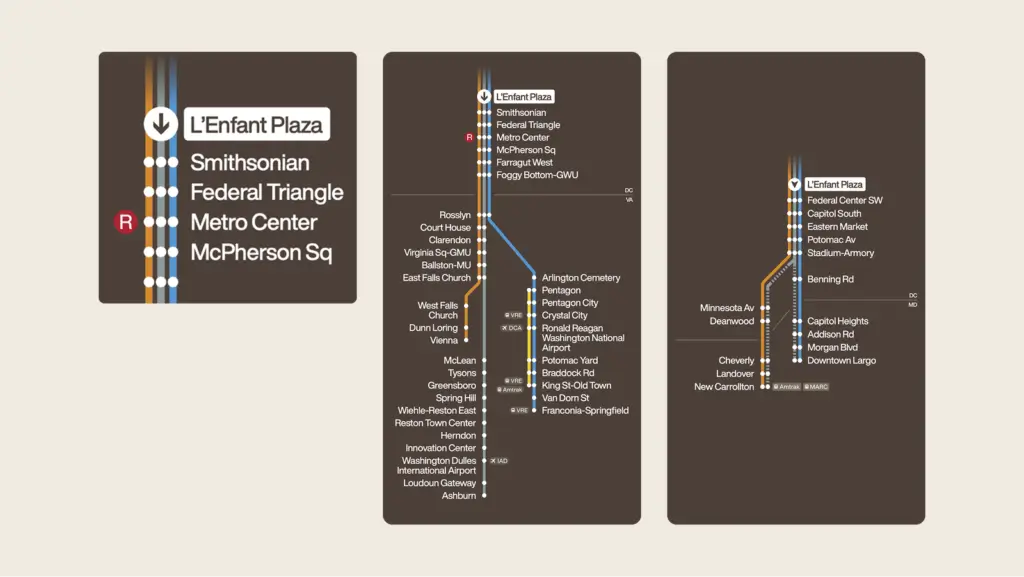
Updated “Station Ahead Maps”
Station Ahead Maps have improvements to help customers confirm their direction and understand the stops between their current station and destination, making the best use of available space. The new maps show every station ahead and have a modified “You Are Here” indicator designed based on customer feedback.
Clearer accessible routes and information
The system uses consistent accessibility symbols and updated tactile panels to help customers locate accessible routes and information throughout the station.
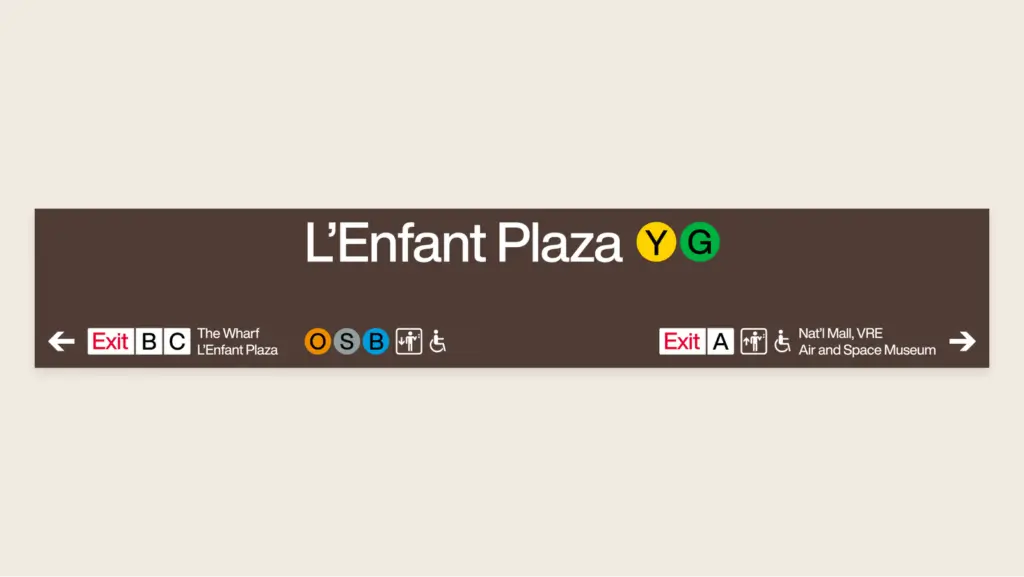
Service information moved onto platforms
The new system moves variable service information off of vault signs and onto platforms. Track-side signs can focus on the station name, exits, and accessible travel information. This approach has several advantages. It makes the system more resilient when rail service changes, reduces the number of difficult to access signs that may require changes, and saves time and money when updates are needed. It also moves important information closer to the customer, thereby improving accessibility.
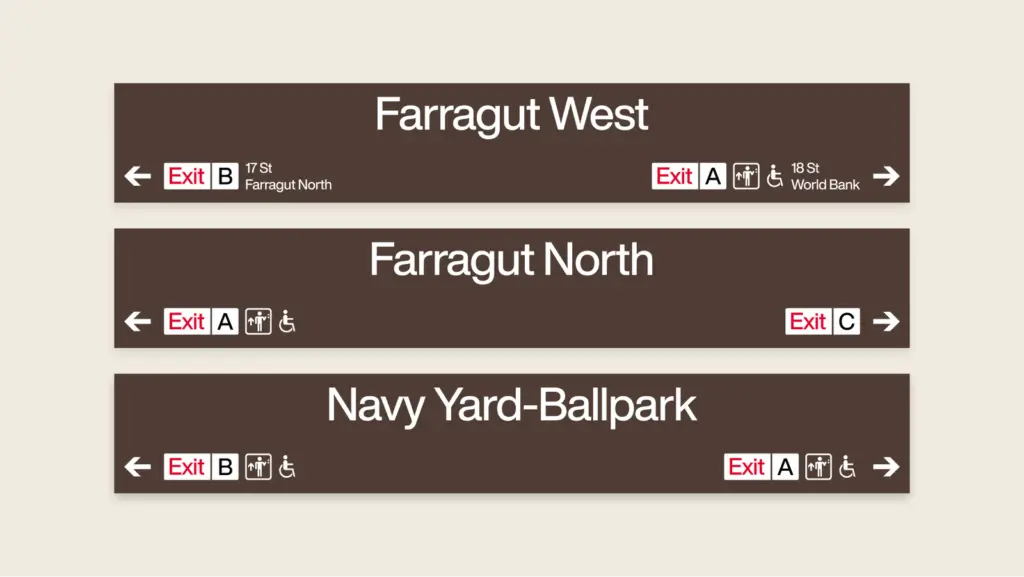
One region. One Metro.
50 years ago, members of this community and region helped deliver an icon of modern mass transit. Over the next five years, and with your help, the region will help refresh and restore it in a manner consistent with the original intent.”