


1608 14th Street, NW
“Dear PoPville,
I wanted to let you know about Sashimi DC – located inside Rice Market on 14th Street.
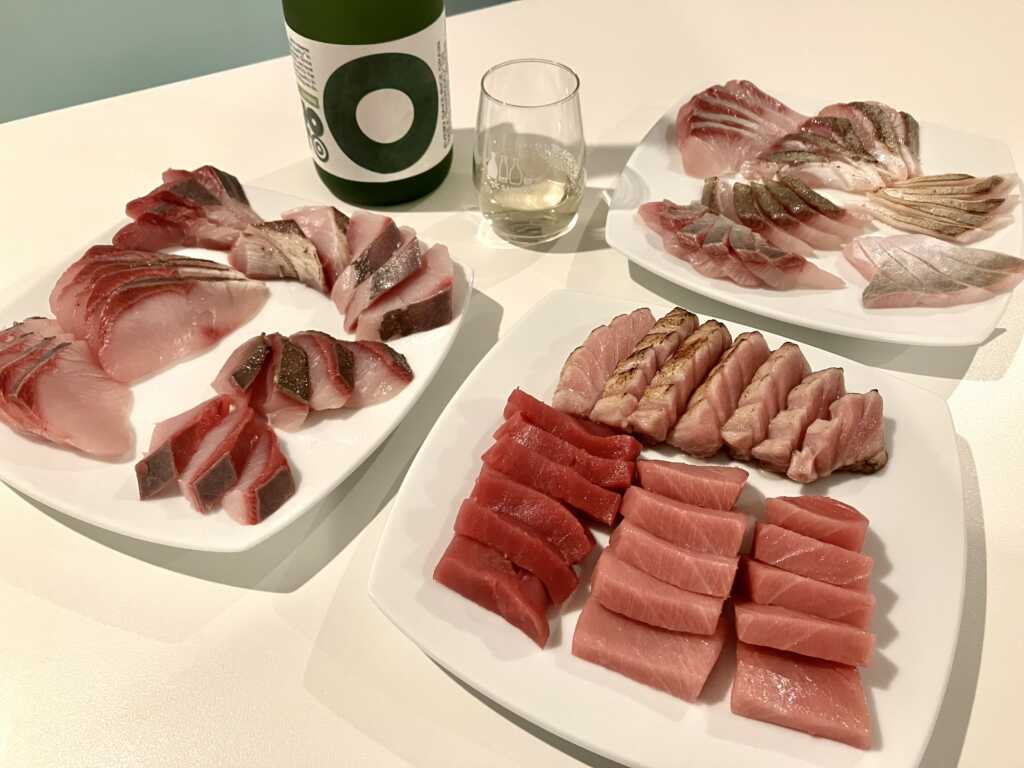
The owner, Keita, gets fresh sushi-grade fish shipped from Japan every week. Salmon, tuna, scallop… you name it. He offers by far the best sashimi I had in the US (I can certify this as a Japanese) It comes in vacuum-sealed filets and is perfect for a sushi party at home :)”
“What is sashimi-grade fish?
“Sashimi-grade” is a food safety standard indicating the fish is safe to eat raw. It is not a regulated certification — it describes a set of handling and processing practices that eliminate parasites and preserve freshness.
For wild-caught fish, this means super-freezing at −60°C, which kills parasites without damaging flesh the way household freezing does. For aquacultured fish, it means raising fish in protected environments where parasite exposure is controlled from birth.
Ikejime — At Sashimi DC, all fish is prioritized for Ikejime processing. This Japanese slaughter technique immediately immobilizes the fish’s nervous system at the moment of harvest by spiking the brain and severing the spinal cord. This prevents the fish from thrashing — which generates lactic acid and heat — preserving umami compounds and muscle texture for significantly longer than conventional methods. The difference is noticeable: Ikejime fish has a cleaner flavor and firmer, more satisfying texture when eaten raw.
Fish at Sashimi DC is shipped via specialized cold chains from Japan, typically arriving in DC within 24–48 hours of processing. This is the same quality standard used by high-end omakase restaurants in Tokyo and New York.
Sourcing
Why source fish from Japan?
Japan has developed infrastructure for premium seafood handling over centuries that is currently unmatched anywhere else in the world. This includes the Ikejime slaughter method, cold chains designed specifically for preserving raw fish quality, and access to fisheries that produce the most prized species — the Goto Islands of Nagasaki for Bluefin Tuna, the waters of Hokkaido for Uni and Scallops.
The precision extends to fish markets: Toyosu in Tokyo operates with grading and temperature control standards built entirely around the assumption that fish will be eaten raw. That infrastructure simply does not exist at the same level elsewhere.
A Bluefin Tuna caught off the Goto Islands, Ikejime-processed on the boat, and air-shipped to Dulles Airport will arrive in Washington DC with more umami intact and firmer texture than a locally caught fish handled with standard methods — even if the local fish was caught the same day.
Responsibility
Is your Bluefin Tuna sustainable?
Yes. All Bluefin Tuna at Sashimi DC is imported under NOAA SIMP (Seafood Import Monitoring Program) regulations. Every shipment arrives with catch certificates that document the fishing vessel, catch location, date, and method — providing full traceability from ocean to your kitchen.
We maintain a zero-tolerance policy for black-market or illegally caught fish. Pacific Bluefin stocks have shown recovery in recent years under international quota management, and our sourcing exclusively from quota-compliant Japanese fisheries supports this recovery.
If you ever want to verify a specific shipment, ask us for the catch certificate. We keep documentation for every import. Transparency about sourcing is non-negotiable — you should know exactly where your fish came from.
At home
How to store your fish.
Store in the coldest part of your refrigerator — the back of the bottom shelf, away from the door where temperature fluctuates. Keep the fish in its original vacuum-sealed packaging until you are ready to use it. Plan to consume within 1–2 days of purchase for optimal quality.
Do not freeze at home. Standard household freezers freeze slowly. This causes ice crystals to form inside the fish’s cells — the crystals expand, rupture the cell walls, and destroy the delicate texture that makes sashimi-grade fish exceptional. Professional super-freezing at −60°C happens so rapidly that no damaging crystals form. Home freezing always degrades quality.
If you receive more fish than you can eat in two days, the Zuke and Kobujime techniques on the Recipes page are specifically designed to transform day-two sashimi into something even better.
Preparation
Should I wash my fish?
No. Do not wash sashimi-grade fish with water.
Washing raw fish under tap water introduces bacteria from the sink and can cross-contaminate surrounding surfaces. It also damages the delicate surface texture of the fish.
All fish at Sashimi DC is processed and handled under strict hygiene conditions before packaging. No cleaning is necessary. If you want to clean the surface before slicing, gently pat with a clean dry paper towel. That is all that is needed.”