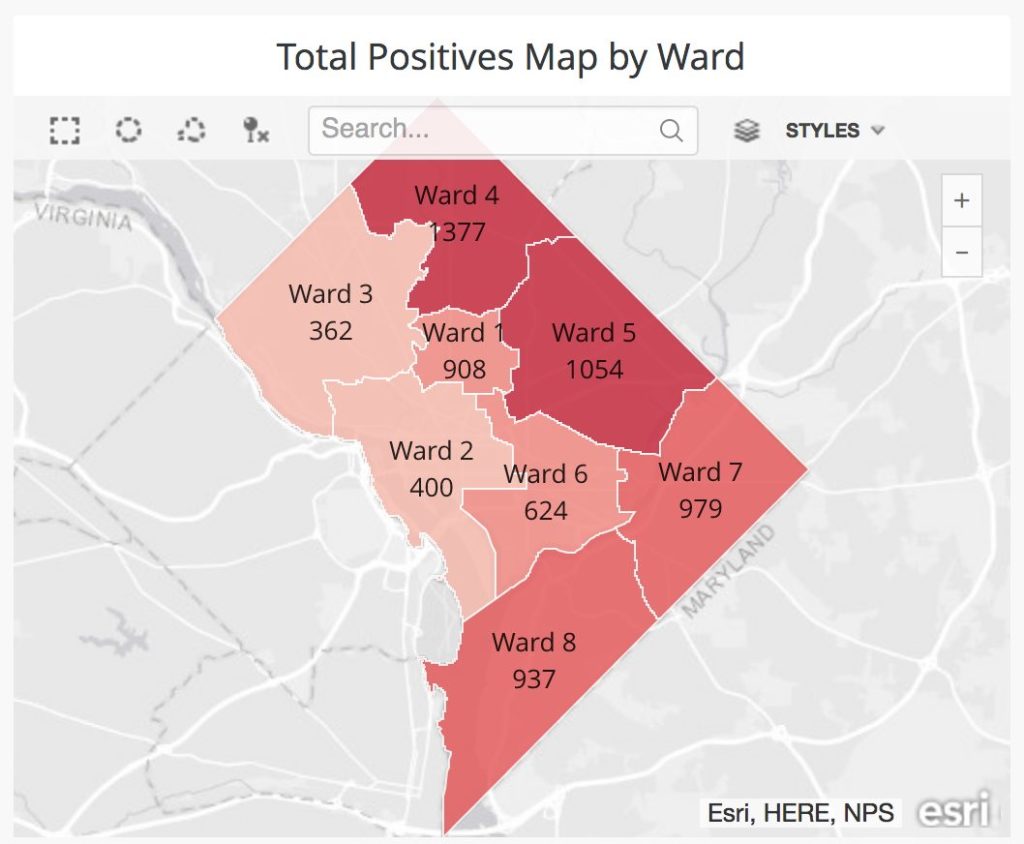
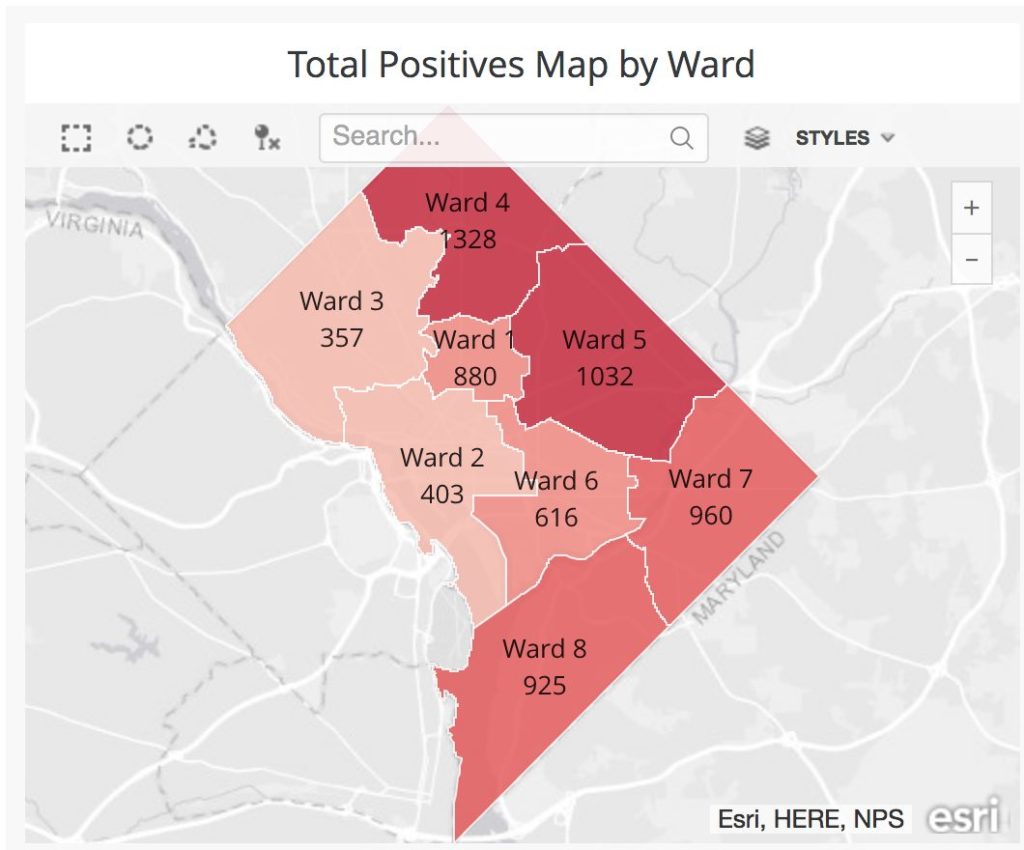
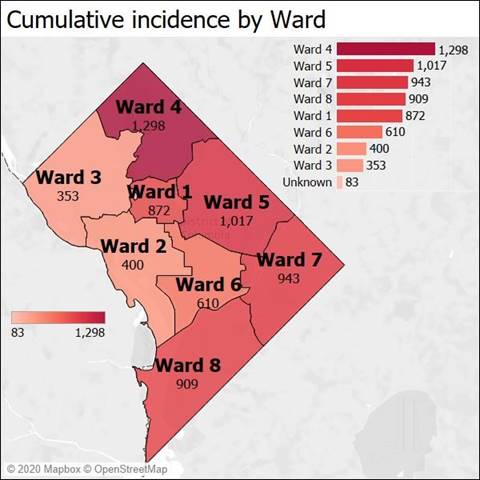
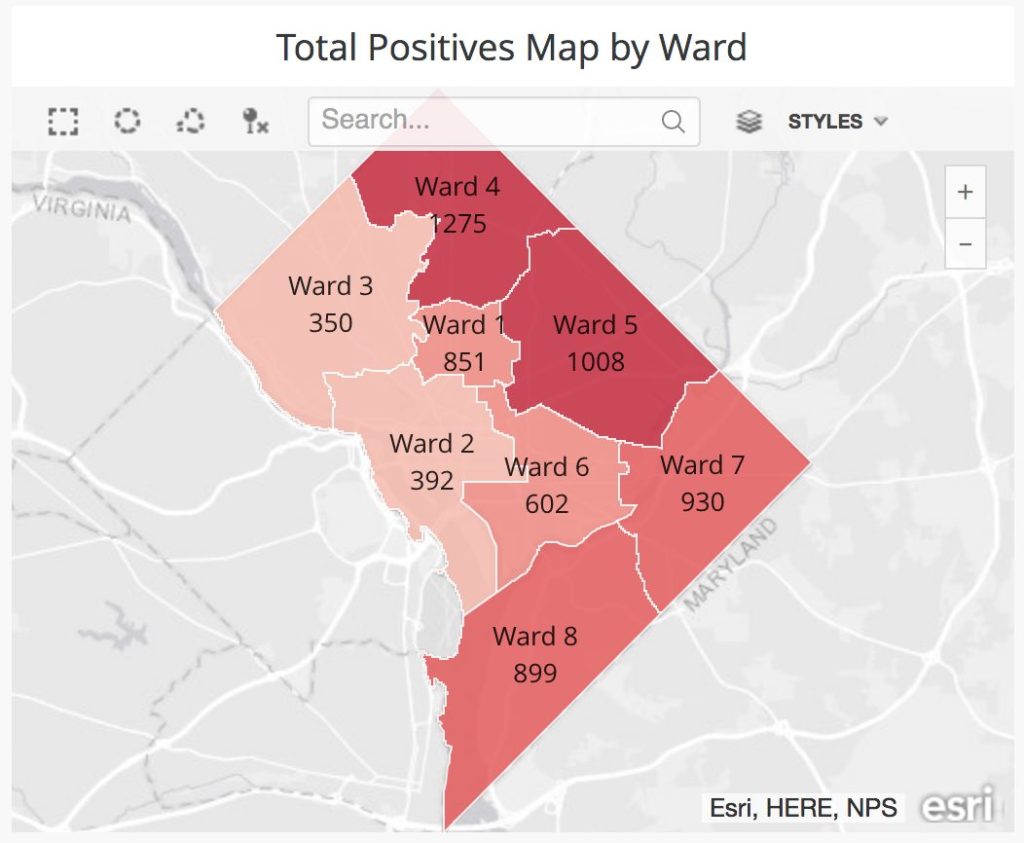
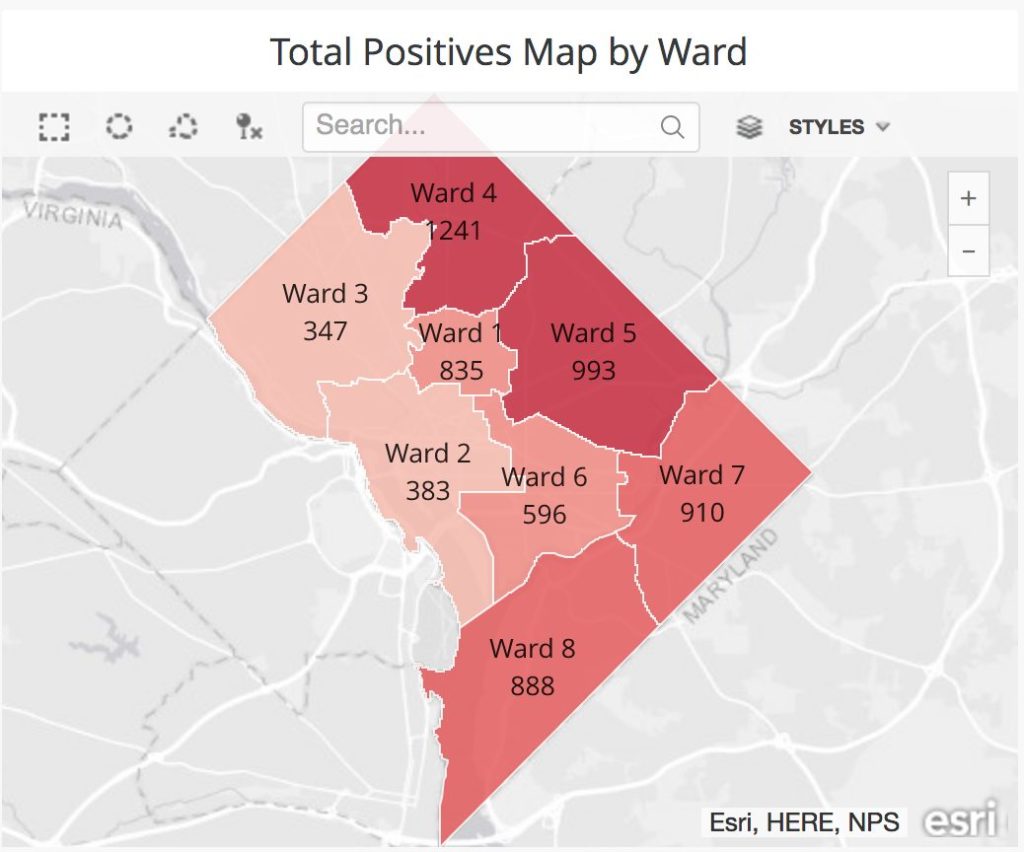
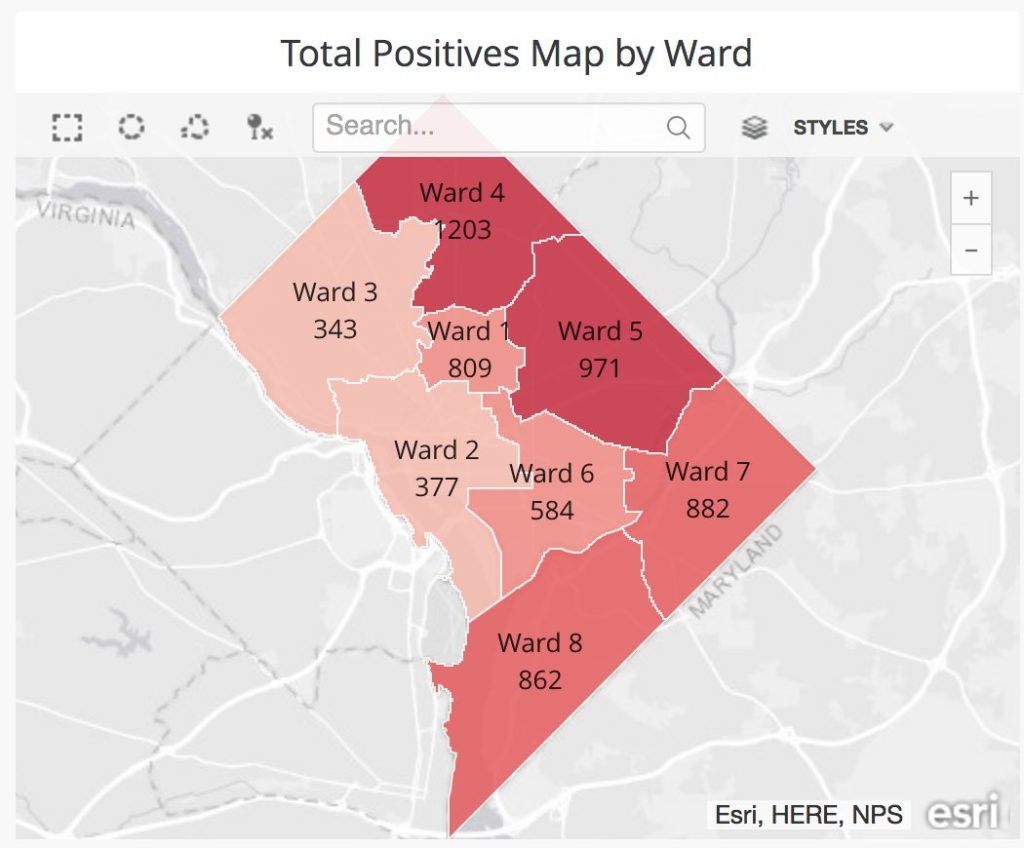
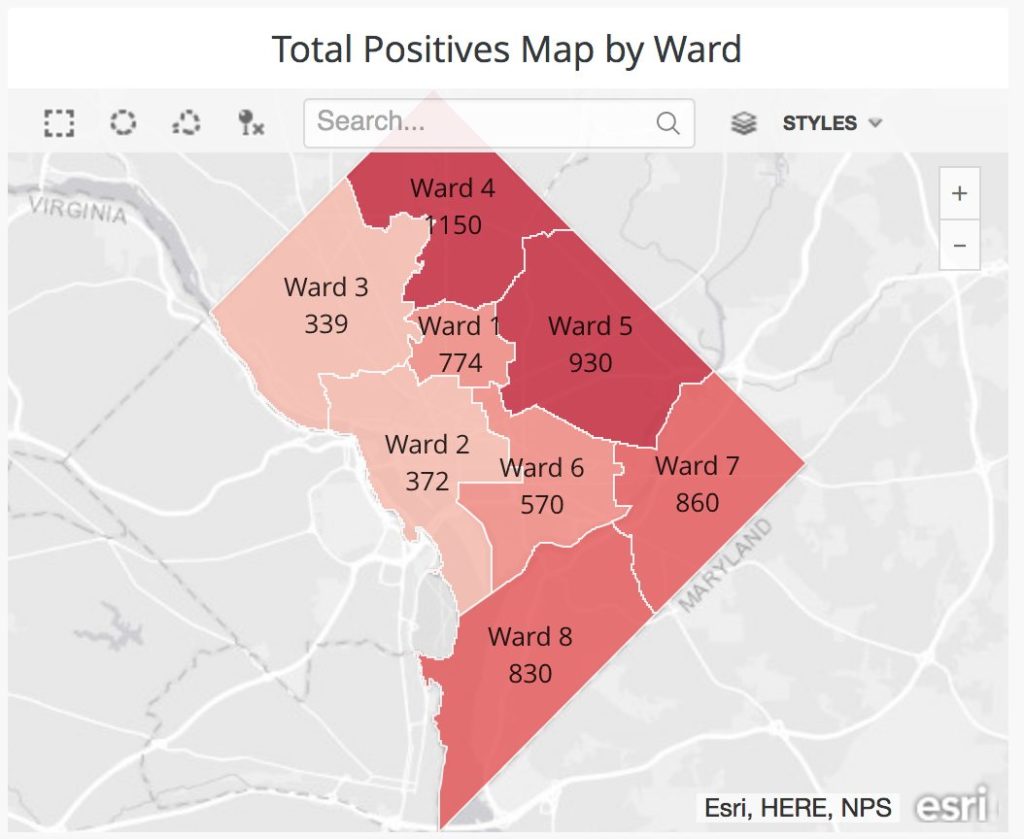
interactive map also embedded below
Huge thanks to Molly for sharing some perspective on the District’s neighborhoods coronavirus map:
“I’m following up about providing some more details and explanation about my DC COVID map that’s weighted by population. There had been some discussion about wanting to see a version of the map that controlled for population in the comments on your daily data posts this week, and I was really curious so I spent some hours correlating the census tract data against the ‘neighborhood’ COVID map that the city started publishing earlier this week. I would say I’m semi-professional when it comes to things like this–as in, I have professional training but it’s not what I usually get paid to do these days. So I’d call this a citizen data science effort!
The city has been reporting coronavirus data by Ward throughout the crisis. They recently added a report for positive cases by “neighborhood”. The city’s neighborhoods are made up of groupings of DC census tracts (standardized geographic areas) so may not align with what we commonly consider neighborhood boundaries. If you want to look at the city’s neighborhood classifications more closely, zoom in on this pdf map.
The city reports the total number of positive cases per neighborhood in their daily reports. However, some neighborhoods have a much higher population than others. If 200 people are sick, it’s important to know whether it’s 200 out of 2,000, vs. 200 out of 20,000. To provide this perspective, I created a map graphic that can show us the rate of cases in each neighborhood, with an interactive map here:
This way isn’t necessarily “better” than the city’s way of showing it, but I personally find it helpful to understand the extent of the outbreak relative to population. (more…)