The following was written by former, and I’m now happy to say current, PoP contributor Karen Frantz.
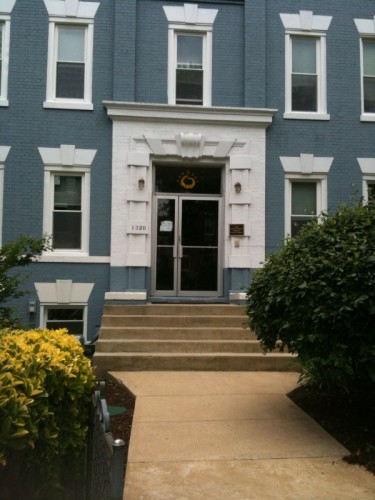
If you happened to stroll down the 1300 block of Harvard Street, you probably wouldn’t think much of two connected row houses halfway down the block that make up the Columbia Heights location for Second Genesis. Painted blue with a vegetable and herb garden planted in a clean and manicured front yard and a yellow sun logo donning the entrance’s transom, the buildings look like they house some hip non-profit, the kind of which you can find all over the D.C. area. And if that was your conclusion you’d in fact be right: Second Genesis is a non-profit, only it’s doesn’t do the kind of work you might expect. It’s a residential facility for low-income individuals undergoing rehabilitation for addiction to drugs and alcohol.
I bring this up the fact that this might surprise you not because it should or shouldn’t, but because until recently Second Genesis might have actually preferred that it did. In fact, as Second Genesis’ development and digital media coordinator, Bianca Poll, told me when I visited the facility last week, though most people are supportive of rehabilitation programs in general, many feel differently when the program is close to where they live—the not-in-my-backyard mentality. And for that reason, Second Genesis has before been wary of being too open, too loud—but no longer. Bianca told me she’s eager to change the NIMBY mindset that some in the area may have about drug rehabilitation programs like Second Genesis’, and invited me to tour the facility and learn more about the work of the non-profit.
Second Genesis was founded in 1969 as part of the Alexandria Mental Health Clinic, and since has expanded to five centers in D.C. and Maryland. Approximately 1200 clients a year are served by Second Genesis through outpatient and residential treatment centers—including the approximately 50 clients able to be served by the residential facility in Columbia Heights. Staff includes physicians, psychologists, addiction counselors, experienced teachers, and administrative staff. It’s the oldest provider of therapeutic community services to fight addiction in the mid-Atlantic region, and its principles include “facilitating individual change and positive growth” in order to break the cycle of addiction. Although different centers are structured in different ways—for example, some house men, some house women, some house women and children—all are therapeutic communities that rely on treatment stages in which clients gain increased levels of personal and social responsibility.
Continues after the jump. (more…)