Streets of Washington, written by John DeFerrari, covers some of DC’s most interesting buildings and history. John is also the author of Lost Washington DC.
Last time we re-lived the Willard Hotel’s early era, when it was run by brothers Henry and Joseph Willard and occupied a sprawling complex of low-rise 19th-century buildings on the northwest corner of 14th Street and Pennsylvania Avenue NW. With the death of Joseph in 1897, control of the hotel fell to his son, “Captain” Joseph E. Willard (1865-1924), who had big changes in mind. As the 20th century dawned, a new era and a new building were in store for Washington’s most prominent hotel, and there would be plenty of drama ahead as well. At one point the building was abandoned and left in ruins, but it finally took on a new life as the once-again grand hotel we know today.
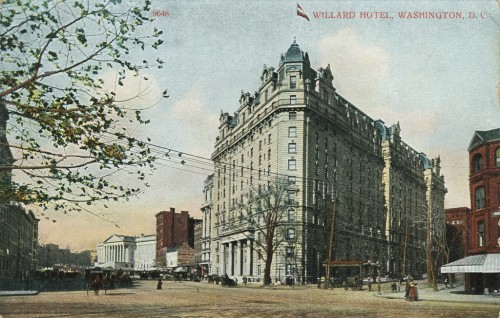
The Willard Hotel, circa 1910 (author’s collection).
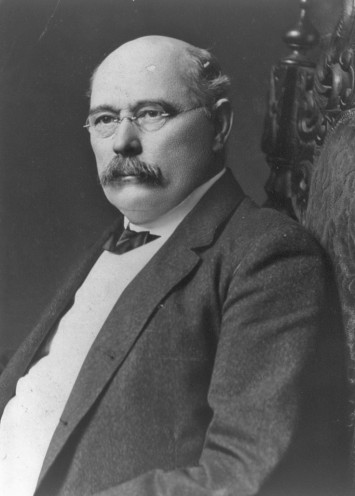
The younger Joseph, though born in the Willard, immediately began planning to replace it when he gained control of the property. He hired architect Henry Janeway Hardenbergh (1847-1918) to design a thoroughly modern new building. Hardenbergh had designed New York City’s Waldorf-Astoria Hotel and would soon be working on the Plaza Hotel there as well. For the Willard, he created a soaring Beaux-Arts palace that resembled in many ways his other Washington hostelry, the Raleigh. Sometimes called Washington’s first skyscraper, the new Willard used advanced construction techniques, including a steel frame and reinforced concrete base. The stately exterior finishes included rusticated Indiana limestone curtain walls on the first three stories with beige brick and terracotta detailing above. The highly-ornamented top-floor dormers, curved mansard roof, and bullseye windows have become iconic.
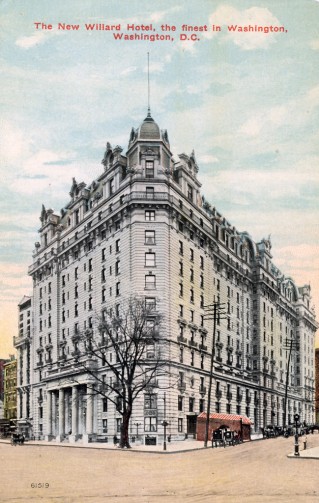
Construction took place in two phases so as to allow hotel operations to continue uninterrupted. The first part of the new hotel—the southern section on Pennsylvania Avenue—went up between 1900 and 1901, while guests stayed in the northern part of the old hotel opening on F Street. The hotel’s sumptuous new main lobby on Pennsylvania Avenue opened for business in October 1901. After guests moved into the new structure, the rest of the building went up between 1902 and 1904.
Like the Raleigh, the new Willard included a lavish ballroom and private dining room on the top floor with magnificent views of the city. At street level were the restaurants. The main restaurant on the first floor was “one of the largest and most elegant dining halls to be found anywhere,” according to The Washington Times. “With its richly decorated ceiling and great columns it is a sight worth looking upon.” Across the long main corridor, which in time would be called Peacock Alley, was the so-called Pompeian Room, a “dangerous” place in some people’s minds, because men and women could mingle there, and women were allowed to smoke. Overlooking all this activity was a balcony designed to accommodate the hotel’s in-house orchestra.
Continues after the jump. (more…)