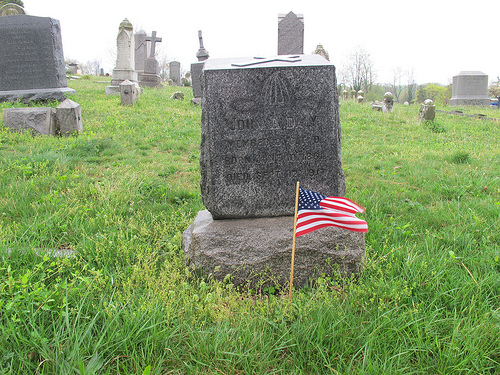
Remembering – John A. Daly, DCFD (1861-1917) From Holy Rood Cemetery in Glover Park.
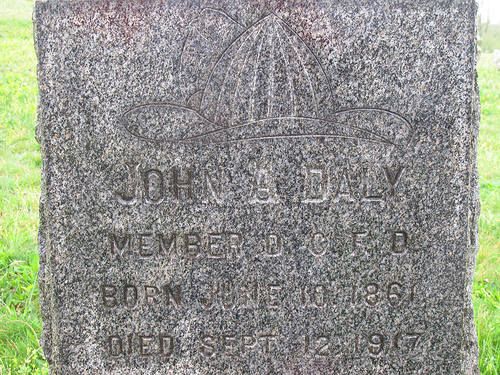


Remembering – John A. Daly, DCFD (1861-1917) From Holy Rood Cemetery in Glover Park.
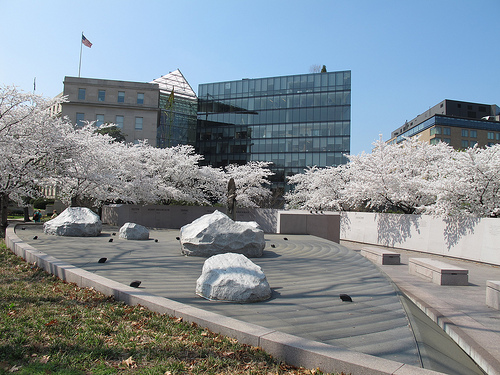
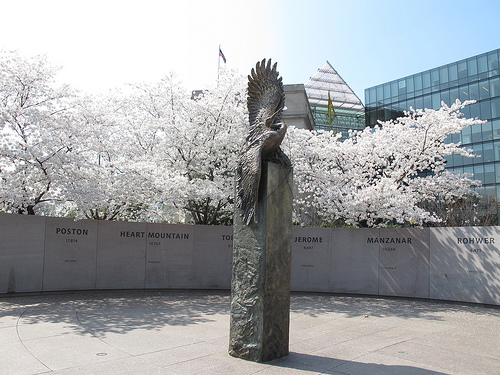
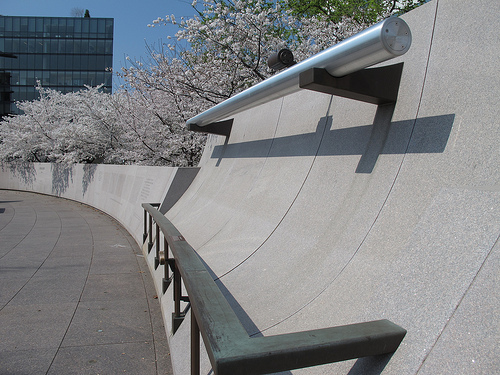
The Memorial to Japanese-American Patriotism in World War II is located at at Louisiana Avenue and D St, NW, not far from Union Station. It is a very moving memorial and looks stunning right now while it’s surrounded by full cherry blossom blooms.
Streets of Washington is the brilliant blog covering some of DC’s most interesting buildings and history written by John DeFerrari. John is also the author of the equally brilliant Lost Washington DC. ‘Streets of Washington Presents…’ will feature some fascinating buildings and history from around PoPville.
The monumental bank building on the southeast corner of 14th and G Streets, NW—vacant now for well over a decade—is one of several such landmarks in Washington’s old financial district, but it has lived the ups and downs of the banking industry much more dramatically than the others. It was born as the home of a feverish enterprise that burned itself out after only 20 years. After going on to host the venerable National Bank of Washington for many decades, it went dark when that institution also collapsed in 1990. For more than a decade now, plans have been afoot to turn it into a museum to commemorate the victims of the Armenian genocide of 1915-1923. The building, including its interior, is protected as an historic landmark. It’s one of only 13 properties in the District with an historic interior designation. As reassuring as it is that plans are in the works for the building’s future, it is also disheartening to see it stand vacant for so long—an unintended reminder, should we need one, of how impermanent our financial institutions can be, despite their best efforts to convince us otherwise.
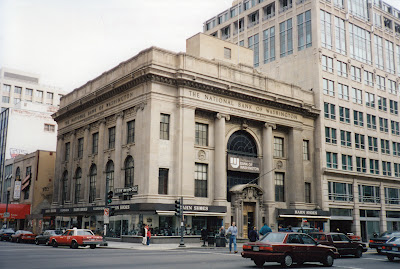
The bank building as it appeared in 1995 (Photo courtesy of the archives of the D.C. Preservation League).
Constructed in 1926, the building was originally the home of the Federal-American National Bank, which had been founded 13 years earlier. Its first and only president was John Poole (1875-1940), an extraordinary individual who once wielded enormous influence in the local financial world. Poole’s roots were humble; he was born to a Parkersburg, West Virginia, grocer who moved his family to Washington when John was only a month old. Young Poole was educated in DC public schools and began his professional career as a messenger for the United States Express Company. His talents apparently were recognized, and he quickly worked his way up through several DC financial institutions.
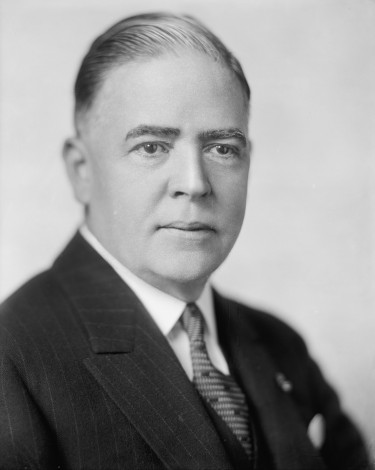
John Poole (Source: Library of Congress).
By 1912, Poole was 36 years old and at the top of his game as cashier of the Commercial National Bank. The Washington Post noted that Poole was “near the head of this city’s group of younger bankers.” It was an opportune time to be in the financial world; Washington’s banks had grown tremendously since the turn of the century, more than tripling their assets. Then in January 1913, Poole, who was also on the board of directors, led a group of 13 board members who decided to split off from the Commercial National and form their own bank. Their new Federal National Bank was an instant sensation, raising $1.5 million from investors within three days of being announced. It opened the doors of its fully-furnished banking room just two days after that. A throng of new customers deposited almost $500,000 on opening day.
Continues after the jump. (more…)
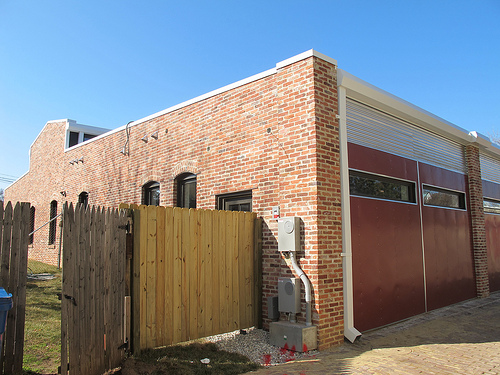
I’ve said it before and I’ll say it again, I never know what I’m gonna encounter when I roam DC’s alleys. Seriously. But last weekend marked a very happy encounter. I was wondering what was going on with this structure in an alley on Capitol Hill near the Hill East border:
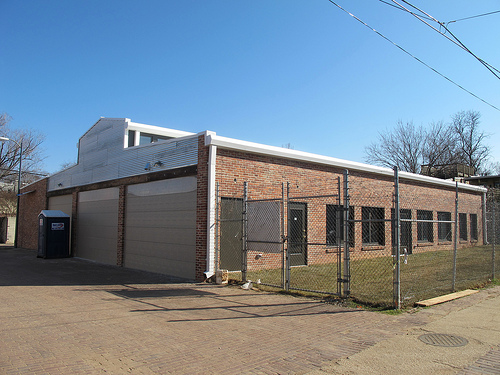
One of the owners came out and asked me if I’d like a tour. Hell yes I would. Some times I get a bit jaded and forget how nice people can be. Mrs. Nash took me around the property telling me about the history – originally built in 1921 to store coal, ice, vending machines and more. The structure now has been combined into one huge home plus a separate in-law suit.
The main house was still being worked on but you can get an idea of how incredibly it will be:
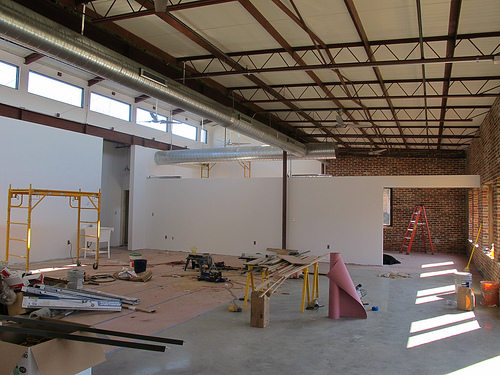
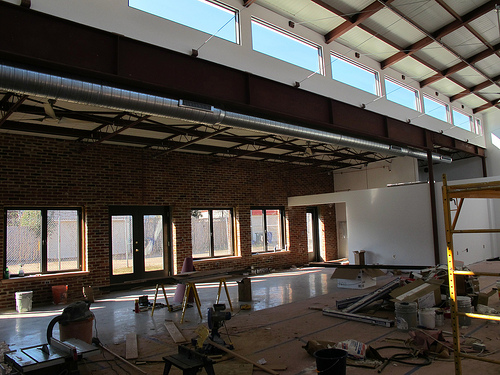
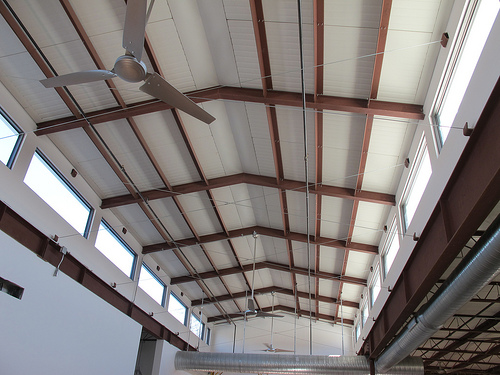
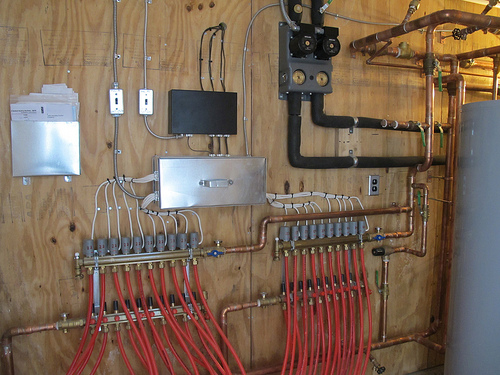
Oh, and did I mention how high tech it is? It has a room that looks like it’s from NASA. It controls all the plumbing, heating, cooling, (radiant floors) etc. I hope to come back and show more pictures when construction is totally finished. Thanks Mrs. Nash!
Dear PoPville,
I was reading the Thaddeus Stevens Elementary Wiki page (Did you know that Jimmy Carter is our only modern day President to enroll his child in DCPS?), and I noticed that singer Roberta Flack was listed as a notable alum. I clicked over to her page, and wow, what a cool lady! Anyway, the article mentions that she taught piano lessons out of her home on Euclid Street NW.
Does anybody know the address?
Wow – super cool lady:
She entered Howard University at the age of 15, making her one of the youngest students ever to enroll there. She eventually changed her major from piano to voice, and became an assistant conductor of the university choir.
Roberta Flack became the first African-American student teacher at an all-Caucasian school near Chevy Chase, Maryland. She graduated from Howard University at 19 and began graduate studies in music, but the sudden death of her father forced her to take a job teaching music and English for $2800 a year in Farmville, North Carolina.
Roberta Flack then taught school for years in Washington, DC at Browne Junior High and Rabaut Junior High. She also taught private piano lessons out of her home on Euclid St. NW. During this period, her music career began to take shape on evenings and weekends in Washington, D.C. area night spots. At the Tivoli Club, she accompanied opera singers at the piano. During intermissions, she would sing blues, folk, and pop standards in a back room, accompanying herself on the piano. Later, she performed several nights a week at the 1520 Club, again providing her own piano accompaniment. Around this time, her voice teacher, Frederick “Wilkie” Wilkerson, told her that he saw a brighter future for her in pop music than in the classics. She modified her repertoire accordingly and her reputation spread. Subsequently, a Capitol Hill night club called Mr. Henry’s built a performance area especially for her.
Anyone know where on Euclid St, NW she once lived?
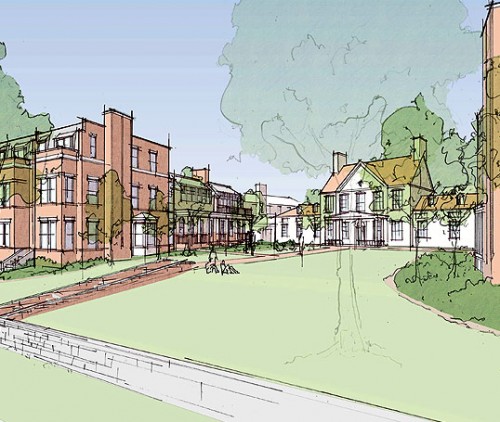
Rendering via The Maples Capitol Hill
Back in Sept. 2010 I nominated this property for a historical horse’s ass award. Last weekend I saw a rough rendering and a website posted out front:
Historic renovation and newly constructed homes
Direct entry elevator access from underground parking garage into select homes
Flats, Duplexes & Townhomes
Historic residences featuring high end finishes
Interior demolition is complete
Occupancy Fall 2012
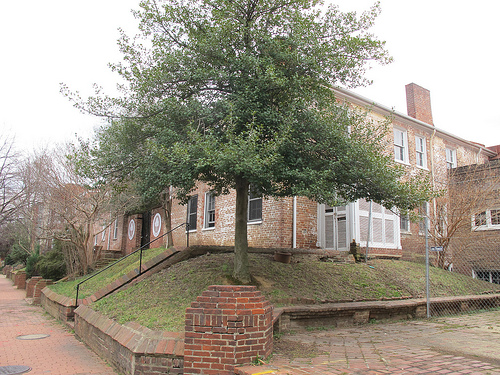
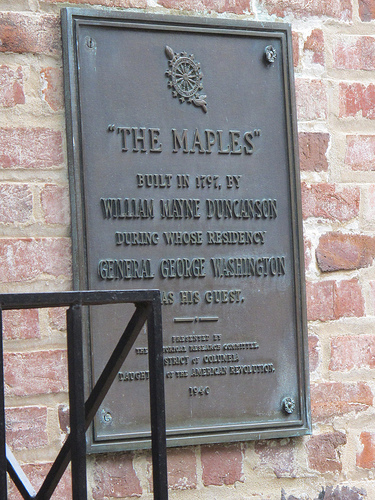
The Maples is located at 619 D Street, SE also listed as 630 South Carolina Avenue SE. You can see some historical photos from the Library of Congress here. Here’s some background info from an Office of Planning Report:
The original main house and stable (which later acquired the current brick façade) were designed by William Lovering for owner William Mayne Duncanson and were built circa 1795-1796. Designed in the Georgian style, the two-story plus attic main house is five bays wide and rectangular in footprint. The gabled roof of the main house includes chimneys at the east and west ends. The front porch, which had been removed as of photographs taken in the 1940s, spanned three bays of the front façade and featured a pediment.
After a long period of vacancy, the house was used as a hospital for wounded soldiers during the War of 1812 and was purchased by Francis Scott Key in 1815. Key’s ownership was followed by that of Major Augustus A. Nicholson, Quarter Master of the Marines, in 1838, and then by Senator John M. Clayton starting in 1856. Clayton, who served as Secretary of State under President Zachary Taylor, added a ballroom addition immediately to the east of the main block (later replaced during the 1930s with a new east wing) and may also have added the north wing behind the main house. Owner Emily Edson Briggs, the first woman admitted to the White House Press Room, expanded the north wing during her ownership of the property beginning in 1871, and the Briggs family subsequently sold the site to the Friendship House Association in 1936.
Full report below:
Streets of Washington is the brilliant blog covering some of DC’s most interesting buildings and history written by John DeFerrari. John is also the author of the equally brilliant Lost Washington DC. ‘Streets of Washington Presents…’ will feature some fascinating buildings and history from around PoPville.
The Aqueduct Bridge, Gateway to Georgetown
Before the magnificent Francis Scott Key Bridge was completed in 1923, a far homelier structure linked Georgetown to Rosslyn. Known as the Potomac Aqueduct or Aqueduct Bridge, it was born of Alexandria’s aspirations to rival Georgetown as a commercial hub. A remarkable engineering achievement, the bridge served as a vital Potomac crossing for 80 years.
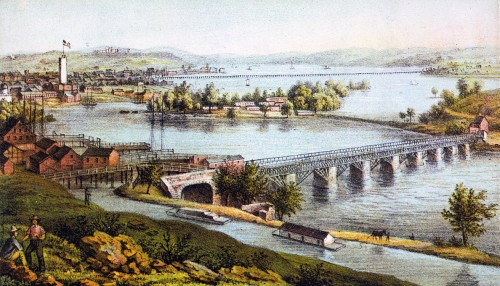
The Potomac Aqueduct, c. 1865. Source: Library of Congress
It all began with construction of the Chesapeake & Ohio Canal in the 1820s. The canal project was a long, complex, and expensive effort originally intended to spur commercial trade with Georgetown (and Washington) by establishing an economical transportation link to the vast and fertile Ohio Valley. It turned out to be too expensive to build it all the way across the mountains to the Midwest, and it never lived up to its investors’ early hopes, but in the 1820s it seemed like the next big thing for the city. Alexandria merchants sorely wanted to get in on this expected action. It would have been too expensive to unload canal boats arriving in Georgetown and reload them on river boats to take them down to Alexandria, so a non-stop method was needed to get the canal boats to Alexandria.
The solution was to build an aqueduct bridge over the Potomac and connect it to a canal on the Virginia side to carry boat traffic down to Alexandria. Congress granted a charter to the Alexandria Canal Company in 1830 and pitched in $100,000 to support the project, which was to be privately owned. Work began in 1833 on both the bridge and the Alexandria canal and lasted a full decade. (All that’s left of the canal is a recreated lock at the privately-owned Tidal Lock Park on the Alexandria Waterfront.)
When Congress stepped in, it put the U.S. Topographical Engineers, predecessors of the Army Crops of Engineers, in charge of the bridge work. Captain William Turnbull (1800-1857) headed this daunting task. Building the bridge’s piers was the biggest challenge. The plan was to construct cofferdams at appropriate spots in the river, pump the water out and then build the piers inside them. However, they had to be built at an incredible depth—through 18 feet of water and 17 feet of silt—to reach a solid bedrock foundation. River cofferdams had never been built so deep before. The first ones erected leaked mercilessly and had to be completely replaced. The second set were little better, filling with water after an hour or so and with mud oozing in from below.
As recounted by Pamela Scott, Turnbull was clearly concerned that the deep and unproven cofferdams—even when finally watertight—might not hold up while the bridge piers were being constructed inside them. In his journal, he observed that the spectacle of “men busily at work so far below the surface of the river, seemed to interest the public exceedingly; but to the engineer, whatever might be his confidence in the ability of the dam to resist the immense weight which he knew to be constantly pressing upon it in the most insidious form, the sight was one which filled him with anxiety, and urged him to the most unceasing watchfulness.”
Continues after the jump. (more…)
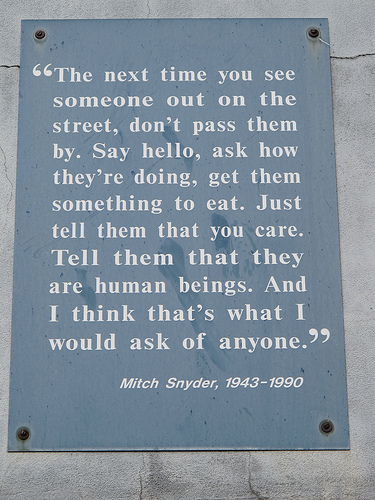
You can read more about Mitch Snyder here.
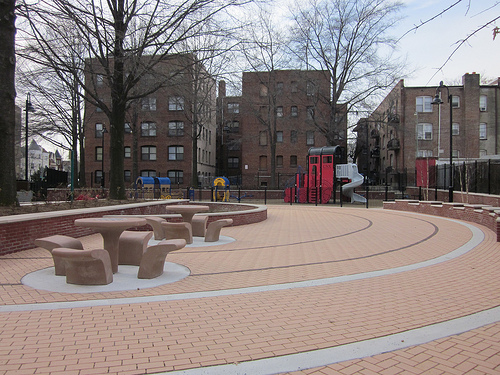
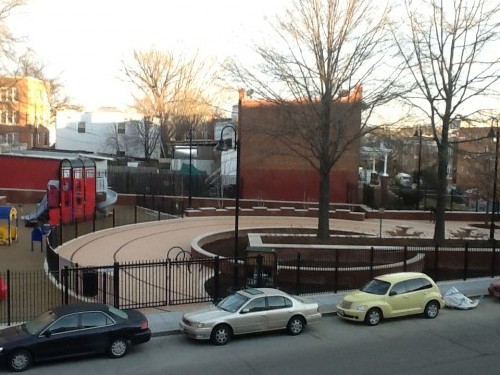
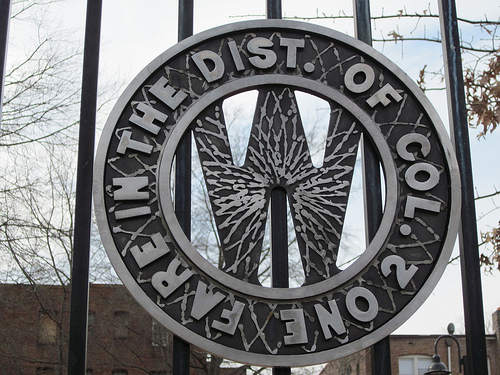
Last week I shared an awesome historic photo of an old trolley car posted at Trolley Park, opening soon at 11th and Monroe St, NW. It keeps getting better – they just added a couple of oversized old tokens to the fence:
I’m really digging all the history they’ve included in the park:
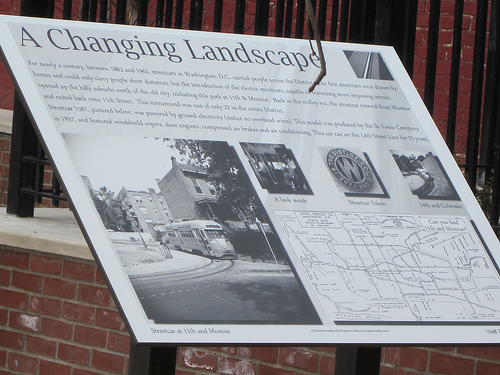
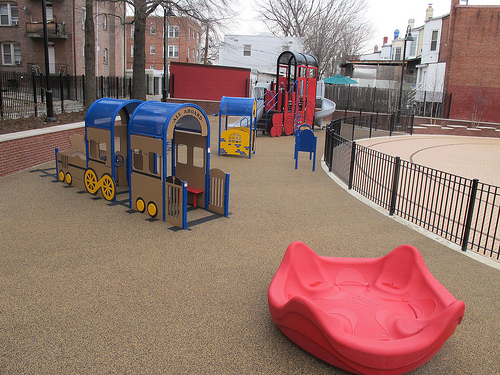
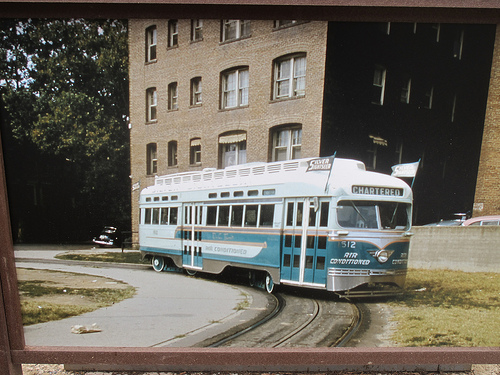
We recently spoke about how good the trolley park renovations were looking at 11th and Monroe St, NW but I just noticed this fantastic old photo at the park. And now we know why it’s called Trolley Park: