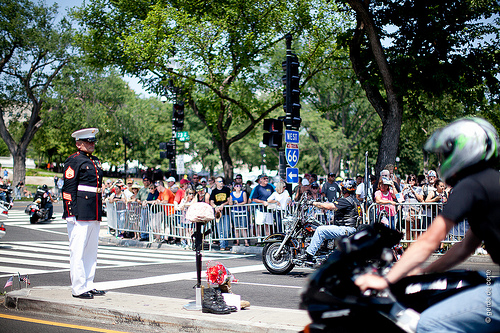
Photo by PoPville flickr user gerdaindc
Join the PoPville flickr pool here and follow PoPville on twitter here on facebook here.
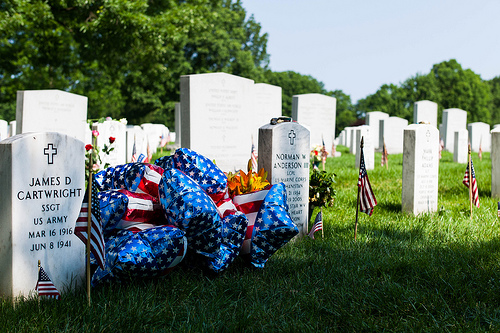
Photo by PoPville flickr user schmiddi
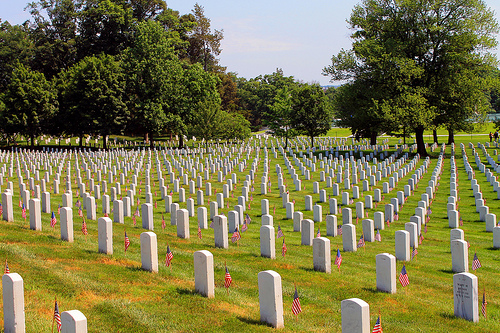
Photo by PoPville flickr user egr5005


Photo by PoPville flickr user gerdaindc
Join the PoPville flickr pool here and follow PoPville on twitter here on facebook here.
Photo by PoPville flickr user schmiddi
Photo by PoPville flickr user egr5005
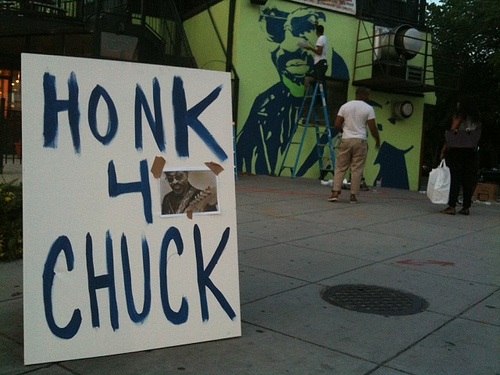
From DDOT:
Tuesday, May 29
The public viewing is scheduled from 11 am to 10 pm on Tuesday at the Howard Theatre, which is located at 620 T Street, NW. The following streets will be closed for this event:
3:00 am – Midnight
T Street, NW, from 7th Street to Florida Avenue, NW9:30 am – Midnight
T Street, NW closure will expand to include T Street between 9th Street and Florida Avenue, NW
7th Street, NW between Florida Avenue and S Street, NW
8th Street, NW between Florida Avenue and S Street, NW
Wiltberger Street, NW between T Street and S Street, NWThursday, May 31
The public memorial service is scheduled from 12 pm – 3 pm at the Walter E. Washington Convention Center, located at 801 Mount Vernon Place, NW.
6:00 am – 6:00 pm
L Street, NW will be closed in both direction between 7th Street and 9th Street
Please note: all street closures and times are subject to change due to prevailing or unexpected conditions.
The general public is strongly encouraged to use public transportation for both events.
Photo by PoPville flickr user ekelly80
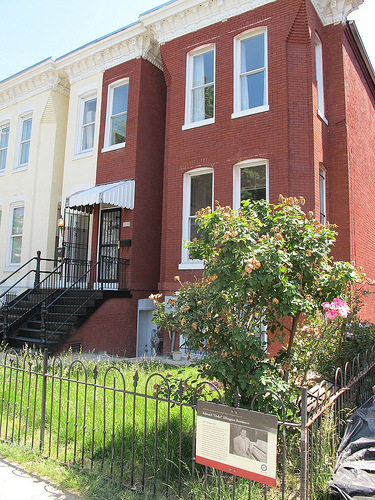
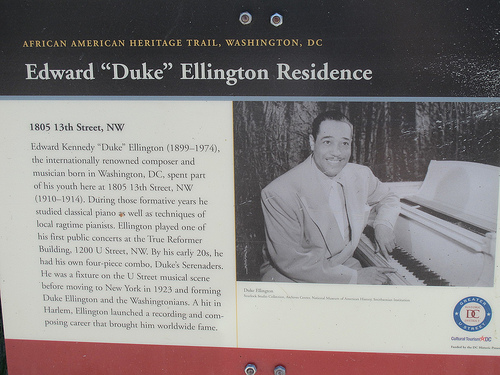
I love walking past Duke Ellington’s old house on 13th St, NW. I especially love how modest it is.
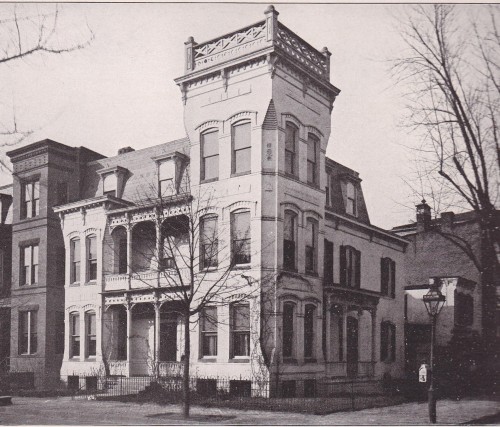
Then and Now by the House History Man is a series by Paul K. Williams. Paul has been researching house histories in DC since 1995, having completed more than 1,500 to date. Read Paul’s previous post here.
The large house at 420 Constitution Avenue, NE on Capitol Hill was the longtime home to Samuel Hamilton Walker and his family. And by long time, I mean long time: from the time they moved into the newly completed house shortly after their wedding in 1872, Mrs. Susan Walker at least, would live there for the next 70 years, until her death in 1942. Samuel Walker would live there until his death in 1938.
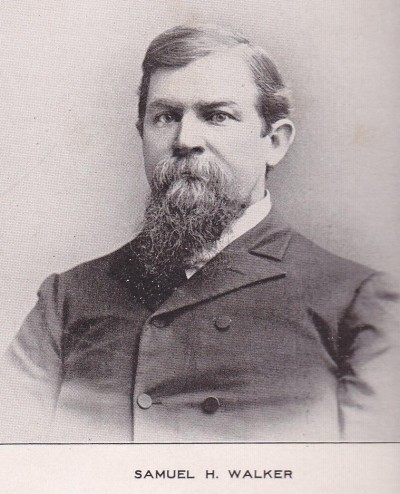
Walker is one of those individuals who doesn’t get much press today, but during his life he was well known in Washington. Why? He built hundreds of houses, especially on NE Capitol Hill, including most of those found on his own block. He had his own real estate development company, located in the Walker Building at 458 Louisiana Avenue (since razed). He was a DC native, having been born here in 1844, and after obtaining a degree from Columbian College, began working in the city’s land record’s office. His national Capital Investment Company eventually built the District Building, which he wisely rented to the city.
Walker had volunteered to defend Washington for four days during the Civil War without enlistment, and that led to him being named the Major and Superintendent of the Police Department in 1886. The Walker house remains at the corner of Constitution and B Streets, NE, partly obscured by trees. The ornate railing atop the corner turret has unfortunately disappeared, however.
Vintage Photographs from The Book of Washington, 1903.
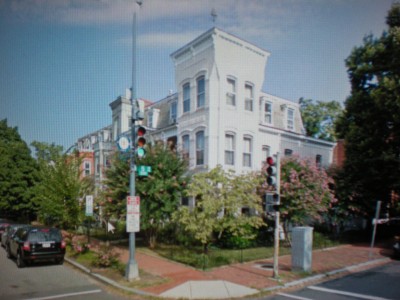

Click photo to enlarge
“Dear PoPville,
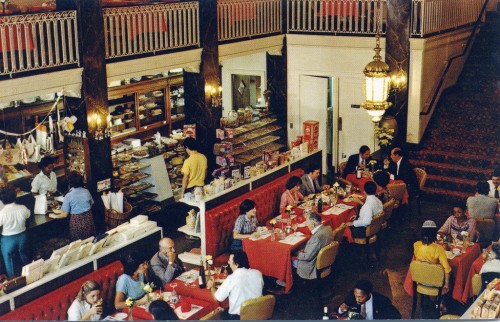
Check out the “old bones” that lie under the drywall, linoleum, indoor/outdoor carpet, and drop ceiling at the former Payless Shoes site on Columbia Road. More importantly, it’s the former Avignone Freres historic bakery, which furnished the White House with cakes and pastries.
If you walk by the site today, you can still see the same square pillars. Hopefully, the original marble (or faux marble) columns can still be unearthed beneath the drywall that’s there now…”
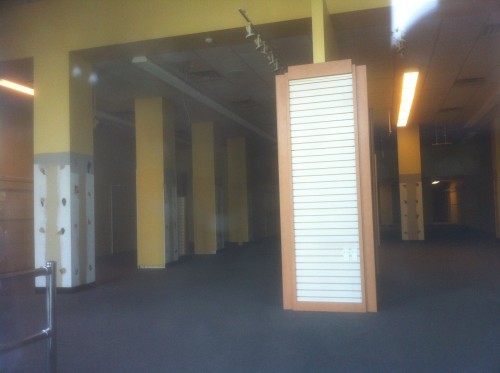
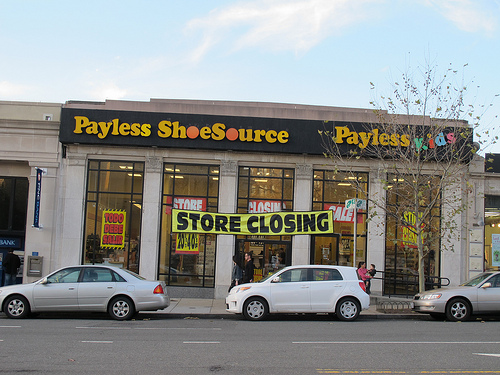
Payless Shoes closed at 1777 Columbia Rd, NW in Nov. 2011.
As I was walking down 14th Street yesterday afternoon I heard no less than six cars blasting Chuck Brown’s music. It was beautiful.
The Mayor’s Office issued a press release:
Mayor Vincent C. Gray today expressed his profound sadness upon hearing the news that D.C. native Chuck Brown, the singer and musician who came to be affectionately known as the “Godfather of Go-go,” has died.
“Go-go is D.C.’s very own unique contribution to the world of pop music, and Chuck Brown was regarded as Go-go’s creator and, arguably, its most legendary artist,” Mayor Gray said. “Today is a very sad day for music lovers the world over, but especially in the District of Columbia. Without Chuck Brown, the world – and our city – will be a different place. What a loss!
I am thankful that I had so many opportunities to witness Chuck’s singular talent in person, and I enjoyed each performance immensely. My heart, my thoughts and my prayers go out to his family.”
Chuck Brown was born in Washington. His musical career began in the 1960s as he played guitar with multiple bands, including Jerry Butler and the Earls of Rhythm and Los Latinos. His solo career took off in the 1970s as Go-go, a subgenre of funk music that originated with performers and clubs in and around the District, began to gain national popularity. His early work included hits like “Bustin’ Loose,” and pop-music historians generally consider Mr. Brown one of the main driving forces behind Go-go’s creation. He continued to play in the Washington area and elsewhere until recently, when he canceled an appearance at the newly refurbished Howard Theatre due to illness.
Last night The Howard Theatre hosted candlelight vigil for Chuck Brown. “Mr. Brown was slated to play The Howard Theatre on June 29, and had played the theatre often.”
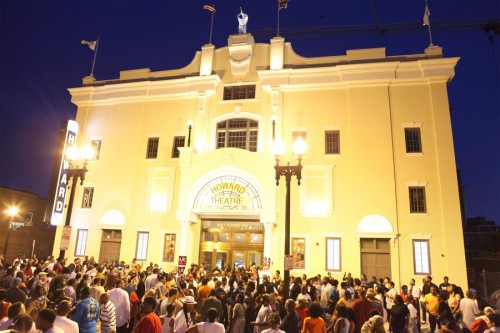
Photo by LaVan Anderson for The Howard Theatre
Then and Now by the House History Man is a new series by Paul K. Williams. Paul has been researching house histories in DC since 1995, having completed more than 1,500 to date. Read Paul’s previous post here.
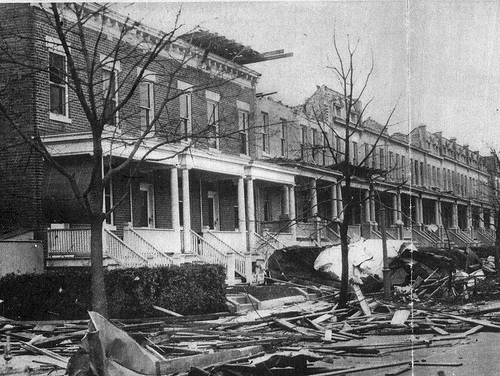
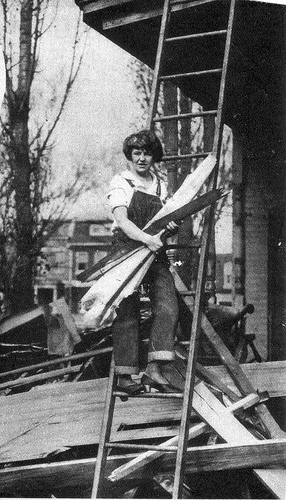
Every house has a history, but to those living on Capitol Hill in the 1300 block of A Street, NE today might not realize that their house history would include a tornado. The residents living there on November 27, 1927, however, would certainly have the shock of their lives. That day, a rare tornado ripped through the block, severely damaging several houses on the south side of the block, seen here. The resulting mess didn’t seem mind Miss Berry Wilson, however, seen in her overalls and high heels, who did not leave all the labor to the men of the family.
The tornado was larger than it appeared in these pictures, damaging a 17 mile tract through metro Washington. It began at 2:15 that day, and was gone less than 25 minutes later. It damaged 372 structures, and created an even more rare 300 foot tall waterspout in the Potomac River in its aftermath. Hundreds were injured by flying debris, but only one woman died of a lightning strike. Property damage was estimated at $690,000 in 1927.
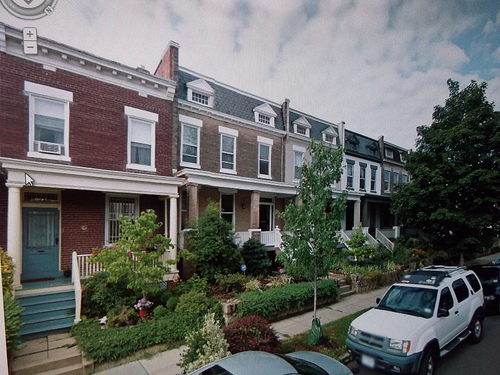
The house at the far left of today’s picture is 1371 A Street, NE – the third house from left the 1927 image (looking west). If you look closely, you can notice brick repair at the cornice line for several houses necessitated from the tornado damage. (Photographs from Capitol Hill by Gregory J. Alexander and Paul K. Williams, Arcadia, 2004).
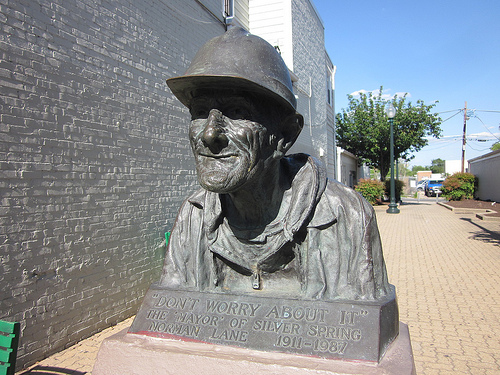
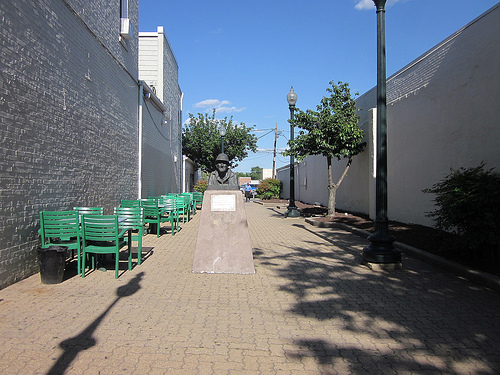
What an awesome sculpture/tribute from up in Silver Spring. The dedication says:
The unofficial “Mayor” of Silver Spring was a homeless man who collected hand-outs of money and food. Norman Lane walked the streets of Silver Spring for almost 25 years, doing odd jobs around the neighborhoods and handing out flowers to women on the street picked out of the Bell Flowers dumpster. Norman Lane was a mainstay in the community, and his enjoyment of life has been immortalized in a bronze bust created by artist and friend, Fred Folsom. The plaque beneath Norman Lane’s likeness reads, “Remembering the Caring Kindhearted Forbearance of the People of Silver Spring.” This is a tribute, not only to this local legend, but to the citizens of Silver Spring like Robert Phillips, owner of the Silver Spring Auto Body Shop, who kept a cot and a hot plate in the garage as a permanent home for Lane.