Tim Prendergast is a Certified Cicerone® and the Assistant Beer Director and Cellarman at Meridian Pint. Read Tim’s previous column on session beer here.

“(Rye) is a very poor food and only serves to avert starvation”

-Pliny The Elder

      Pliny the Elder was a 1st century Roman historian who is sometimes credited with the first written mention of hops. His name also graces the label of one of the most highly sought after IPAs in all of the world. His name has gravitas in the beer world. Unfortunately, I will have to disagree with him about rye and I’ll take the majority of this space to do so. But before I get to rye and beer, I’d like to steer this weeks’ column towards bread, specifically the king of breads, rye bread.

As far as I’m concerned, nothing comes close to rye bread.  Where white bread or wheat bread is simply a vehicle to keep your hands from getting mayo on them, rye bread becomes a memorable part of the sandwich. When it comes to the best sandwiches on the face of the earth nothing beats a corned beef or pastrami on rye. In fact, there is no such thing as a corned beef or pastrami sandwich if they aren’t followed by the words “on rye”. Don’t believe me? Go watch Annie Hall. A pastrami on white can help end a relationship.

Why all the rye love? I’m espousing my love for rye because I recently realized that it’s not just the bread that I love. It’s the grain itself. My most recent affection for rye has manifested itself as love for rye whiskey. Rye whiskey, once the dominant whiskey of the colonies, has enjoyed a huge resurgence in recent years. I recently enjoyed a Rendezvous Rye from High West Distillery that floored me. It had a pronounced citrus and lemon character that made me rethink the flavors that I thought possible in whiskey.

Continues after the jump. (more…)


Photo by flickr user Kevin H.

From an email:

This Sunday, Dec 11 at 6 pm, Bourbon Adams Morgan will be offering rare and exotic beers aged in bourbon barrels.

On draft we will be pouring:

Great Lakes Blackout Stout in a Buffalo Trace Bourbon Barrel
Lagunitas Cappuccino Stout in a Bourbon Barrel
Allagash Curieux in a Bookers Bourbon Barrel

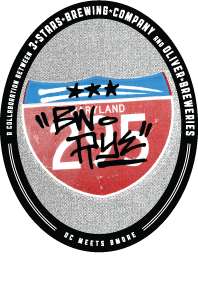
The debut of 3 Stars/Olivers Rye Pale Ale blended with a Rye Porter aged in Hudson Rye Whiskey Barrels!!!

We will also have bottles of Founders Backwoods Bastard and Mikkeller Blackhole aged in Bourbon

Full pints and flights will be available as well as the bourbon special of the night and with the purchase of a 2oz pour of Buffalo Trace, Bookers, or Hudson Rye, a pint will be discounted $2 while supplies last.

On a sadder note this will be my last shift before I take the long move up to Buffalo…gotta see about a girl.

Buffalo’s gain is our loss. Brian Kruglak was def. one of DC’s best beer directors. Good luck, Brian!


Thanks to a reader for sending word from Coloradoan:

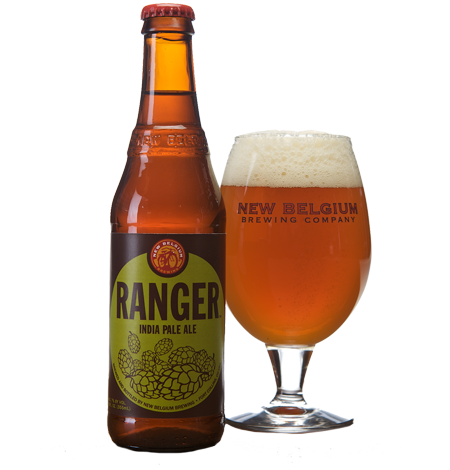
“New Belgium Brewing Co. has revealed it is considering Philadelphia, Pa., Asheville, N.C., and two other cities for its new East Coast brewery and has announced two new beers in development.

A sign of the brewery’s growing portfolio, Simpson revealed two new beers the brewery is working on for next year.

The first is a pale ale called Dig, which will replace its former spring seasonal, called Mighty Arrow.

The second beer is a pale lager called Shift and is named after the brewery’s free-beer-after-each-shift policy.

Shift will be released only in the brewery’s new 16-ounce cans that are coming off the canning line that is under construction.”

More details here.


Photo via Chocolate City Beer

“Dear PoPville,

I just happened to pass by Chocolate City Beer at 2801 8th Street NE a little while ago, and they are now open selling growlers and glassware to the public. They plan to do this every Saturday. I bought their first growler!”

From Chocolate City Beer:

At The Chocolate City Beer Brewery
2801 8th Street NE, Washington DC, 20017

Growler: $6
Growler/Filled: $16
Fill your Own Growler: $10
One of a kind CCB 20oz Glassware: $5

On Tap: Cornerstone Copper Ale”

Sweet! Chocolate City Beer now joins DC Brau selling growlers on Saturdays.


Jack Van Paepeghem is a server at Meridian Pint

To put it simply and probably against conventional wisdom, saisons and farmhouse ales are extreme beers. Ranging from pale straw to opaque black in color; refreshing and sessionable to savory and slow sipping in alcohol character; and simple and restrained to overtly complex in aroma and flavor; these beers exhibit a range of extremes in all aspects. And more often than not, saisons and farmhouse ales are extremely misunderstood. With this said, I want to help dispel some of the historical and contemporary myths surrounding the Belgo-Franco farmhouse tradition and offer some examples of great and accessible year-round brews which contribute to our understanding of this family of beers.

It is most important to note that not all saisons are farmhouse ales, and not all farmhouse ales are saisons. If you have ever found yourself scratching your head while deliberating over various “farmhouse” ales on a beer list or while browsing the beer aisle, this is for good reasons. In short, there is no distinct style as “farmhouse,” as the name implies rather an attitude and a historical condition of brewing practices than any codified style.

While most brewing cultures have roots in farmhouse brewing, “farmhouse” used in the widely accepted sense refers to the areas of southern Belgium (French speaking Wallonia) and northern France. Saisons were born out of the former while northern French farmhouse breweries have historically produced what are called “Bieres De Garde,” which translates roughly to “beers for keeping.” This keeping is another name for lagering, which is the cold storage of beer at near freezing temperatures which restrains fruity yeast characters and highlights the malt body which is generally fuller and slightly darker than typical saisons. Some American-made examples of this style include Schlafly’s Biere de Garde and Allagash’s Fluxus ’11.

Continues after the jump. (more…)

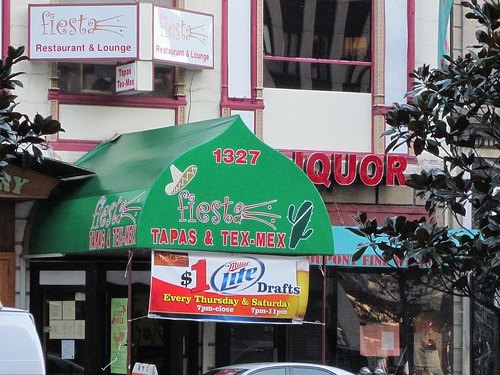
Every since I noticed the $1 beer special at Hot N Juicy in Woodley Park, I’ve been a bit obsessed with finding more $1 beer options. I’m also obsessed with cedar shingles but that’s neither here nor there.

Anyway, it gives me great pleasure to share another find – Fiesta located in the old Taj Mahal space upstairs at 1327 Connecticut Ave, NW has a sweet deal. $1 Miller Lite drafts on Thurs. and Sat.

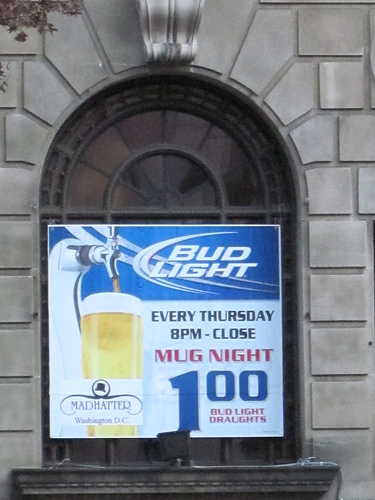
And as previously mentioned, if you don’t like Miller Lite you can go a few storefronts down to the Madhatter for $1 Bud light drafts on Thursdays.


Sam Fitz is a Certified Cicerone® and the Beer Director at Meridian Pint and Smoke & Barrel.

Cask Beer: The Perfect Fit for PoP’s 5-Year

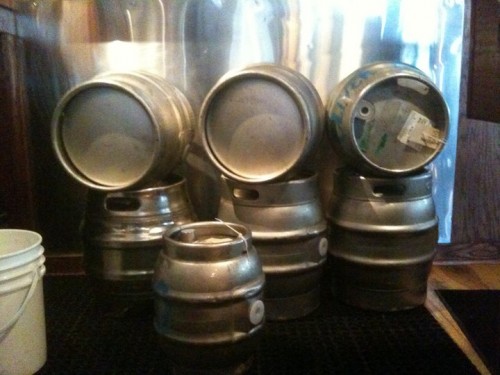
Beer, like most products these days, has been drastically transformed, for better or worse, by modern innovation. The way in which it is now made, stored, and served is markedly different from a century ago. This evolution has changed the very nature of beer. Super-cold and effervescent are appropriate descriptors for the overwhelming majority of brews you’re likely to encounter today, including craft beer, but these would be wholly inappropriate for most of the beers offered just one century ago. Draft systems were nonexistent then and the pub specialty the world over was cask beer, naturally carbonated and served close to room temperature. It may not seem like a big deal, but the transition from casks to kegs transformed beer into something related but distinctively new. It’s kind of like dinosaurs and birds.

Cask beer is brewed and primarily fermented like any other beer. During fermentation, yeast converts sugars into carbonation, which is eventually allowed to escape, and alcohol, which is obviously retained. Draft beer is then filled into kegs and force-carbonated with compressed gas. Before this was possible, brewers had to utilize yeast’s naturally ability to make bubbles. Casks, created from wood or metal, are filled with flat beer that is pitched with a second dosing of yeast and sealed. As the cask “conditions”, the yeast consumes residual sugars and carbonates the vessel. For serving, a faucet is hammered into the cask, and it is either gravity poured or hooked up to a beer engine that pulls the brew out of the cask with pressure applied by a hand pump.

Forced carbonation in draft beer produces small bubbles that are uniform in size and have a particular propensity to lift lingering flavors off your tongue and cleanse your palate. The effect is refreshing, bubbly, and very useful in pairing with fatty foods. Lower temperatures help any liquid to retain its carbonation, so it’s no surprise that draft beer is usually sold very cold to maximize its refreshing capabilities.

Continues after the jump. (more…)

From an email:

Monday Nov 7 starting at 6 pm.
Rob Tod, founder of Allagash Brewing is coming to to Jack Rose [2007 18th St, NW] to share some of his beers and all of his knowledge.

There is no cover charge and we will be selling full oz and 4 oz pours all individually priced. Rob will be in the scotch room simply talking and schmoozing with fellow lovers of beer.

Please join us as we tap:

Allagash Curieux
Allagash Black
Allagash Blonde
Allagash Tripel dry hopped with Sorachi Ace (super, super rare)”


Tim Prendergast is a Certified Cicerone® and the Assistant Beer Director and Cellarman at Meridian Pint.

In April 2010, I spent a few weeks in Belgium, a pilgrimage for any committed fan of beer. I slept in fanciful barges on beautiful canals, ate wonderful food, and of course drank a wide variety of the most amazing beer you could ask for. All of it flavorful, and appetizing, and strong. I quickly had to adjust to the fact that drinking a beer that wasn’t the Belgian equivalent of Budweiser meant that you were usually drinking a beer over 7% abv. I’m a little guy, I got drunk fast. When the time came to leave Belgium, I made my way across the English Channel only to find out that an Icelandic volcano with an unpronounceable name had halted air traffic over virtually all of Europe. I was stuck in Europe for an entire week longer than I anticipated. Poor me. I was afforded a few days in London. What to do?

I headed to the pub, of course. I ordered a beer named Timothy Taylor’s Landlord. The beer arrived in glass that seemed gigantic. I was used to the Belgian serving sizes that were 9-12 oz., this beer was a massive 20 oz. To this day I remember the smell, it was earthy, and grassy, and tantalizing. It tasted somewhat sweet, somewhat bitter, subtle and still complex. I remember having an overwhelming urge to drink A LOT of it. And I did, because even though the brewery calls it a strong pale ale, it was only 4.1% alcohol. To put things in perspective, Miller Lite has more alcohol in it than this beer does.

Thus began my love affair with so-called “session beer”. What is session beer? Think of famous beer slogans, like Miller’s “tastes great, less filling” or Schaefer’s “The one beer to have when your having more than one.” That’s the basic idea behind session beer, now apply it to beer that tastes great and doesn’t spend millions of dollars telling you how unmanly you are (or, if you’re a woman ignore you altogether). In all seriousness, there is great debate over what session beer is, with most of the debate revolving around how much alcohol a beer can have in it and still be called a session beer. British folks tend to put the number around 4%. I’ve seen British beer bloggers call beers at 5% “loopy juice” because it’ll get you so drunk. Americans tend to put that number at 5% or above. I tend to subscribe to the definition of session beer put forth by influential beer blogger Lew Bryson:

► 4.5% alcohol by volume or less

► flavorful enough to be interesting

► balanced enough for multiple pints

► conducive to conversation

At the end of the day, in a very basic sense session beer is a beer that you can and want to drink a few of. Isn’t that what we all want in a beer when we go out with friends? A beer that you can have a few of without getting too drunk or tired to continue your night doing something else. A beer that is drinkable AND flavorful. A beer that engenders conversation by teasing out the gift of blarney rather than making us blubbering fools. It’s certainly what I want.

Continues after the jump. (more…)


Sam Fitz is a Certified Cicerone® and the Beer Director at Meridian Pint and Smoke & Barrel. Read Sam’s take on the Boilermaker here.

Autumn in the District is unpredictable and too often too short. 2011, though, has brought us an unexpectedly pleasant fall to complement the multitude of Oktoberfest, Pumpkin, and other tasty seasonals that abound in the city. But as the weather changes and the beers get darker, I’m finding it difficult to abandon my summer fling: refreshing, high quality, gluten-free fermented cider.

Woodchuck, Doc’s and other American long-standing American cider makers have painted the consumer’s image of cider: sweet, sticky, bubbly liquid produced from apple juice of undefined quality. The residual sugars, usually from cheap ingredients and not apples themselves, are what define these products, and the fact that they are technically made from apples is experienced by the consumer as little more than an image conjured. This is all quite a shame as there are many notable Old World ciders, as well as a burgeoning group of American producers, seeking to redefine the perception of their craft.

Cider’s history is as ancient as that of beer. England, France and Spain have been producing this beverage for thousands of years. Hundreds of different apple varieties have been cultivated specifically for its production, providing astonishing diversity for a product that usually relies heavily on a single ingredient (water and yeast round-out the recipe). Old World ciders can be a little difficult to find stateside and are certainly pricey, but if you can get your hands on them, such as anything made by Etienne Dupont, you’re in for a real treat. Fortunately, the American craft beer movement has begun influencing domestic cider production and the quality is improving every day.

The end of 2010 saw the introduction of Crispin Ciders to the nation’s capitol. Based in Minnesota, Crispin started with a range of ciders called the “Blue Line”. Original, Light and Brut are nice products that are reminiscent of the super sweet, sticky, cheap hard ciders of the 1990’s but are created from better ingredients (fresh-pressed apple juice instead of concentrate) with more care. Made to be familiar and accessible to the general public, they are a nice entry into the world of craft cider.

Continues after the jump. (more…)

View More Stories