“Dear PoPville,

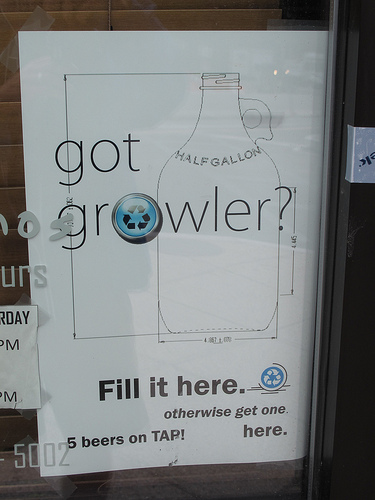
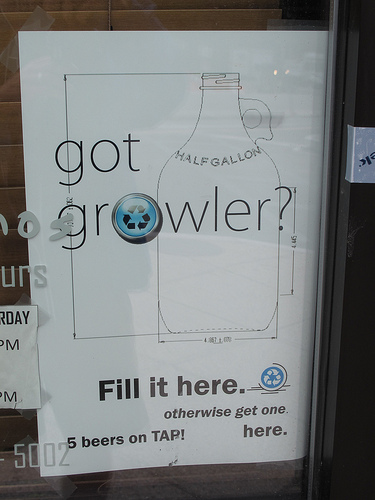
ABRA told the manager of D’Vines this weekend that they were no longer allowed to sell growlers, since they are a retailer and not a manufacturer. You can read about it here if you haven’t. I’m pretty disappointed, since I really like the store and it seemed to be a great boost for them.

If you’d like to express your support the OP also sends a letter he sent to CM Graham:

Dear Councilmember Graham,

I am writing you concerning the recent decision of ABRA to bar the wine shops D’Vines and De’Vinos from selling growlers of beer. I have enjoyed shopping at D’Vines since it opened; they have good wine at a good price, and a good selection of beer. I also want to support our local businesses, and I hope you do too. ABRAs decision, that D’Vines is not allowed to sell growlers under their current license, hurts local business, and serves no valid purpose of their regulatory scheme. The growlers are sealed immediately after filling, and they are not consumed on the premises. I hope that you will consider ways to encourage ABRA to reconsider their decision.”

I believe that ABRA is enforcing the current law so supporters should probably encourage CM Graham and the Council to change the law so that it would be legal to sell growlers at D’vines.

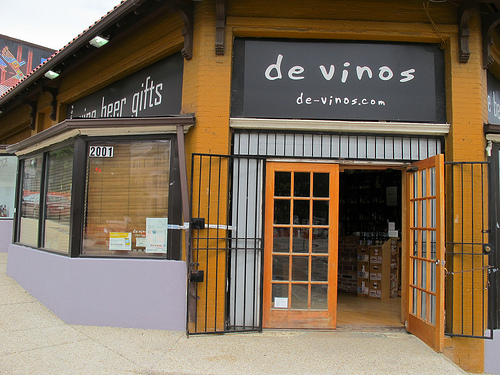
De Vinos is located at 2001 18th St. NW in Adams Morgan and their sister store, D’Vines, is located at 3103 14th Street, NW in Columbia Heights.  We discussed the growlers here.


From an email:

I’m a volunteer with a local urban agriculture non-profit, the Neighborhood Farm Initiative, which is a project of the American the Beautiful Fund. The Neighborhood Farm Initiative, which focuses on adult and teen gardening education, will be hosting our second annual home brew contest fundraiser.

This event “Home Brew Harvest”, held on October 23 at America Ice Co in the U Street neighborhood, will feature a home brew 101 workshop, light seasonal snacks, and tasting of brews from a few local home brewers. The afternoon will conclude with a friendly competition where all attendees can vote for their favorites. This year, the Neighborhood Farm Initiative is teaming up with Food Day 2011, a national event spotlighting sustainable and healthy food, to celebrate the art of home brew – a wonderful way to enjoy sustainable libations.


Sam Fitz is a Certified Cicerone® and the Beer Director at Meridian Pint and Smoke & Barrel. Read Sam’s take on Firestone Double Jack here.

Beer and whisky are perfect partners. Intimately related, the two are made with nearly the same ingredients and processes. In both cases, sugars are extracted from malt (modified grain) and the resulting sugar water is inoculated with yeast with the expectation of boozy goodness. Beer, of course, has hops, and whisky is distilled subsequently to intensify the spirits’ impact. Despite these small differences, the two are a natural pairing.

Purveyors of good beer usually have at least a few good whiskies on hand. Even if it’s just a familiar bottle of Jameson or an excellent Basil Hayden’s, good beer drinkers frequently want a whisky chaser. There used to be a widely recognized term for this: a boilermaker. Although the name has lost its familiarity, the tradition continues.

Taking the classic boilermaker to its furthest extreme, pouring a brew over the top of a shot of whisky, is an endeavor for the brave–or perhaps the overly ambitious. Either way, it’s an experience you won’t soon forget.

Strength is the obvious draw of the boilermaker, and a PBR on top of a shot of rail whiskey easily accomplishes this. The diluted wateriness of the PBR masks the burn of the cheap whisky and makes a bunch of booze beyond tolerable. It’s definitely a field day for heavy drinkers. But what about a craft boilermaker? This is an incarnation that, despite its fortitude, is prized for its aroma, taste, feel and all the other wonderful sensations good beer and whisky can conjure. Enter Governor Hal.

Continues after the jump. (more…)
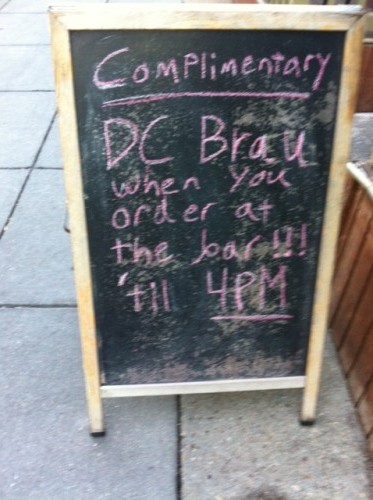


Photo by PoPville flickr user ekelly80

“Dear PoPville,

Do you or any of the members know what stores have or allow mixed 6-packs of beer in DC? Trying to get a taster 6-pack.”

I happened to see a mixed six pack that looked pretty good at D’Vines in Columbia Heights (3103 14th St, NW) Where else can you get a mixed 6 pack around town?


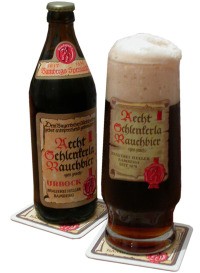
Sam Fitz is a Certified Cicerone® and the Beer Director at Meridian Pint and Smoke & Barrel. Read Sam’s take on Aecht Schlenkerla Rauchbier here.

California is one great place to take a beer trip. Northern California, one of the epicenters from which microbrews emerged in the early 70’s, was arguably the hotbed for the beginning of American craft beer. Sierra Nevada and the revived Anchor Brewery paved the way for American entrepreneurs to jump headfirst into a new world of quality brew. Today many of the world’s finest breweries are located in and around the Bay Area, and the beer culture there is largely unmatched across the globe.

Southern California, a later entrant into the craft beer scene, has come a long way in the past two decades and has started to rival its northern neighbor. The Stone Brewing Company was founded in 1996 and, in a remarkably short time, helped spawn a craft revolution in So Cal. They not only made great beer, but they also established a distributorship to sell the goods of their fellow microbrewers and spread the craft gospel. Now, it would take weeks, maybe months, to tour all of the fine breweries in the south of California.

Incorporating both of these beer destinations into one trip is a daunting task, but at least you can hurry up the 101, skipping the largely open and beer-barren landscape between Los Angeles and San Francisco. Wrong! Sitting on the side of the 101 in Paso Robles, looking like a giant barn in the middle of farmland, is a true gem: the Firestone Walker Brewing Company.

Continues after the jump. (more…)

Sam Fitz is a Certified Cicerone® and the Beer Director at Meridian Pint and soon to open Smoke & Barrel. Read Sam’s take on Jolly Pumpkin Artisanal Ales here.

You won’t believe it’s not bacon beer. Aecht Schlenkerla Rauchbier comes from the UNESCO World Cultural Heritage town of Bamberg, Germany and is a portal into the beer days of old. Beechwood-smoked malt lends the beer a bizarre aroma that can range from a mild campfire smokiness to an all-out bacon attack that will make any vegetarian cringe. There’s no meat in this one though, just the perception conjured by Old World brewing techniques.

Malt is the base of any beer and, in simplest terms, is grain that has been readied for brewing. In a process called “malting”, grains, primarily barley, are soaked in water, allowed to grow to a certain point, and then terminated with heat. Today’s brewers generally skip this step and purchase their malt from maltings, large facilities that process huge quantities of malt. Direct-fire kilns are used and little flavor, other than degrees of roastiness, is added to the malt.

Schlenkerla, which means the little one that can’t walk straight, is a brewpub in Bamberg that hasn’t changed much in its 700 years of operation. The brewers still maintain their own maltings and utilize a wood-fired kiln. This is the entirety of their secret. Smoke from the wood engulfs the malt as it dries, infusing it with flavors more expected in charcuterie than beer. Beechwood, the local fuel source in Bamberg, is known for its meaty smoke and is Schlenkerla’s wood of choice.

Everything about Schlenkerla is old school. They have been brewing out of the same facility since the Middle Ages, lager their beers in natural caves below the city, and pour their Rauchbier at the brewery from oak casks powered by gravity. Aecht Rauchbier means “the original German smoke beer,” and Schlenkerla certainly deserves that title.

Continues after the jump. (more…)
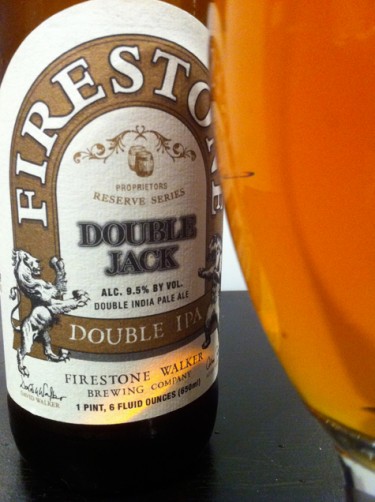


Photo by PoPville flickr user ekelly80

“Dear PoPville,

Now that fall is just around the corner, I would really like to visit an apple orchard of the pick-your-own variety. Do any of your readers have suggestions for ones that

1) are within 1 -1.5 hours drive from DC
2) pet-friendly
and bonus points for
3) include or are nearby wineries?”

The above “Dear PoPville” got me thinking about how much I love Autumn. So in addition to the specific questions above – I’d like to add a couple more – what’s your favorite Autumn seasonal beer. And more generally what’s your favorite Autumn activity in or near DC?


Sam Fitz is a Certified Cicerone® and the Beer Director at Meridian Pint and soon to open Smoke & Barrel. Read Sam’s take on Life & Limb here.

Sam will be checking the post throughout the day to answer any follow up questions you may have.

You can’t blame people that don’t like beer. But you can help them. Generic American light
beers are everywhere, and many perceptions as to what beer actually is are generated by the
pervasiveness of mainstream brands. Craft beer, though, is rapidly expanding and brings with
it an astounding diversity that defies a single notion of “beer”. If you’re familiar with the wide
range of beer styles available, then you should be able to convert your beer-bashing friends.

Sweet, malty amber lagers and English brown ales are good ammunition for rum and coke
devotees, or other sweet mixed-drink drinkers. Whiskey aficionados are usually quite satisfied
with a hefty barrel-aged brew. Coffee stouts can wow the caffeine dependent populace (this isn’t
rocket science). But perhaps the most astonishing introduction you can offer is to the growing
world of sour beers.

Sour was once the norm for beer. Before developments in sanitization procedures and scientific
knowledge, the environment in which a beer was brewed impacted the outcome as much as
any ingredient deliberately added, and the effect was usually some degree of sour presence. If
you’ve ever had the displeasure of consuming sour milk, then you’ve been rudely introduced
to Lactobacillus, an omnipresent bacteria with a penchant for sour. Lacto lives in your fridge
and in your brewery, constantly searching for lactose and other sugars from which it can derive
nourishment and convert to lactic acid. Brettanomyces (affectionately known as Brett by sour
lovers), another souring agent, is a yeast usually found on the skins of fruit, and it has been
championed by the Belgians in the form of Lambics, Geuezes & Flemish Reds.

Continues after the jump. (more…)

View More Stories