Streets of Washington is the brilliant blog covering some of DC’s most interesting buildings and history written by John DeFerrari. John is also the author of the equally brilliant Lost Washington DC. ‘Streets of Washington Presents…’ will feature some fascinating buildings and history from around PoPville.
The monumental bank building on the southeast corner of 14th and G Streets, NW—vacant now for well over a decade—is one of several such landmarks in Washington’s old financial district, but it has lived the ups and downs of the banking industry much more dramatically than the others. It was born as the home of a feverish enterprise that burned itself out after only 20 years. After going on to host the venerable National Bank of Washington for many decades, it went dark when that institution also collapsed in 1990. For more than a decade now, plans have been afoot to turn it into a museum to commemorate the victims of the Armenian genocide of 1915-1923. The building, including its interior, is protected as an historic landmark. It’s one of only 13 properties in the District with an historic interior designation. As reassuring as it is that plans are in the works for the building’s future, it is also disheartening to see it stand vacant for so long—an unintended reminder, should we need one, of how impermanent our financial institutions can be, despite their best efforts to convince us otherwise.
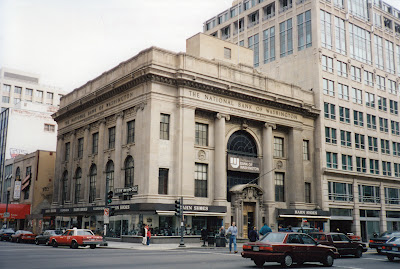
The bank building as it appeared in 1995 (Photo courtesy of the archives of the D.C. Preservation League).
Constructed in 1926, the building was originally the home of the Federal-American National Bank, which had been founded 13 years earlier. Its first and only president was John Poole (1875-1940), an extraordinary individual who once wielded enormous influence in the local financial world. Poole’s roots were humble; he was born to a Parkersburg, West Virginia, grocer who moved his family to Washington when John was only a month old. Young Poole was educated in DC public schools and began his professional career as a messenger for the United States Express Company. His talents apparently were recognized, and he quickly worked his way up through several DC financial institutions.
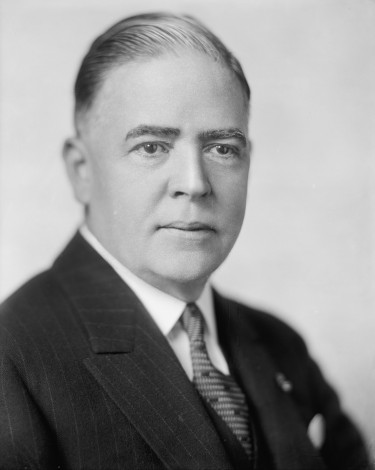
John Poole (Source: Library of Congress).
By 1912, Poole was 36 years old and at the top of his game as cashier of the Commercial National Bank. The Washington Post noted that Poole was “near the head of this city’s group of younger bankers.” It was an opportune time to be in the financial world; Washington’s banks had grown tremendously since the turn of the century, more than tripling their assets. Then in January 1913, Poole, who was also on the board of directors, led a group of 13 board members who decided to split off from the Commercial National and form their own bank. Their new Federal National Bank was an instant sensation, raising $1.5 million from investors within three days of being announced. It opened the doors of its fully-furnished banking room just two days after that. A throng of new customers deposited almost $500,000 on opening day.
Continues after the jump. (more…)