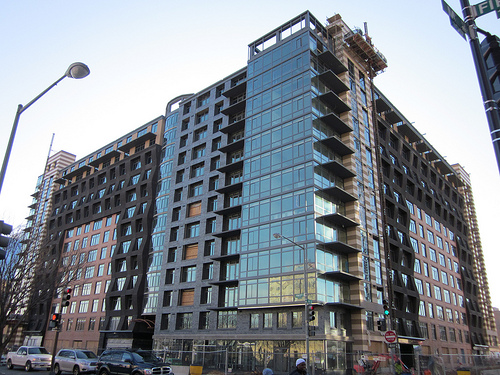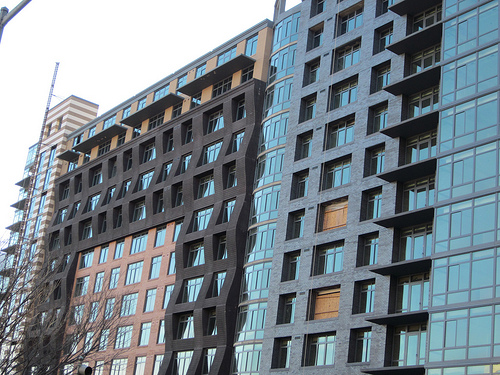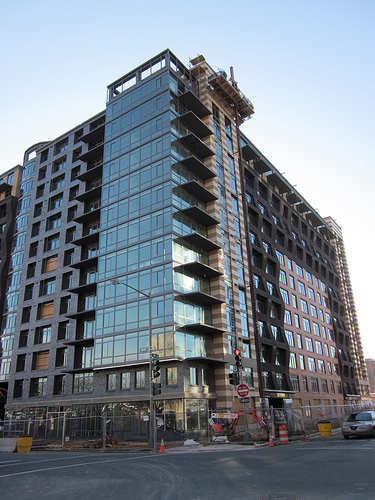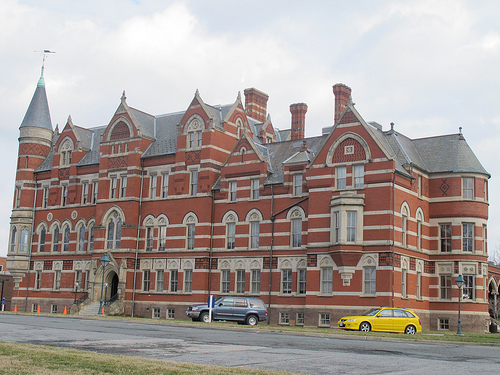
I thought these two from Gallaudet off Florida Ave, NE were pretty sweet.
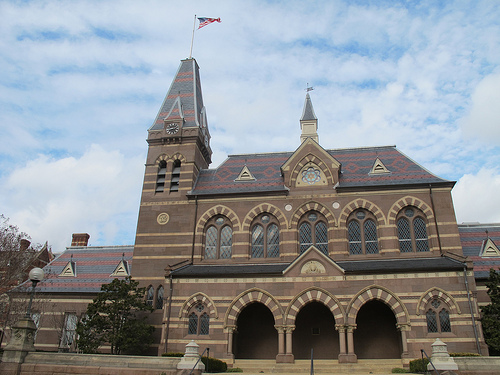


I thought these two from Gallaudet off Florida Ave, NE were pretty sweet.
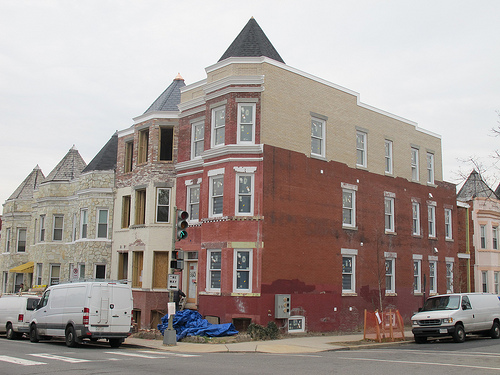
I assume they’ll match the color and when/if they do, I gotta say not so bad. You can see what it looked like in Nov. 2011 here.
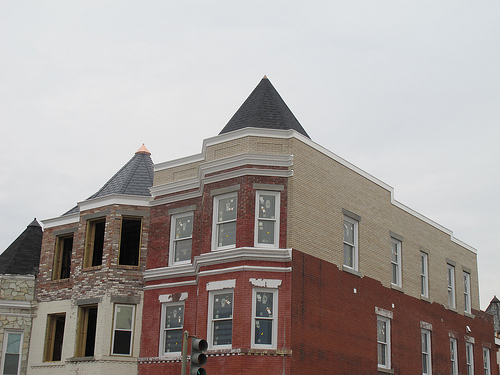
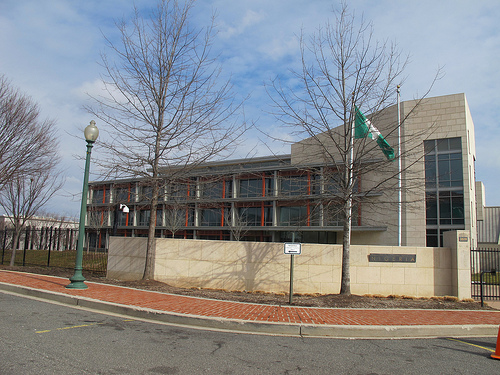
The photos don’t do it great justice but you can sorta tell how unique it is. The Nigerian embassy is located at 3519 International Court, NW.
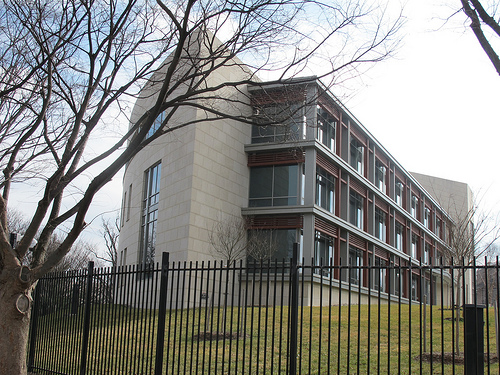
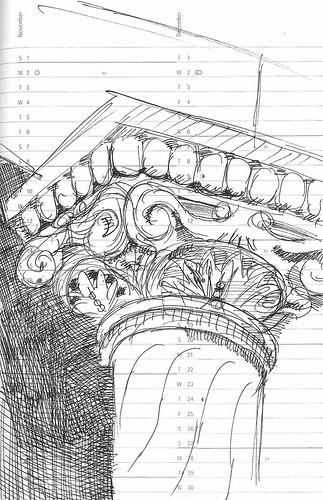
Image by PoPville flickr user hipchickindc
Dear PoP,
You recently posted my question about best practices in basement renovations (http://www.princeofpetworth.
com/2011/12/dear-popville- ). I got some great information and have talked to numerous people that responded. I’ve since realized that in order to move further I need to hire an architect.basement-renovation-advice/# comment-438830 Could you ask PoPville for recommendations? Despite it being a basement, I have great exposed brick and wooden ceiling beams throughout the entire ~1100 sq ft space. I’m hoping to go for a modern “loft” feel accenting the existing brick and wood, and I think there’s definitely room for some cool unique accents, which with the right architect, could make it a showpiece project.
Streets of Washington is the brilliant blog covering some of DC’s most interesting buildings and history written by John DeFerrari. John is also the author of the equally brilliant Lost Washington DC. Following is a new occasional series called ‘Streets of Washington Presents…’ featuring some fascinating buildings around town. The Evening Star Building has always been one of my favorites. I was blown away to learn about the history. As a result it is a long post, not all contributions will be this extensive. Hope you enjoy it as much as I did.
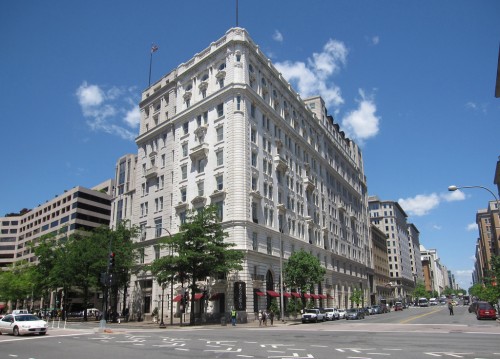
It was a sad day in Washington in August 1981 when The Washington Star ceased publication after more than 128 years of service. The Star’s tenure had stretched back before the Civil War, an amazing run that witnessed the historic sweep of the city’s development from small town to sophisticated metropolis. “The Rock of Gibraltar in Washington journalism is The Washington Star, one of the world’s really great newspapers,” historian Fred A. Emery wrote in 1935. The rise and fall of this bygone institution has its own grand sweep, with its greatest achievements occurring when it was quartered in the majestic marble building at 11th Street and Pennsylvania Avenue, NW, that still bears its name today.
The Star began inauspiciously enough in December 1852, one of dozens of newspapers that sprang up for limited runs in 19th century Washington City. In fact, two other D.C. newspapers had already used the Star name, the Columbian Star from 1822 to 1827, and the first Washington Star in 1841. The third Star, the one that would matter, began as a four-page broadsheet with a run of 250 copies, printed on a hand press in a small office at 8th and D Streets, NW. The paper’s first owner, Captain Joseph Borrows Tate, sought to distinguish the Star from all the other rags published throughout the city by striking a tone of impartiality: “The Star is to be free from party trammels or sectarian influences…devoted in an especial manner to the local interests of the beautiful city which bears the honored name of Washington.” The paper’s neutral stance and focus on local news became its trademark and, in time, gave it broad appeal and commercial success. It also led at times to overly innocuous reportage, as in this oft-quoted remark by reporter William Tucker that appeared in the paper’s first edition: “Our courts are sitting, but the business with which they are engaged is not of a very interesting character.”
Tate sold the paper within a year to William Wallach (1812-1871), an aggressive Texan who worked hard to build up the business, moving its office to the southwest corner of 11th and Pennsylvania in 1854. Wallach hired a promising young reporter, Crosby S. Noyes (1825-1908), in 1853, and Noyes quickly became the Star‘s star. One of his many assignments was to report on the hanging of John Brown at Harper’s Ferry, WV, in 1859, which he did in flowery, dramatic prose. The Star maintained an anti-slavery stance in those days and, once the Civil War began, was decidedly pro-Union, despite the strong Southern sentiments then common in Washington.
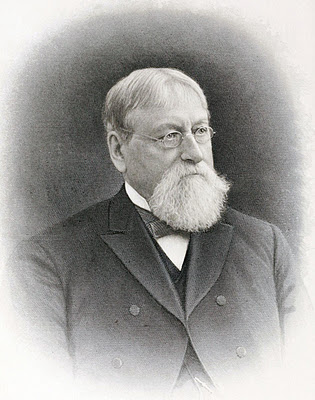
Crosby S. Noyes (Source: Wikimedia Commons)
The paper grew in prestige during the war years, aided by its exclusive connections with an early incarnation of the Associated Press. Through the AP, the Star‘s vivid coverage of the war’s impact on Washington was relayed across the country. The New York Times often reprinted war reports from the pages of the Star, and the paper’s prestige increased. Supposedly, as soon as Abraham Lincoln finished delivering his second inaugural address, he handed the text to Crosby Noyes so that it could be printed in the Star.
In 1867, Wallach retired and the paper was bought by Noyes and four other investors: Samuel H. Kauffmann (1829-1906), Alexander “Boss” Shepherd (1835-1902), Clarence D. Baker, and George W. Adams. Shepherd, who would become governor of D.C. in 1873, sold his share of the enterprise within a few years, as did Baker, and Adams remained a behind-the-scenes investor. That left Noyes and Kauffmann to establish a family dynasty that would preside over the Star for another 100 years. Noyes exercised editorial control, while Kauffmann served as publisher and handled the business side.
Continues after the jump. (more…)
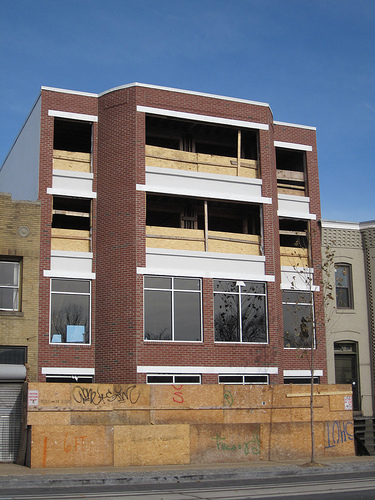
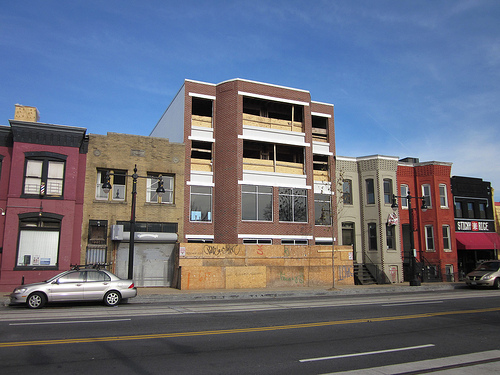
Too early for a thumbs up/thumbs down vote for this one from the 1200 block of H St, NE?
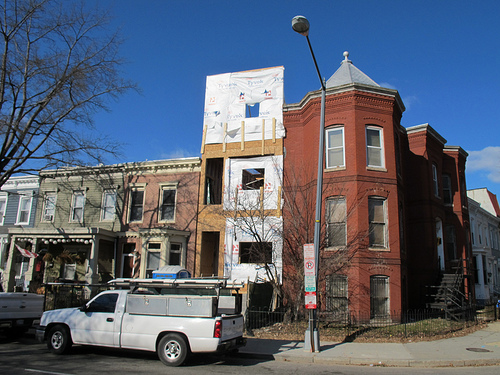
Oh boy…
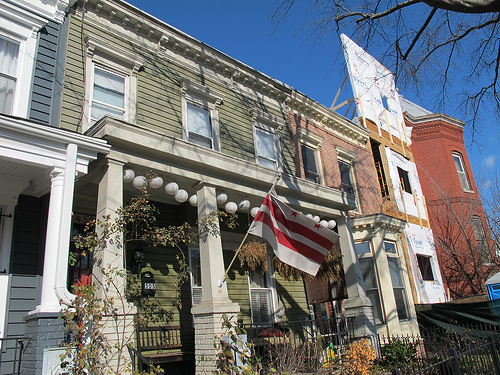
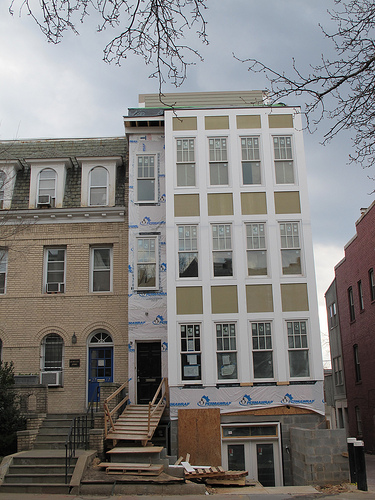
It’s been a while since we checked in on 2714 Ontario Road, NW. We’ve been following the progress of this construction here, here and here.
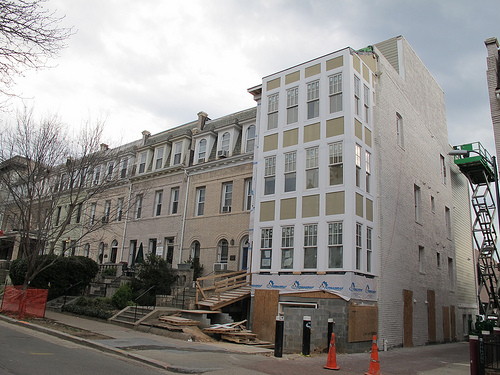
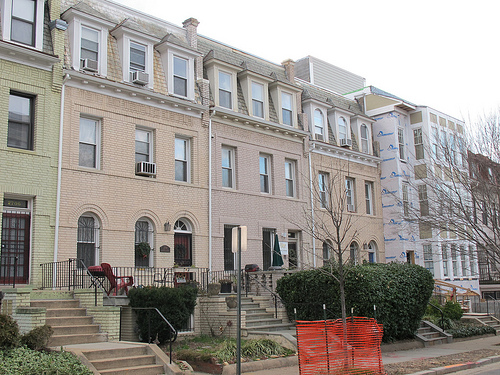
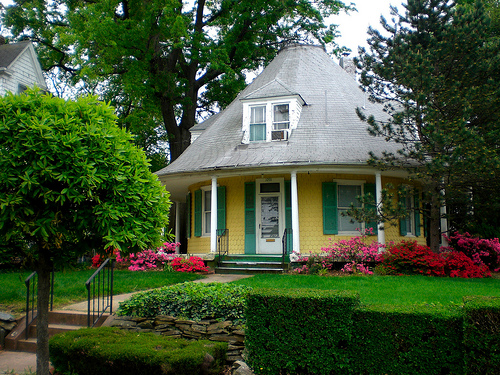
Photo by PoPville flickr user Lalaroo
Some interesting info from the Brookland listserv on this oft nominated House of the Day:
Working with John Feeley, I have researched the history of the Round House (1001 Irving) and nominated it as a DC landmark building. The nomination was filed by the DC Preservation League. The building is protected from major changes (to the exterior only — the nomination is only for the exterior of the building) until the city’s Historic Preservation Review Board actually hears the case, and at that time the protection becomes permanent or disappears. Some cases are heard fairly soon and some wait for years. The owner, a local developer who has begun a good restoration of the building anyway, and the ANC, all are consulted before the hearing, naturally, but the Board will base its decision largely on the historical and artistic aspects of the building itself. The building permits already issued to the owner remain in force, because they were validly issued. Visiting the place recently, the developer seems to be maintaining not only the exterior as it was but also the interior. (There were three rooms surrounding a central spiral staircase that goes to the second floor. A skylight tops the house.
The house was built in 1901 by a prominent Brookland builder, John C. Louthan, who lived in another house he himself built at 12th and Irving (now gone). His architect was a very busy designer of modest houses in the city, Edward Woltz. This was one of only a handful of larger buildings Woltz designed. Over its life the house has seen only four owners; Mrs. McKinney, who died last year, had lived there since about 1950. There is no information about why Woltz and Louthan chose the odd shape for their house — octagon and round houses were a short fad in the US in the 1850s but had stopped being built by the Civil War and revivals of this style are rare. Nonetheless, that is what Woltz seems to have done. There are no other round houses in Washington.