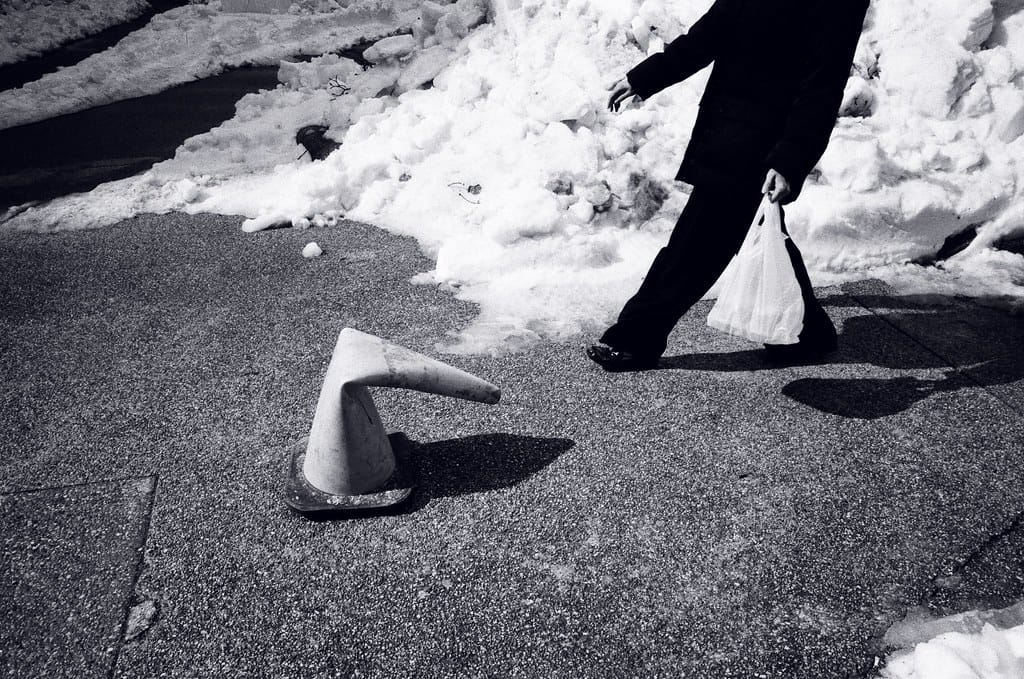
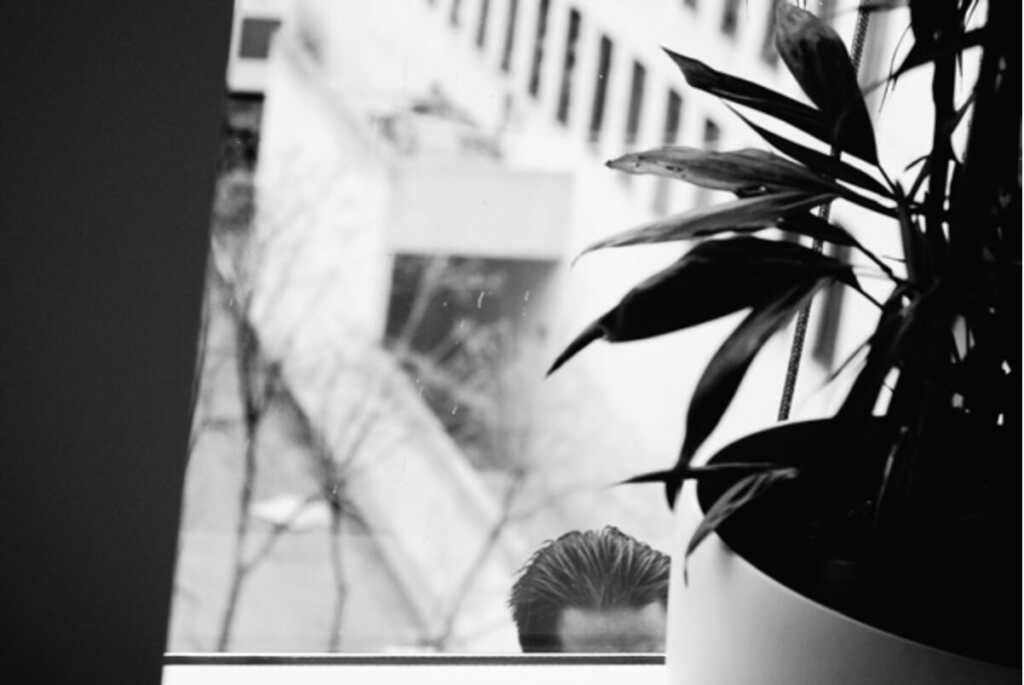
Photographer Mike Hicks shot this with a Leica using black and white film.


Photographer Mike Hicks shot this with a Leica using black and white film.
Yesterday’s LOOK photo has been deemed too controversial for this blog and was removed yesterday afternoon. Be sure to check out the complete award winning photo essay about autisim by photographer Gihan Tubbeh. Last week, a photograph of two men kissing caused some people to cancel their WAPO newspaper subscriptions.
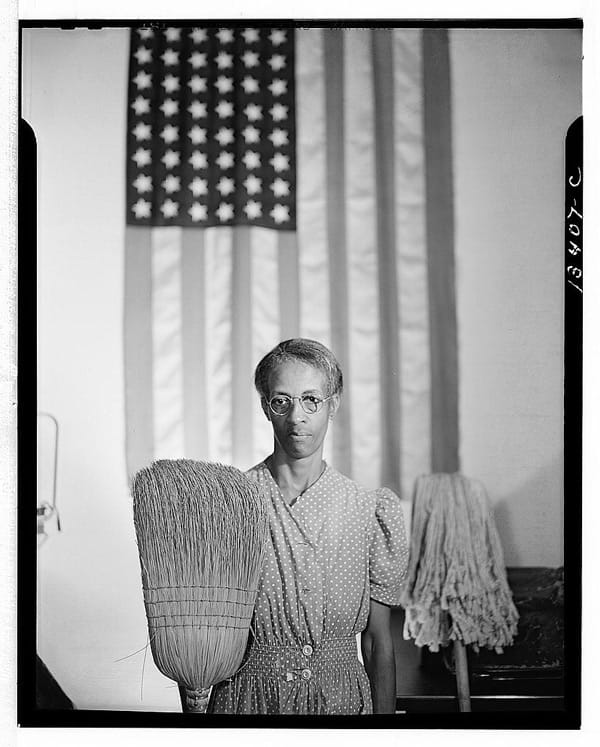
Photographer Gordon Parks took this photograph titled “American Gothic” in 1942 while working for the Farm Security Administration in DC. His editor, Roy Stryker, said that the photo was “an indictment of America” and would get all the FSA photographers fired. Read the March 2006 obit from NYT photography critic Andy Grundberg. Excerpt below.
Perhaps his best-known photograph, which he titled “American Gothic,” was taken during his brief time with the agency; it shows a black cleaning woman named Ella Watson standing stiffly in front of an American flag, a mop in one hand and a broom in the other. Mr. Parks wanted the picture to speak to the existence of racial bigotry and inequality in the nation’s capital. He was in an angry mood when he asked the woman to pose, having earlier been refused service at a clothing store, a movie theater and a restaurant.
…
Mr. Parks credited his first awareness of the power of the photographic image to the pictures taken by his predecessors at the Farm Security Administration, including Jack Delano, Dorothea Lange, Arthur Rothstein and Ben Shahn. He first saw their photographs of migrant workers in a magazine he picked up while working as a waiter in a railroad car. “I saw that the camera could be a weapon against poverty, against racism, against all sorts of social wrongs,” he told an interviewer in 1999. “I knew at that point I had to have a camera.”
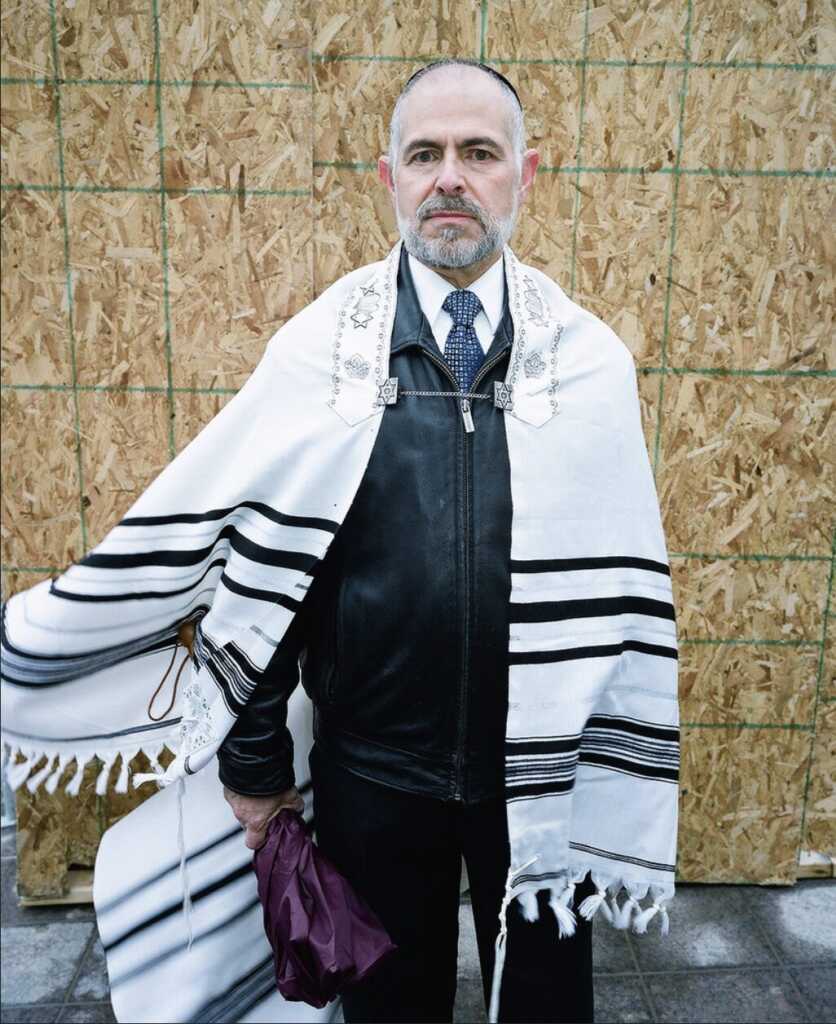
Arthur Blecher, Rabbi. © 2010 Matt Dunn
Arthur Blecher is an ordained Rabbi, author, practicing psychotherapist and advocate for marriage equality in DC. Arthur was present at the DC Superior Court yesterday to witness some of the 151 same sex couples applying for marriage licenses. More photos from outside the courthouse are here.
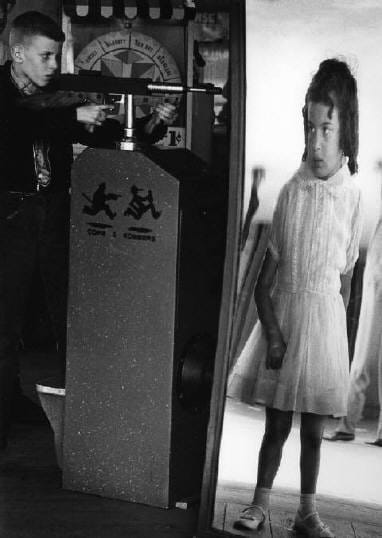
Untitled from the Chicago photographs © 1961 Yasuhiro Ishimoto
The Spring 2010 issue of Aperture Magazine has a feature on Japanese-American Photographer Yasuhiro Ishimoto. The photo below was taken in Chicago between 1959-1961. Yasuhiro Ishimoto was born in San Francisco and raised Kochi City, Japan. In 1939, due to concerns of him being drafted he returned to the US where he studied agriculture at the University of California (1940-42). He moved to Chicago in 1944 and began to study architecture at Northwestern University in 1946 when he met photographer Harry Shigeta and took up photography seriously. Two years later Ishimoto transferred to the Institute of Design where he studied with Harry Callahan, Aaron Siskind, and Gordon Coster(1948-52). In 1961 he returned to Japan (Tokyo), where he has lived ever since. Ishimoto showed his devotion to his adopted city, Chicago, in his book, Chicago, Chicago (Bijutsu Shuppan-sha, 1969). This book is often regarded as Ishimoto’s most personal statement – his bold use of contrast, the design of the frame, and the influence of his studies in architecture define his Chicago. Ishimoto has published many books and exhibited widely throughout Japan and the US. In 1999 he was the subject of a career retrospective at the Art Institute of Chicago.
© 2009 Kay Rousslang
Local photographer and Petworth native Kay Rousslang writes the A Flaneur in Washington blog. The term flaneur, from the French verb flâner, means “to stroll”. In Charles Baudelaire‘s essay The Painter of Modern Life, Baudelaire describes the flaneur as the ideal modern man, one who “sets up house in the heart of the multitude, amid the ebb and flow of movement, in the midst of the fugitive and the infinite.” The flaneur “makes it his business to extract from fashion whatever element it may contain of poetry within history, to distil the eternal from the transitory.”
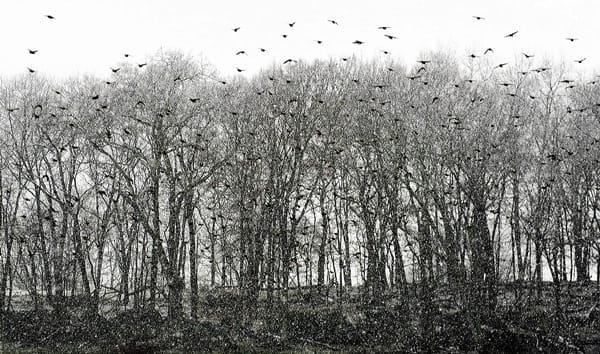
UNTITLED © Ricky Carioti / Washington Post
A flock of birds swarm a field in Loudoun County, Va., during a light snowfall on Dec. 5, 2009.
In yesterday’s LOOK post, most people commented on the context of the photo, the WAPO article, rather than the photograph itself. Here’s another photo from the 2010 WHNPA awards. The Pictorial Category awarded 8 photos. Which of the eight photos is your favorite and why? Ricky Carioti, from the Washington Post, won an award of excellence for the photo below.
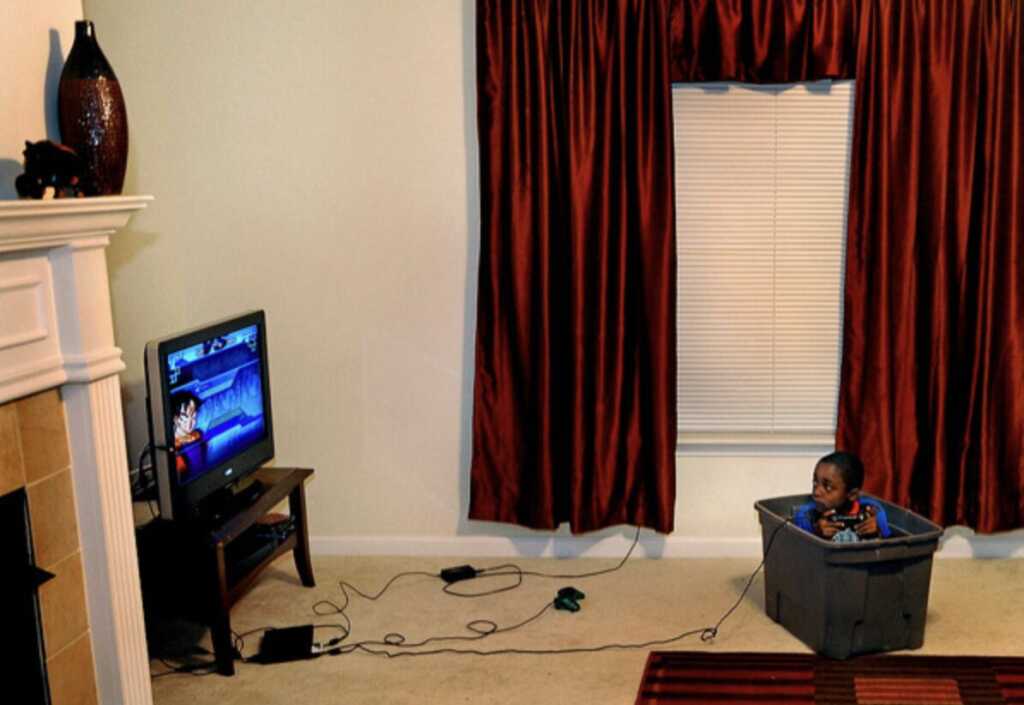
BIN BOY © Michael Williamson / Washington Post
Daverena White’s young son, Milique White, 4, sits in a plastic storage bin as he plays a video game at the apartment in Germantown, Md., Nov. 24, 2009, where the family now lives. His family had been homeless for months but got housing through a special county program.
More from the 2010 WHNPA awards. The Feature Category awarded 7 photos. Which of the seven photos is your favorite and why? Third Place went to Michael Williamson of the Washington Post for the photo titled “Bin Boy”.
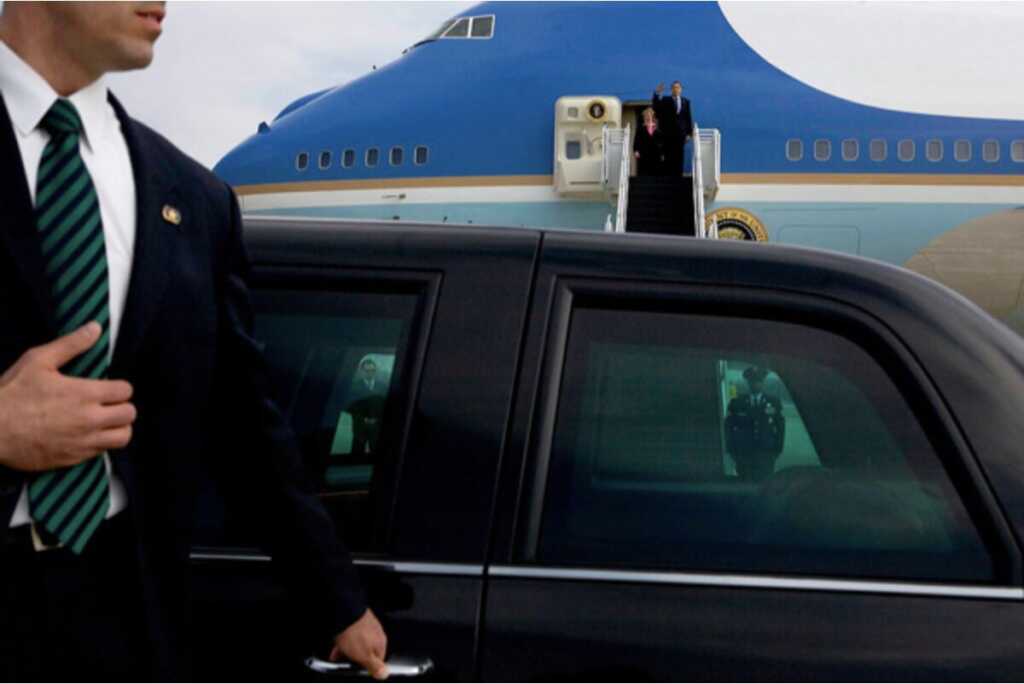
© Stephen Crowley / New York Times
ARRIVAL
President Barack Obama arrives in Columbus, Ohio, to address police academy graduates on March 6, 2009.
The White House News Photographer’s Association annual awards ceremony was Sunday, Feb. 14th. New York Times Photographer Stephen Crowley was awarded third place in the Presidential Category for this photo, titled Arrival.
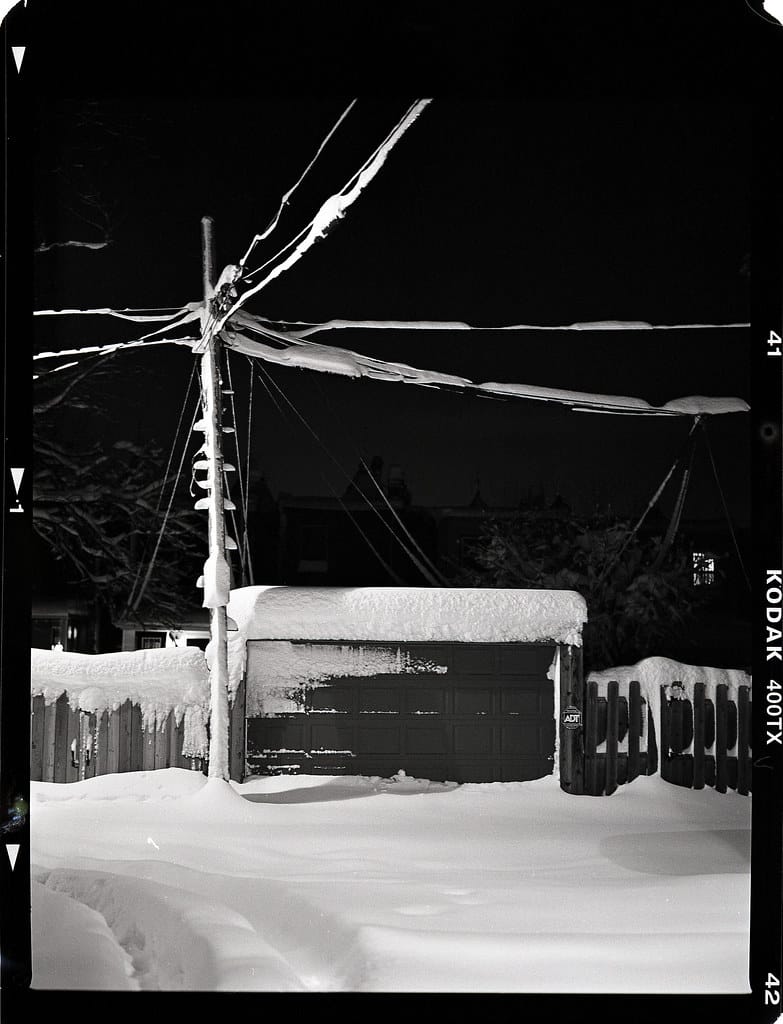
© 2010 LMNOphotos
A night shot of Linden Court on Tri-X film from local photographer Tony Zarrella of LMNOphotos. Join the group LOOKDC.