

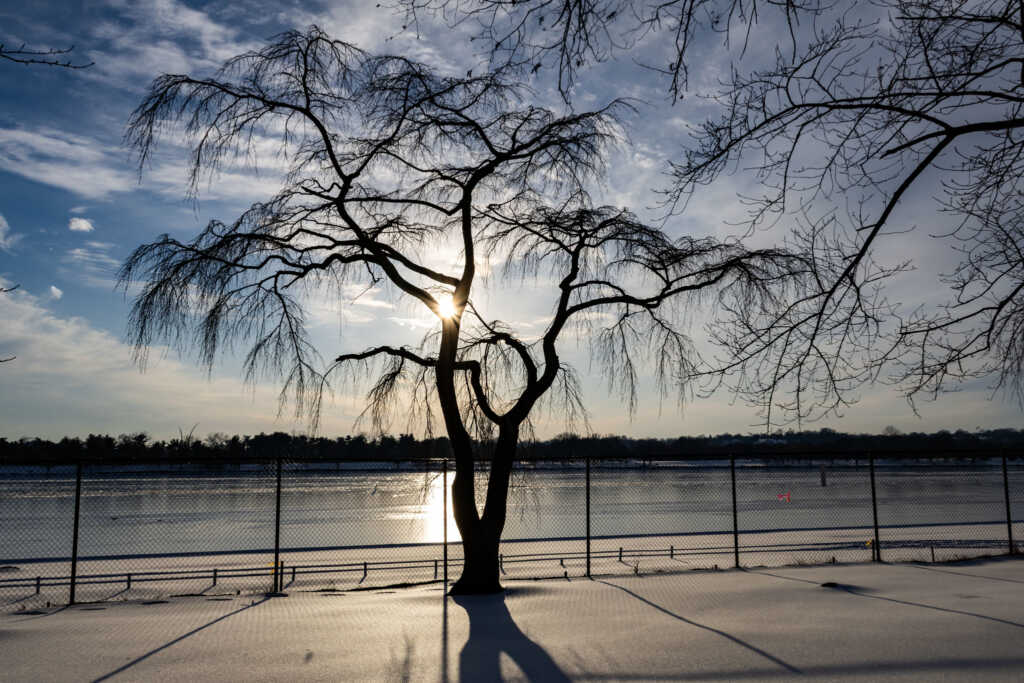
photo by Diane Krauthamer
From the Mayor’s Office:
“The District Department of Health (DC Health) has lifted the recreational advisory for the Potomac River in Washington, DC, effective immediately. Consistent water quality testing shows bacterial levels are now within safe ranges for recreation.
The advisory was issued following the January 19, 2026 collapse of a section of the Potomac Interceptor, which released untreated wastewater into the river. The District, in close coordination with DC Water, the Department of Energy and Environment, the District’s Homeland Security and Emergency Management Agency, DC Health, the U.S. Environmental Protection Agency (EPA), and the Federal Emergency Management Agency, has conducted ongoing water quality monitoring at multiple locations along the Potomac River as well as the Anacostia River.
Escherichia coli (E. coli) in urban rivers is highly variable and high E. coli values can be caused by many different sources of pollution. For example, E. coli levels can increase when it rains or when snow melts, because this creates stormwater runoff which carries bacteria from pet and wildlife waste to waterways. The EPA standard for E. coli for recreation contact is 410 MPN/100 mL and while swimming in the rivers without a permit is never allowed in the District, that is also the standard that the District uses.
Recent tests confirm E. coli levels in the District’s portion of the Potomac River meet EPA standards for recreational use and have remained within typical range for the District’s rivers for the past 21 days (since the last overflow).
“Protecting the health and safety of District residents is our top priority,” said Dr. Ayanna Bennett, Director of DC Health. “After careful review of the last three weeks of water quality data, we are confident that conditions in the District’s portion of the Potomac River no longer pose an elevated public health risk. This advisory applies only to waters within the District of Columbia, and we encourage residents to follow guidance from neighboring jurisdictions for areas outside the District’s boundaries.”
Throughout this incident, Washington, DC’s drinking water has not been affected. The water used for DC’s drinking water is being pulled from upstream of the break (at Great Falls). Any sewage that went into the river because of the break in the Potomac Interceptor flowed away from the water intake and not towards it.
For more information on DOEE’s testing data, visit doee.dc.gov. For DC Health’s health advisories, visit doh.dc.gov. For information on DC Water’s progress on the Potomac Interceptor repair, visit dcwater.com.”
From the Potomac Conservancy:
“Potomac Conservancy today issued a public statement expressing disappointment and a call for accountability following DC Water’s failure to provide a comprehensive written response to a February 9th letter outlining urgent community concerns.
The collapse of the Potomac Interceptor pipe released more than 200 million gallons of wastewater into the Potomac River and the C&O Canal. The spill prompted health advisories and halted safe recreation and is now considered the largest sewage spill in U.S. history.
Potomac Conservancy’s February 9th letter called for clear answers, transparent communication, and commitments to independent investigation and long-term environmental remediation. The letter was signed by over 2,100 residents and 21 businesses and organizations, representing a broader network of more than 42,000 river supporters. As of the February 27th deadline for response, DC Water had only confirmed receipt of the letter.
In its public statement, Potomac Conservancy noted that while some progress had been made in recent weeks, public trust has eroded due to lack of communication and must now be actively rebuilt through transparency and accountability.
At the February 26th DC Water community meeting in Bethesda, turnout reflected the scale of concern. “In the nearly 50 years that I’ve lived in the DC metro area, I’ve never seen so many people come out for an environmental hearing,” noted William Eichbaum, former Vice President of the World Wildlife Fund and long-time D.C. resident.
Potomac Conservancy acknowledged recent progress by DC Water, including daily water testing, but stated they do not yet go far enough to restore public trust. The organization reiterated its call for an independent third-party investigation, water quality testing through summer, and visible and regular public access to agency leadership.
Potomac Conservancy stated it remains ready to work collaboratively on the Potomac River’s recovery while urging DC Water to rise to meet the moment.”