

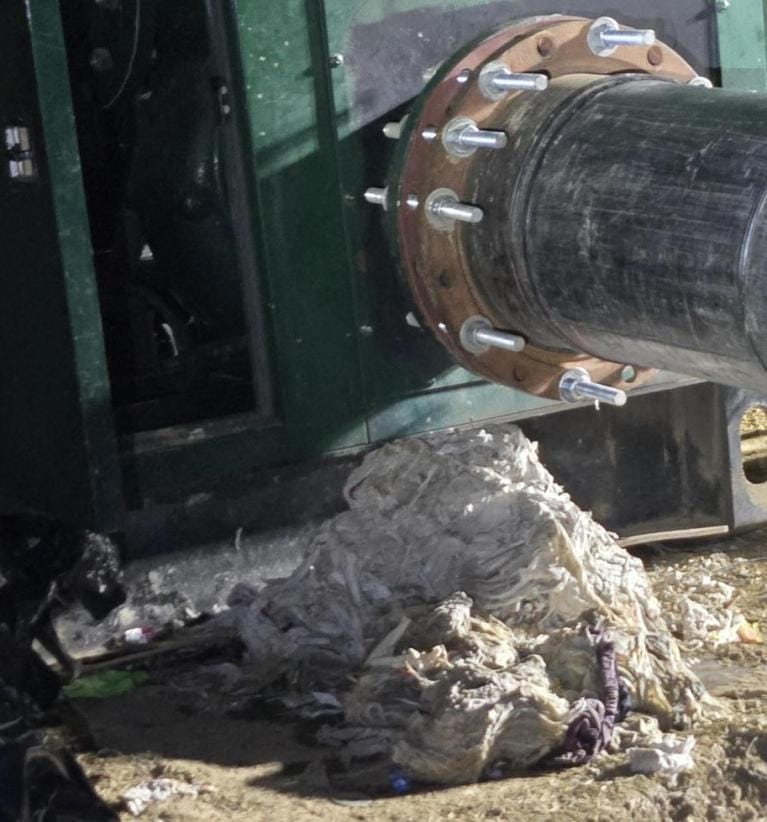
“A significant overflow occurred overnight after pump capacity dropped during a high-flow period. An earlier, smaller overflow was contained. New pumps may arrive this week to help stabilize operations. Water quality sampling continues.”
The latest from DC Water:
“UPDATE: Potomac Interceptor Collapse, February 9
Highlights
A significant overflow occurred late Sunday during a high flow period while several bypass pumps were temporarily taken out of service for maintenance reducing overall pumping capacity.
DC Water is preparing an Environmental Restoration Plan, which is still in development.
Construction continues to establish upstream and downstream access points to support additional bypass pumping around the collapsed pipe section.
A full repair timeline has not been established. New bypass pumps and bulkhead must be installed before crews can safely remove a large rock dam blocking the damaged section of pipe.
DC Water and its contractors continue working around the clock, to operate, clean and maintain bypass pumps that divert wastewater around the damaged section of the Potomac Interceptor and return flows into the system further downstream. Despite these efforts, a significant overflow occurred late Sunday. The amount is still being calculated, but preliminary estimates indicate several hundred thousand gallons of wastewater overflowed.
The overflow event occurred when multiple pumps were out of service for required cleaning and maintenance after becoming clogged by non-disposable wipes that were flushed into the system. This reduction in pumping capacity coincided with a high flow period in the sewer system contributing to the event. The incident is in addition to a smaller overflow that occurred earlier in the day but was contained within the site and did not reach the river.
Restoring full functionality and flow to the Potomac Interceptor remains the key to eliminating both dry and wet weather overflows. Work continues to create two new access points upstream and downstream of the damaged pipe section to increase pumping capacity. These improvements are needed to install a bulkhead to limit flow and allow for the safe removal of a significant rock blockage at the collapse site.
Five new bypass pumps – each capable of pumping up to 13 million gallons a day – are currently being tested and may begin arriving later this week. Once those arrive, some pumps can be placed on stand-by to immediately replace pumps taken out of service for cleaning and maintenance.
DC Water is also preparing an environmental remediation plan and continues to perform water quality sampling. Elevated E. coli levels remain at the Lock 10 channel, where snowmelt combined with residual wastewater are entering the river and are periodically further impacted by overflow events. Sampling indicates significant decrease in E. coli at downstream sampling sites where levels are within acceptable limits as set by the Environmental Protection Agency.
Water Quality Sampling Results
Results of water quality sampling below reflect adjustments that have been made following a review of the sampling data that identified errors that have now been corrected. The highlighted results are updated, the most significant of which was the sample taken near the drainage channel on February 6. The previous data indicated 2,420 MPN/100mL when the results were 242,000 MPN/100mL. We regret this mistake and have implemented additional quality control measures to ensure the accuracy of the data reported. The updated data is highlighted in yellow.
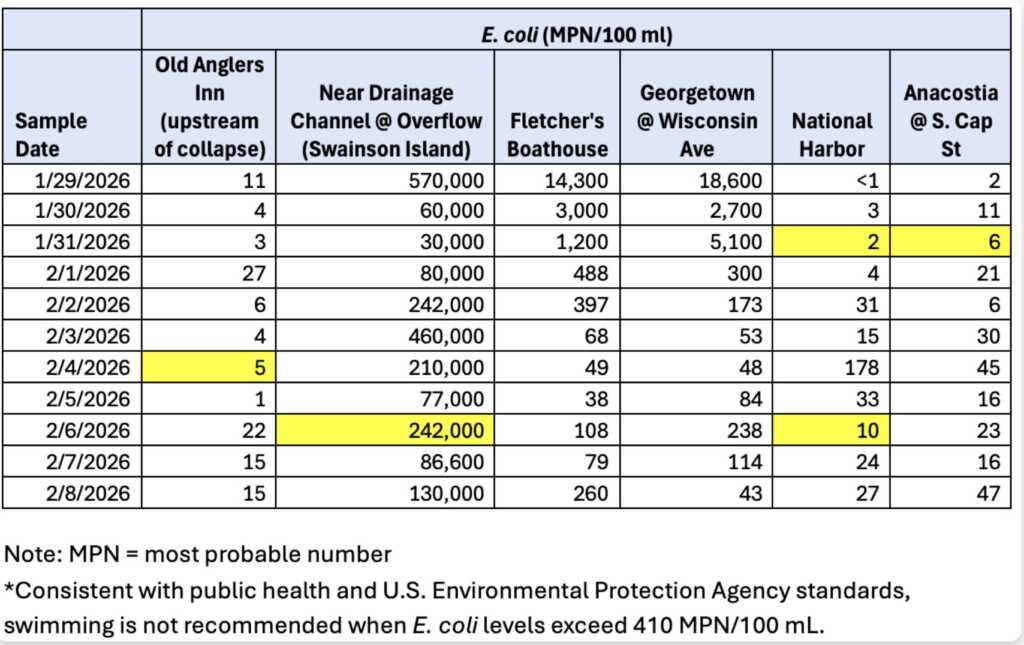
Historical data indicate typical E. coli levels in the Potomac River can range from 10 to 5,000 MPN/100mL. Variability in E. coli results are common and are influenced by multiple factors, such as weather (rainfall/snow melt and associated runoff) and subwatershed activities and conditions, including aging sewer infrastructure and illicit discharges.”
From the Potomac Conservancy:
“Today, Potomac Conservancy sent a letter to DC Water calling for accountability, answers, and actions in response to the massive Potomac Interceptor sewage spill that began on January 19, 2026 in Cabin John, Maryland.
The river advocacy group was joined by nearly two dozen national and regional environmental and business signatories including American Rivers, National Parks Conservation Association, Piedmont Environmental Council, Nature Forward, and Rock Creek Conservancy. Over 2,100 concerned residents and local businesses joined the public-sign on letter which ran from January 30 to February 8, 2026.
The letter, sent Monday morning to DC Water CEO and General Manager David Gadis, calls for transparency, independent investigation, effective restoration efforts, and long-term investment into infrastructure improvements after hundreds of millions of gallons of raw sewage were released into the Potomac River from the Potomac Interceptor.
“The public outcry and response to our letter shows that our community deeply cares about the health of the Potomac and safety of their water,” said Hedrick Belin, President of Potomac Conservancy, adding, “When failures like this happen, they don’t just harm the river, they erode public trust in infrastructure systems meant to protect us. Our communities deserve clean water and they’re demanding it.”
DC Water has implemented emergency diversion measures to stop and contain the leak, but Potomac Conservancy and signatories of the letter call on an independent investigation and improvement plans to prevent a disaster like this from happening again.
“If this spill had occurred just a few months later, during peak recreation season, E. coli contamination could have effectively shut down large stretches of the river, eliminating safe access for anglers, paddlers, and families”, added Belin.
The Conservancy’s letter urges DC Water to:
Provide transparent public updates on spill volume, water quality, and health risks
Commission an independent investigation into the cause of the infrastructure failure
Publicly identify other known or potential weak points within infrastructure system with a timeline and action plan for repair
Commit to environmental mitigation and restoration
And more (Read the full submitted letter at https://potomac.org/blog/2026/2/9-pc-letter-to-dc-water-sewage-spill)
Environmental partners echoed the call for action. “As the river that supports our nation’s capital and its surrounding communities, the Potomac should reflect the highest standards of water health and stewardship,” said Gary Belan, Senior Director of Clean Water Supply for American Rivers. “Sadly, the Potomac Interceptor sewage spill demonstrates the devastating impacts that can occur when much needed maintenance and investment are delayed. This is a situation that will increasingly play out nationwide if municipalities ignore the needs of their water systems. The health of their rivers and citizens depend on timely investment.”
Potomac Conservancy’s 2025 Potomac River Report Card showed that the river’s recovery has stalled over the past decade, making infrastructure failures like this one particularly concerning. Fisheries and biology experts are still weighing the full-scale impact of the contamination.
“Communities across the Potomac watershed, including those who have lived for decades with the impacts of chronic sewage pollution and toxic releases in the Anacostia River and other waterways, know too well the consequences of delayed action and underinvestment,” said Belin. “This incident must not further undermine public confidence in our water safety and infrastructure.”
Potomac Conservancy emphasizes that it remains committed to working constructively with DC Water as a clean water partner, and awaits a response from their leadership by February 27, 2026.”