The reality
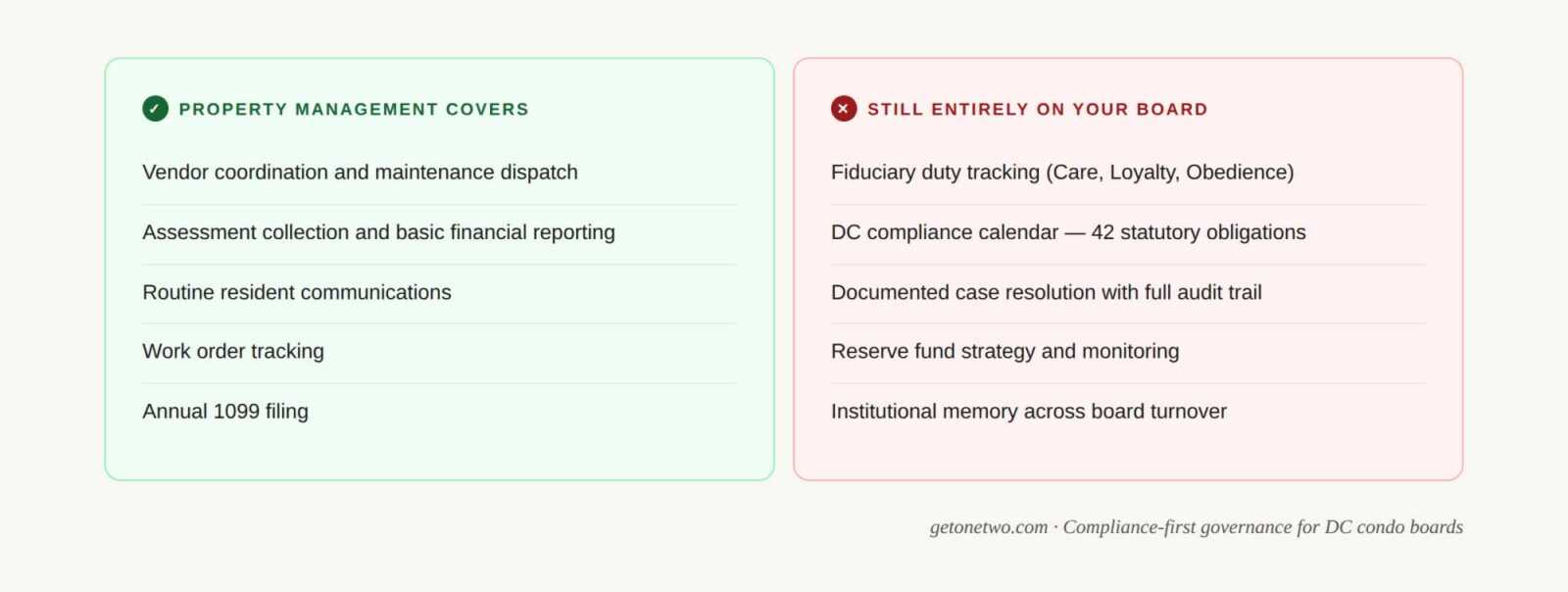
You’ve probably never read your building’s property management contract all the way through. Most board members haven’t either. If you did, you’d find a carefully defined scope of work — vendors coordinated, maintenance dispatched, assessments collected, reports generated.
What you wouldn’t find: anything about fiduciary duties. Reserve funding strategy. Compliance tracking. Case documentation. Institutional memory. The legal obligations that make your board personally accountable to unit owners.
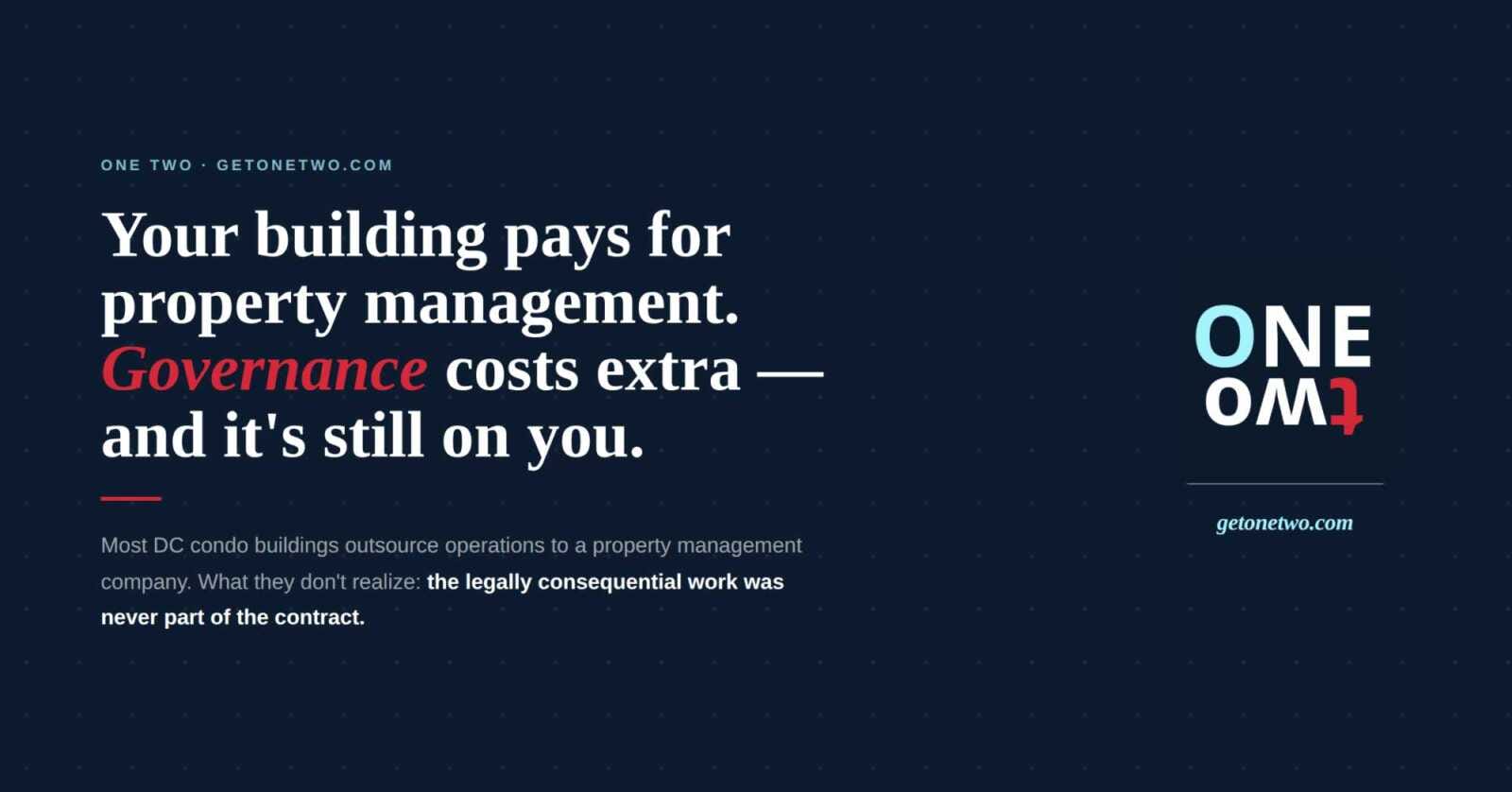
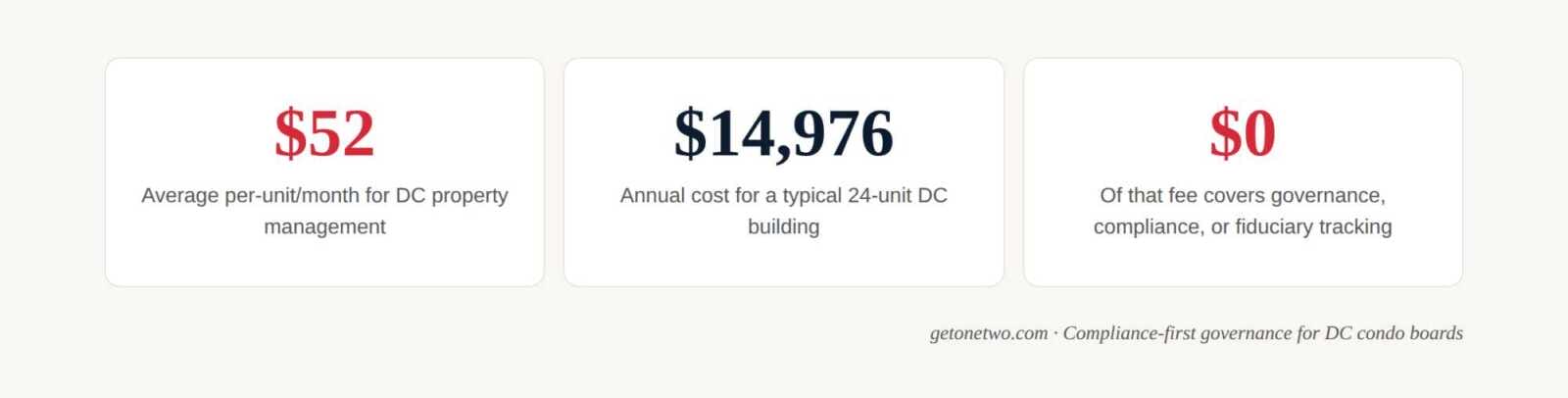
That’s not an oversight in the contract. It’s the contract. Property management was never designed to cover governance. And yet most boards — paying $10,000 to $18,000 a year for the service — assume it does.
Operations and governance are different jobs. One has a contract. The other has a fiduciary duty.
What your building is paying — and what it’s getting.
What the contract covers. What it doesn’t.
The markup problem most boards don’t know about.
Beyond the management fee, most property management companies mark up vendor invoices — the plumber, the landscaper, the elevator contractor — by 10 to 15 percent before passing the bill to the association. It’s legal. It’s common. And boards have almost no visibility into it.
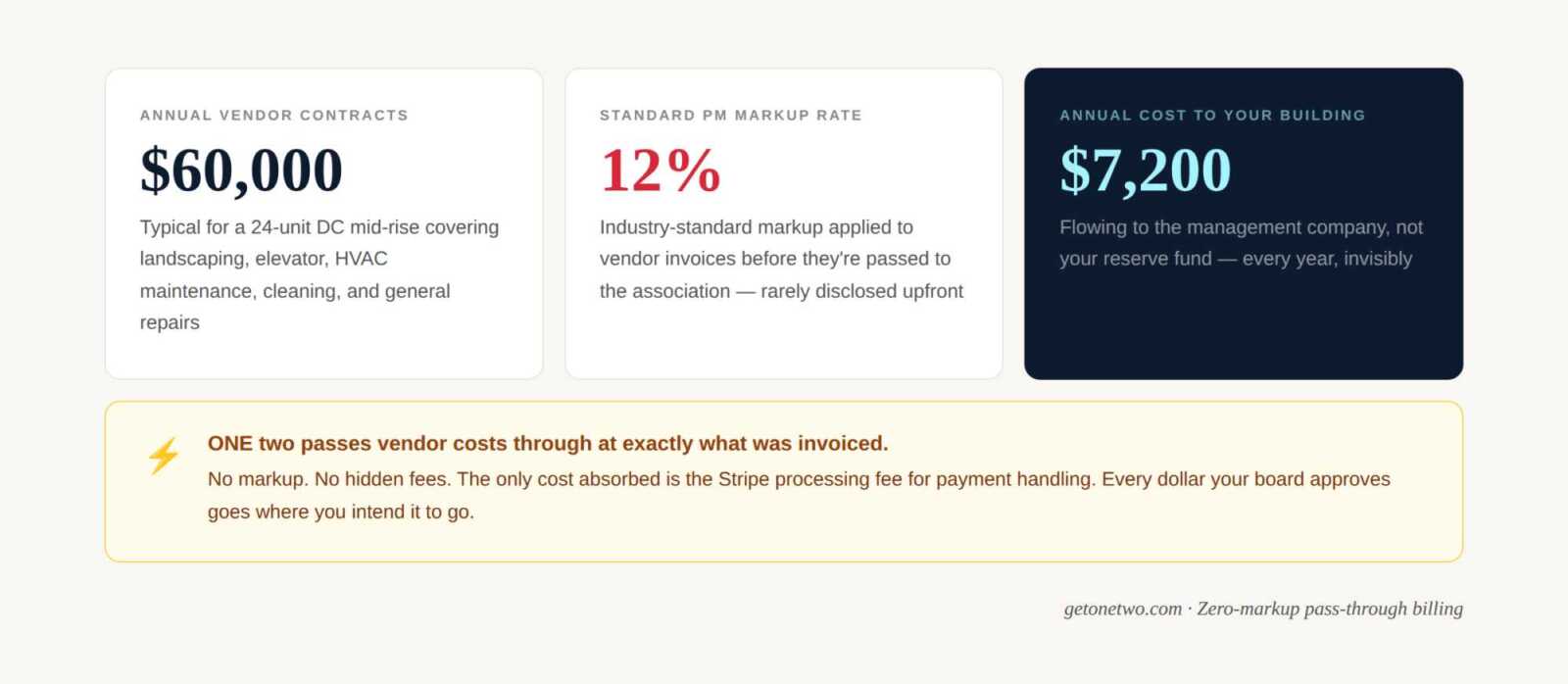
ONE two fills the governance gap PM was never built to cover.
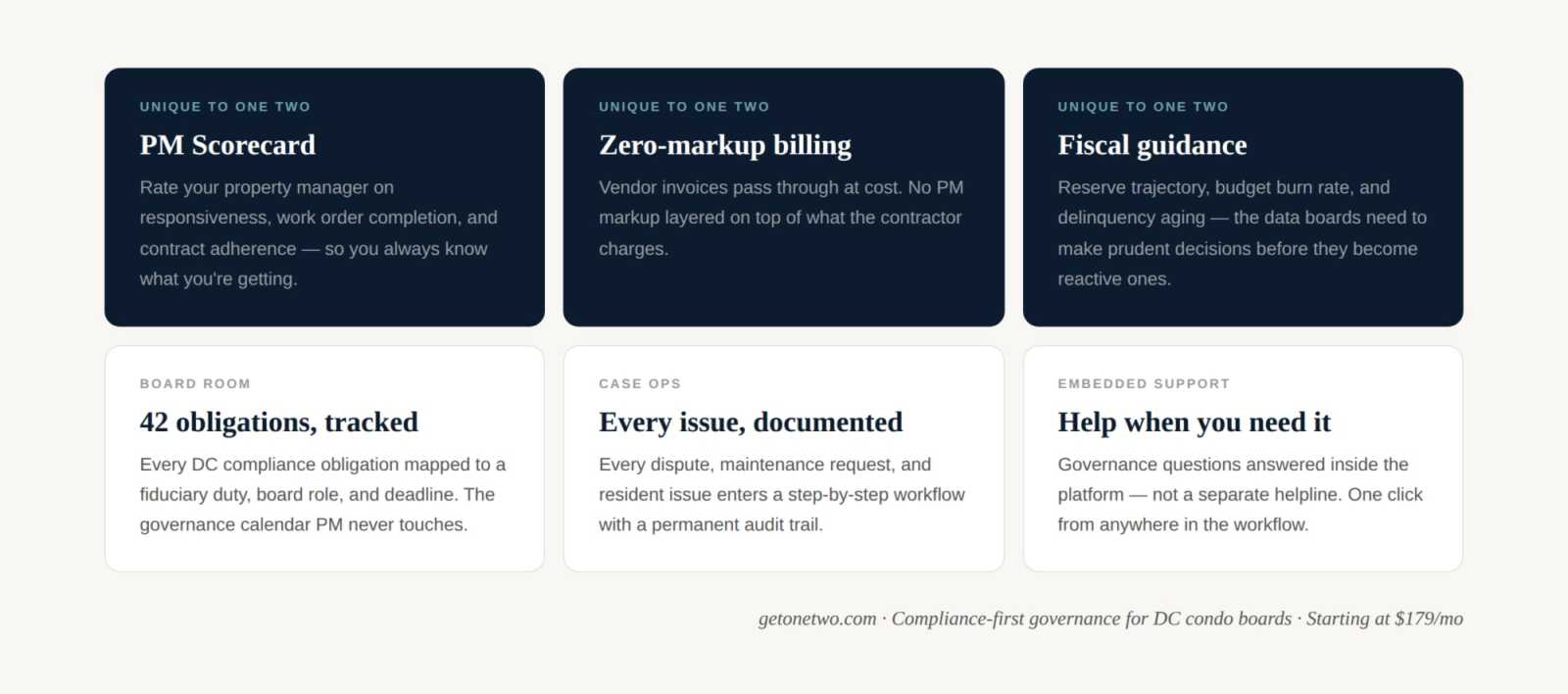
ONE two gives volunteer boards the infrastructure to handle the work that falls outside every property management contract — and the tools to hold their manager accountable for the work that should be inside it.
Fiscal guidance
Most property management financial reports tell you what happened. A general ledger from last quarter, an assessment collection summary, a year-end statement. What they don’t give you is the forward-looking picture a board actually needs to govern well.
ONE two’s Fiscal Lens surfaces reserve fund trajectory, budget burn rate, delinquency aging, and capital item replacement timelines together — so the board can see where the building is headed, not just where it’s been. A board that can see its reserve gap two years out makes different decisions than one that finds out at the annual meeting.
Embedded support
Most governance software expects you to figure it out on your own. A knowledge base, a ticketing system, a phone number you call during business hours.
ONE two builds support directly into the platform. When a board member hits a fiduciary obligation they don’t recognize, encounters a workflow step they’ve never handled, or needs to understand what a compliance deadline actually requires — help is one click away, in context, without leaving the platform. It’s designed for the board member who didn’t sign up to be an expert. That’s the whole point.