

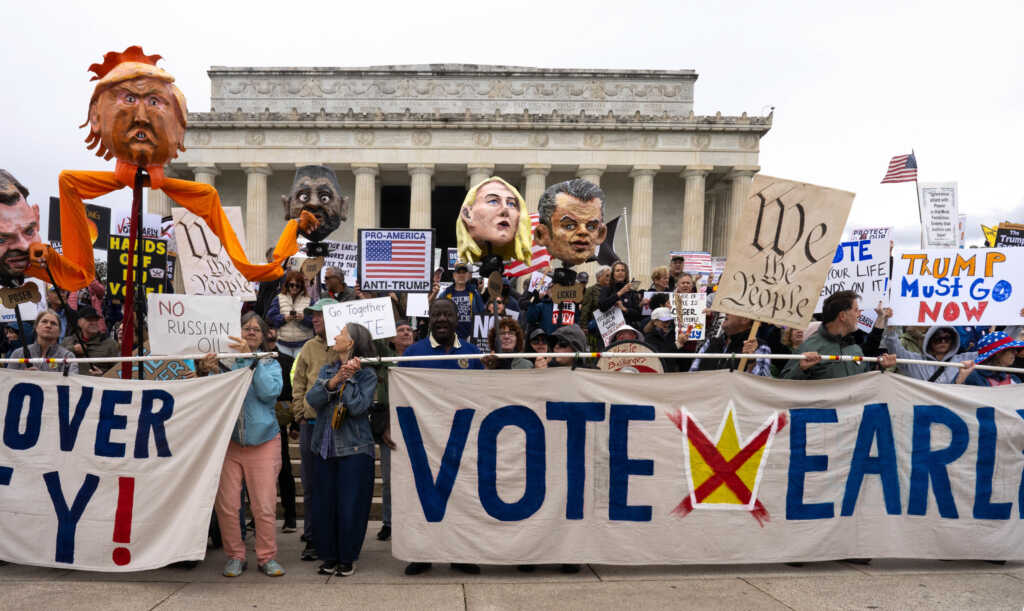
 photo by Victoria Pickering
From the Office of the Attorney General (OAG):
“Attorney General Brian L. Schwalb today issued a know-your-rights advisory on poll monitoring and voter intimidation for District residents. DC and federal law protect the rights of District residents and all Americans to vote in a free and fair election without intimidation, coercion, or outside interference.
“Voting in DC is simple, secure, and reliable,” said Attorney General Schwalb.
“Anyone who experiences or witnesses interference with our local elections should report potential violations to our office and the DC Board of Elections.”
For guidance on your rights as a District of Columbia voter, read the FAQs provided below.
Can federal officials send the military, National Guard, and/or federal law enforcement to monitor the polls?
No. An array of federal statutes bars federal employees, law enforcement, and the military from using their official power to interfere with an election. Federal law generally prohibits the federal government from sending the military or “armed men,” including federal law-enforcement officers or National Guard troops, to a polling place. Federal law also forbids anyone from intimidating or coercing voters in federal elections and from interfering with an election officer’s discharge of their duties. National Guard troops deployed in the District have been specifically directed not to monitor or secure polling locations. And federal law bars federal and local officials from using their authority to interfere with or affect a presidential or congressional election—such as using their official authority to help a particular candidate or party.
Can federal officials use the military to interfere with the election?
No. Federal law prohibits the armed forces from denying the right to vote, interfering in an election, or preventing election administrators from performing their duties.
Can federal officials send armed ICE agents to polls?
No. Federal law generally bars the federal government from sending armed persons to election locations. Any armed federal agents—whether with ICE, the FBI, the U.S. Marshals, or any other agency—cannot be sent to polling places.
Can federal officials order local law-enforcement officials to monitor the polls?
No. Authority over federal law enforcement generally does not extend to local law enforcement. In addition, as with federal actors, DC government employees can face criminal sanctions if they interfere with a presidential or congressional election.
Can federal officials “take over” or “nationalize” elections?
No. The Constitution assigns states the power to run federal elections. Congress can override state rules by passing a law, but federal officials have no power to set election rules absent legislation. While DC is not a state, Congress has given the District the power to regulate and administer voting within DC in federal elections.
Can federal officials send individuals or groups to monitor DC polls without authorization?
No. District Law prohibits unauthorized poll monitoring and voter intimidation. Specifically, DC requires those persons seeking to witness the administration of elections to petition the Board of Elections for authorizing credentials. If the Board of Elections issues credentials to observers, those observers are prohibited from: touching ballots or voting equipment; interfering with the progress of voting or counting; assisting a voter; talking to any voter during the process of voting; obstructing the electoral process in any way; and using any video or still cameras inside a polling place while the polls are open for voting. District law also expressly prohibits anyone from interfering with voter registration or voting itself.
Can Department of Justice poll monitors interfere with voting or vote counting?
No. Federal poll monitors are not new: the Department of Justice has often sent monitors to polling places in previous elections. These monitors have no greater power than any other member of the public. They need permission to enter our polling places and must present credentials. Once inside a polling place, as the term “election monitor” suggests, they can only monitor. They cannot inspect or seize ballots, interfere with election administration, demand information or documents from voters, intimidate voters, engage in any partisan activity, disrupt voting, or decide which votes are counted.
Are there permissible forms of election observation and monitoring in the District?
Yes. District law allows for “poll watchers”—those representing candidates or ballot measures—and “election observers”—those otherwise interested in witnessing the election process—if expressly approved in advance by the Board of Elections. Individuals approved by the Board may witness the election inside polling places but are subject to extensive restrictions: they cannot touch any ballots or voting equipment, interfere with voting or counting votes, help anyone vote, talk to a voter while that person is voting, talk to any vote counter while that person is counting ballots, or obstruct the election process. As discussed in the previous paragraph, election monitors from the Department of Justice must follow all these rules, too.
Know Your Rights
If someone interferes with your right to vote through threats, intimidation, or coercion, or if you become aware of any interference with the right of DC residents to vote, please contact OAG at (202) 727-3400 or email us at [email protected], or contact BOE at 202-727-2194 or [email protected].
Voting in the District of Columbia
District residents can find information about the November elections, registering to vote, and voting by mail or in person on the DC Board of Elections website: www.dcboe.org. In the District, all registered voters will be mailed a ballot. Voters can return their mail-in ballot by mail using the enclosed prepaid envelope. Mail ballots must be postmarked by Election Day (Tuesday, November 3, 2026) and must arrive no later than November 13. If you plan to mail in your ballot, the Board of Elections recommends doing so as early as possible. The signature on your mail-in ballot must match a signature on file with the Board of Elections.
Voters can also drop off their ballot at one of dozens of mail-ballot drop-box locations before 8:00 p.m. on Election Day or at one of the vote centers during early voting (Monday, October 26, 2026–Sunday, November 1, 2026) or on Election Day. You can track the status of your mail-in ballot online. Mail-in ballots began arriving during the first week of October, but if voters do not receive a ballot by October 30, officials recommend planning to vote in person.
If voters don’t plan to vote by mail, they can find convenient early vote centers and Election Day vote centers online, which will be open every day from 8:30 a.m. to 7:00 p.m. during early voting and from 7:00 a.m. to 8:00 p.m. on Election Day. Voters can vote at any of the vote centers during early voting and on Election Day. Unregistered voters can also register in person during early voting or on Election Day itself. More information on registering to vote is here.”