

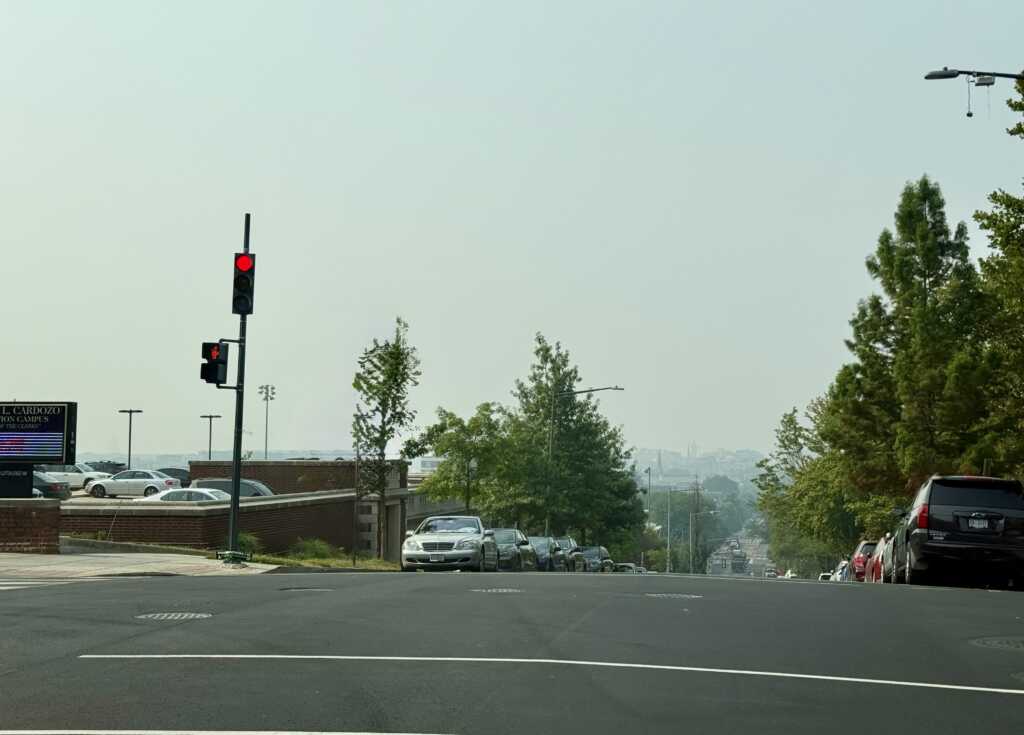
13th and Clifton Street, NW
From a press release:
“An air quality health advisory has been issued for the Washington, D.C. region today due to smoke from wildfires in Canada. Air quality is forecast to reach “Purple” (very unhealthy) levels, posing health risks for everyone.
On “Purple” air quality days, the air is considered very unhealthy for everyone. The risk of health effects increases for all people, while children, older adults, individuals who are pregnant, people who exercise outdoors, and those with heart or lung disease, including asthma, may experience more serious health impacts. Residents are encouraged to stay indoors, keep windows closed, and avoid strenuous outdoor activities whenever possible.
While air pollution is not good for anyone to breathe, some individuals are more at risk from its effects, including children; older adults; those who are pregnant; people living with asthma, (COPD) and other chronic diseases; people of color; people who have lower incomes; people who work outdoors; and people who live or work near sources of pollution.
The American Lung Association in the District offers these five tips to avoid lung irritation and health complications due to high levels of air pollution:
- Take extra precautions for sensitive groups: Proactive steps should be taken for people who are more susceptible to pollution, like children, older adults, people with respiratory diseases like COPD or asthma, and those who are pregnant.
- Check your air quality at AirNow.gov, and limit the amount of time spent outdoors beginning when the air quality is orange, or unhealthy for sensitive groups.
- Put air conditioners on recirculate: People with lung disease or heart conditions should stay inside on bad air quality days as much as possible, with doors, windows and fireplace dampers shut, and preferably with clean air circulating through air conditioners and air cleaners. Use air conditioners on the recirculation setting to keep from pulling outside air into the room. When driving your car on days with bad air quality, keep your windows and vents closed. Vehicle air conditioning should only be operated in the “recirculate” setting.
- Don’t exercise outside: On days when air pollution is high, adjust your plans for the day. Everyone should limit or avoid outdoor activity, but this is especially important for children, older adults, people with respiratory diseases like COPD or asthma, and individuals who are pregnant.
- Reduce your own air pollution: When the air quality is bad, consider postponing mowing the yard, using a charcoal grill or making unnecessary trips in your vehicle. These activities add to the air pollution.
- Monitor your symptoms: Higher levels of air pollution can make breathing more difficult. If you have chronic lung disease, follow your asthma or COPD action plan. You should also report any new or lingering health concerns to your healthcare provider.
More information about air quality and air pollution, as well as more tips are available here.
Climate change is making the summer months hotter, resulting in higher levels of ground-level ozone pollution (smog) and smoke from increasingly frequent and intense wildfires. Unusually high temperatures are occurring throughout the U.S. this summer.”