

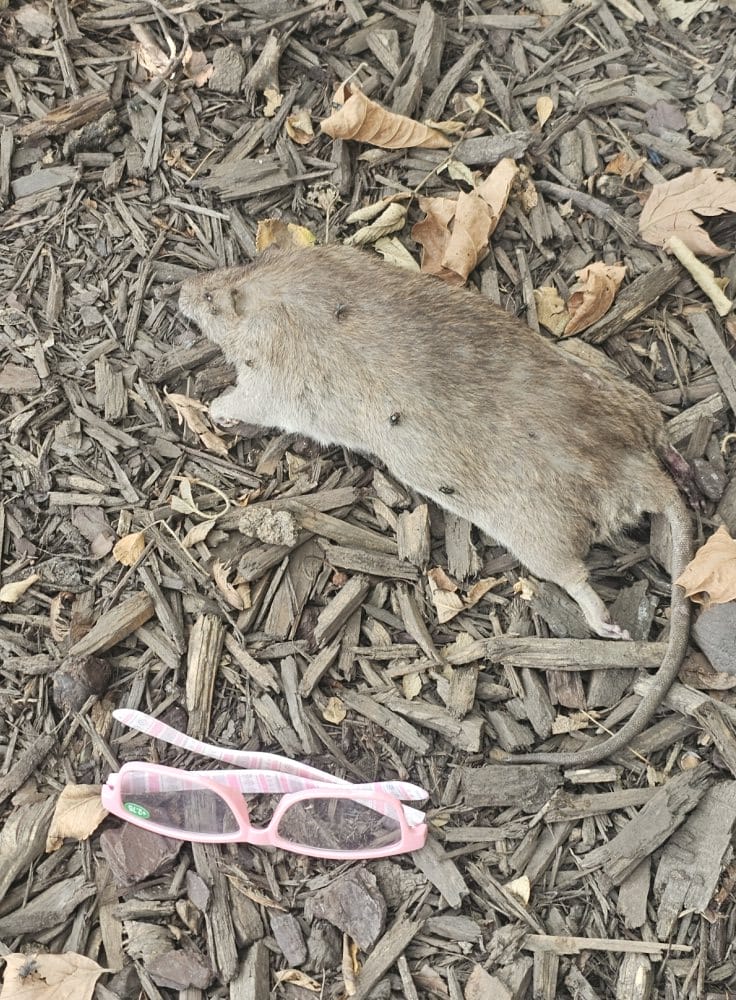
Thanks to M. for keeping the nightmares fresh :)
“I saw this beast near the corner of 13th and S NW in a tree box, and the glasses are NOT kids glasses.”
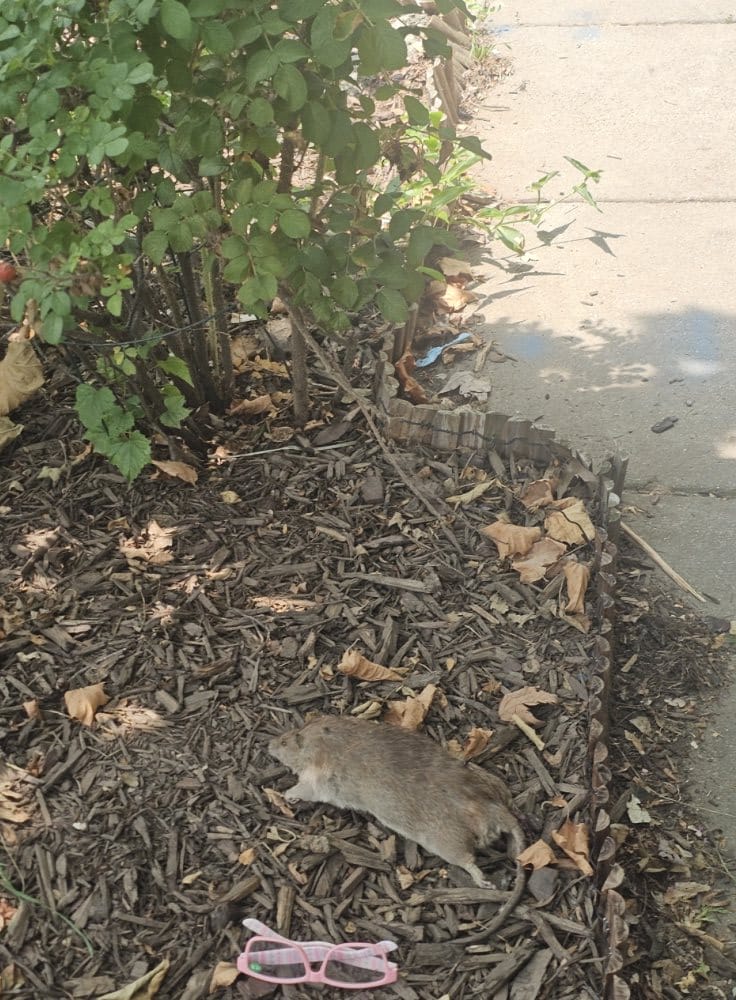
Related. From the office of Councilmember Christina Henderson:
“Dear Neighbors,
Did you know that a group of rats is called a “mischief”? They are certainly earning that name in the District these days. Whether you’ve noticed new holes in your trash containers, burrows in a sidewalk tree box, or actually seen one or several rodents run across your path, it’s likely that you’ve noticed that the District’s rodent population is reaching new levels. And you’re not wrong—the District has one of the fastest rodent population growths of any major urban area in the country.
Besides the beautiful monuments and unmatched culture, why do rats love DC so much? Hard to know. But we do know a main reason why we’ve had difficulty containing the problem –easy access to food. Open or overflowing trash cans, discarded takeout containers, and other unsecured food waste makes for an all-you-can-eat buffet for rodents. While several District agencies, including DC Health, Department of Public Works, and Department of Buildings, all play a role in rodent management, residents, businesses and property owners can also significantly reduce rodent populations by properly disposing of food waste.
Because rodent problems are persisting, residents are more frequently turning to rodenticides purchased online or at hardware stores that, when applied improperly, are not effective at reducing rodent populations. These rodenticides do, however, pose significant health risks to residents, particularly children, as well as to pets and endangered wildlife. As I’ve previously noted, one local hospital reported 12 cases of pediatric hospitalization tied to rodenticide exposure in the past year. Pets and wildlife are also susceptible to ingesting and being poisoned by rodenticides, particularly owls, hawks, and other birds of prey. City Wildlife has reported that roughly 85% of its intake over the past year have tested positive for rodenticides.
My team and I are taking the rat problem seriously and have taken several steps to address the problem. In the Fiscal Year 2027 budget, we dedicated $200,000 for rodent-proof trash receptacles in public spaces and Department of Parks and Recreation properties in high traffic areas. We also secured a subtitle in the Budget Support Act (and accompanying funding!) that will ensure the upcoming capital modernization projects for DC Public Schools and the Department of Parks and Recreation will include upgraded rodent-proof trash receptacles. This is a down payment on the permanent bill I introduced in March the Public Trash and Recycling Container Budgeting Act of 2026.
I was also pleased to introduce the Rodent Education and Management Yields Results (“REMY”) Amendment Act of 2026, named after everyone’s favorite protagonist from the Disney Pixar movie “Ratatouille”. This legislation proposes to both strategically decrease food sources for rodents, while protecting residents from the health risks associated with untrained application of rodenticides. Specifically, this bill proposes to:
Decrease food sources for rodents by establishing a commercial corridor rodent-proof dumpster pilot program to support Business Improvement Districts and Main Streets in addressing areas with high rodent populations;
Protect children, pets, and wildlife from rodenticide poisoning by requiring training and certification for the sale and usage of anticoagulant rodenticides in the District; and
Increase public awareness for effective prevention and abatement strategies by requiring DC Health to conduct public education as part of its rodent abatement efforts.
On Monday, July 13, the Committee on Health and the Committee on Public Works and Operations held a joint public hearing on the REMY Act and the Rodent Abatement and Transparency (RAT) Amendment Act of 2025, authored by Councilmember Janeese Lewis-George. Over the five-hour hearing, we heard from passionate public witnesses and government witnesses about the challenges for controlling the rodent population, the public health risks of rodenticides, and evidence-based strategies to better manage rodents. Also, this week, my staff are attending the Rodent and Vector Control Academy, hosted by DC Health, to hear from rodentologists, public health experts, and ANC Commissioners about the newest strategies and interventions to control rats.
As the Council begins its summer recess, my team and I will be reviewing the hearing testimony, Rodent Academy presentations, and other research, so we can be ready to move a bill forward in the fall that takes meaningful steps to reduce rodent populations in the District. Trust me, we’ve already learned A LOT.
In the meantime, if you are wondering what you can do to help, please consider:
Waste management: Don’t leave food or food waste outside your home in containers that rats can access (clamshell containers, soft plastic bags, etc.), and try to limit having food waste in your trash collection containers for more than a day before your scheduled trash collection. Example: An ANC Commissioner at Rodent Academy shared that a neighbor thought she was feeding the birds in her front yard, but cameras showed she was actually feeding rats.
Compost: Composting is an excellent way to keep your food scraps out of your trash receptables, and a rat’s belly. The District now offers a variety of ways for residents to compost, including drop-off sites throughout the District and a curbside composting pilot. Learn more on DPW’s Zero Waste website.
Report rodent activity to 311: DC Health and other agencies will respond to 311 complaints of rodent activity, and DPW will remove dead rodents within 24 hours of receiving a complaint. Depending on the situation, they may notify property owners about improper waste management, clean up an alley, or use rodenticides to treat burrows. DC Health has a new Rodent Control Dashboard where you can see hotspots for rodent activity based on 311 complaints.”