

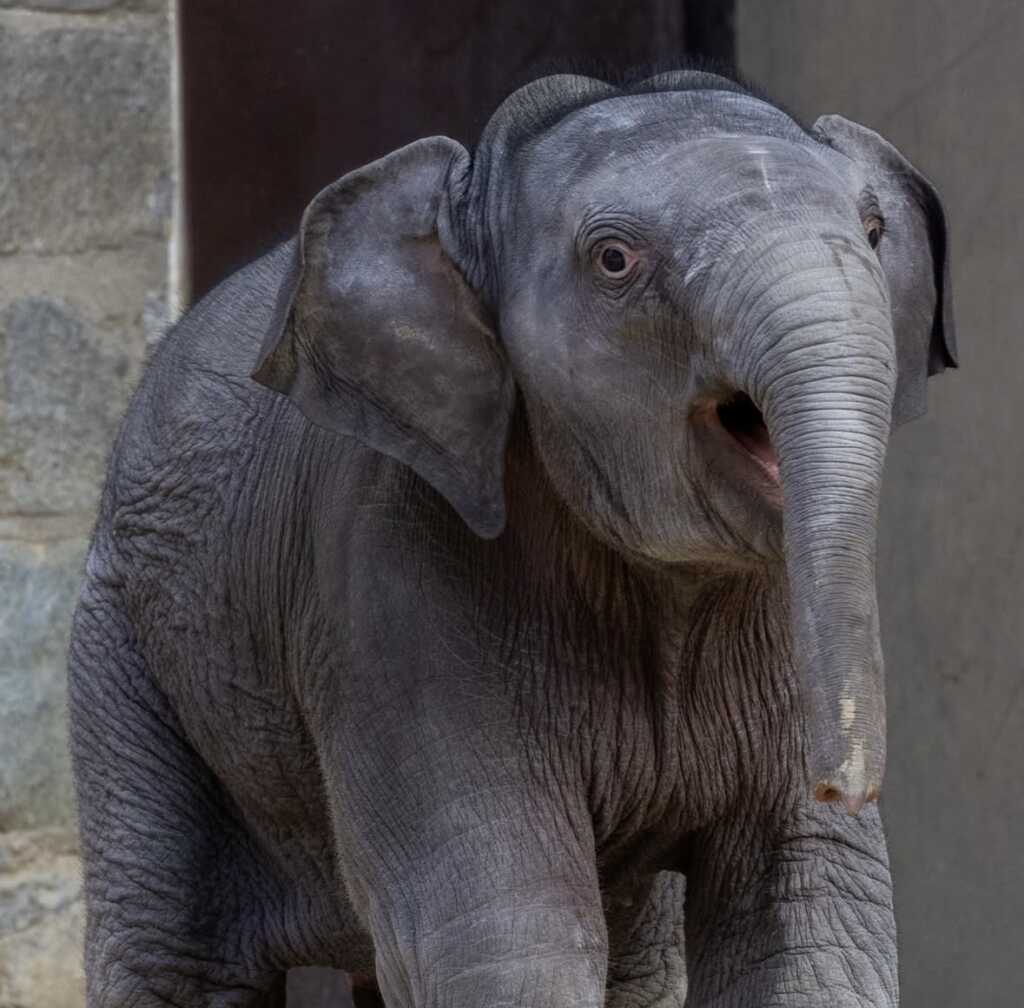
Photo by Roshan Patel/Smithsonian
From the Smithsonian’s National Zoo:
“Baby elephant Linh Mai made her public debut April 22 to the delight of thousands of Zoo visitors.
With fewer than 50,000 Asian elephants left in the wild, every birth matters.
Calves like Linh Mai, born into human care, play a critical role in the species’ survival. How?
🐘 By seeing and learning about elephants in zoos, people are inspired to be part of the solution, amplifying the incredible work conservationists are doing around the globe to save elephants and other species.
🔬 By taking the lessons learned about elephant physiology, behavior, reproduction and more to inform the care of elephants in zoos, tourist camps and conservation facilities.
🌏 By closely managing the population in human care, conservationists can maintain genetic diversity, ensuring a healthy population if, in the future, individuals are reintroduced to the wild.”
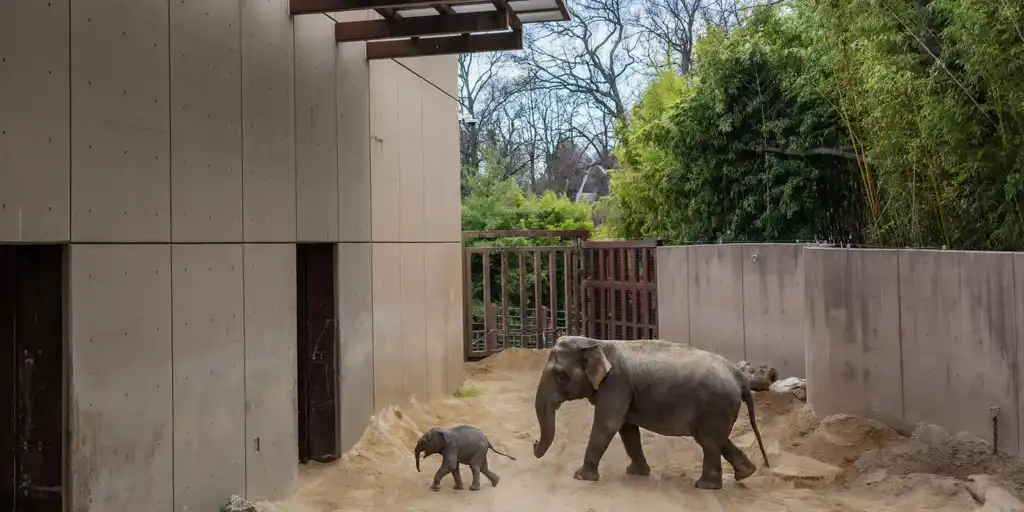
photo via Smithsonian’s National Zoo
“Baby elephant Linh Mai made her public debut to the delight of thousands of Zoo visitors on April 22, but elephant fans who weren’t at the Zoo still have a big reason to celebrate: the Elephant Cam is back on the Zoo’s website.
What’s new? The camera system is now curated by a trained group of Zoo volunteers who follow the elephants’ every movement. This means better footage for online visitors, who can now watch the elephants from more angles and with clearer views.
The Elephant Cam offers views of the Zoo’s herd from 7 a.m. to 7 p.m. every day of the week. After 7 p.m., the camera feed re-airs the views from the previous 12 hours. When volunteers are not on duty, the camera system cycles through different views of the habitat.
Training a New Crew
Robbie Clark, acting curator of the Elephant Trails exhibit, says the birth of Linh Mai brought the perfect opportunity to get volunteers involved in the live cam program. Over the last few months, about two dozen volunteers were recruited and trained as camera operators. Many had prior experience operating the Giant Panda Cam.
And as enjoyable as watching Linh Mai play in her new habitat, the Elephant Cam isn’t just there to capture cute moments, said Clark. It also supports important animal care work: keepers routinely watch footage to check on group dynamics, sleep patterns — even where to locate an individual elephant’s droppings for health testing.
“The cameras are a valuable tool for us. And we appreciate that they help us share our elephant ambassadors not just with visitors at the Zoo, but online too,” he said.
How You Can Get Involved
Supporting the Elephant Cam is an incredible opportunity for animal lovers, said Kristin VanBuskirk, volunteer manager at the Zoo.
“They’re catching so many interesting moments that someone wouldn’t get to see on a regular Zoo trip,” said VanBuskirk.
The program is competitive, and it’s a sought-after position among Zoo volunteers. But for newcomers interested in participating, VanBuskirk said there are plenty of other ways to get involved in the volunteer community. For example, the Zoo Crew program — featuring volunteers who greet visitors, answer questions, and help guests navigate the Zoo — starts recruitment in May. And for a shorter-term commitment, opportunities to support seasonal events like Boo at the Zoo and Night of the Living Zoo are listed on the Zoo’s website each August.
The Elephant Cam offers views of the Zoo’s Asian elephant herd from 7 a.m. to 7 p.m. every day of the week. After 7 p.m., the camera feed re-airs the views from the previous 12 hours. The footage runs on a 30 minute delay, which allows staff to pause the broadcast in the event that immediate medical care or intervention is required.“