


“Dear PoPville,
Are you aware of anyone who has approached the Mayor’s office or their councilmember to request their plans for addressing DC’s pervasive, city-wide rat problem? Have condo associations or neighborhoods found successful ways to minimize the public health, property damage, and nuisance caused by these rats? It was disappointing to see
a recent Economist article with a chart showing that DC has the worst rat problem in the country by far, but any resident probably could have told them this was the case!
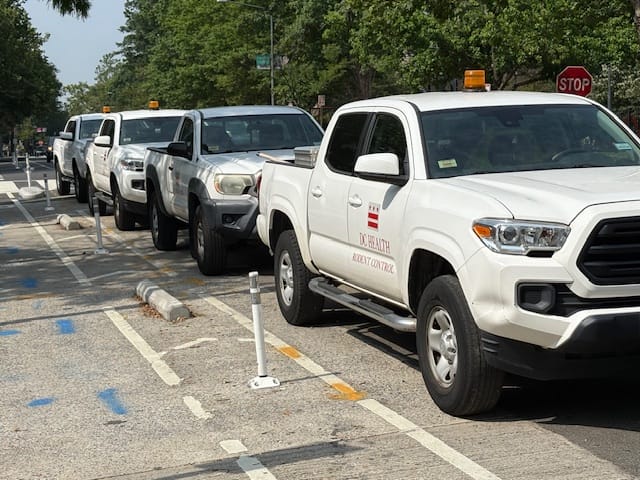
I’d love to hear from anyone who has learned anything or is interested in approaching city council and mayoral candidates in the coming months. (I set up this email address [email protected] specifically for this issue.) Our neighborhood is frustrated with the limited support 3-1-1 can provide and the problem has become untenable.”
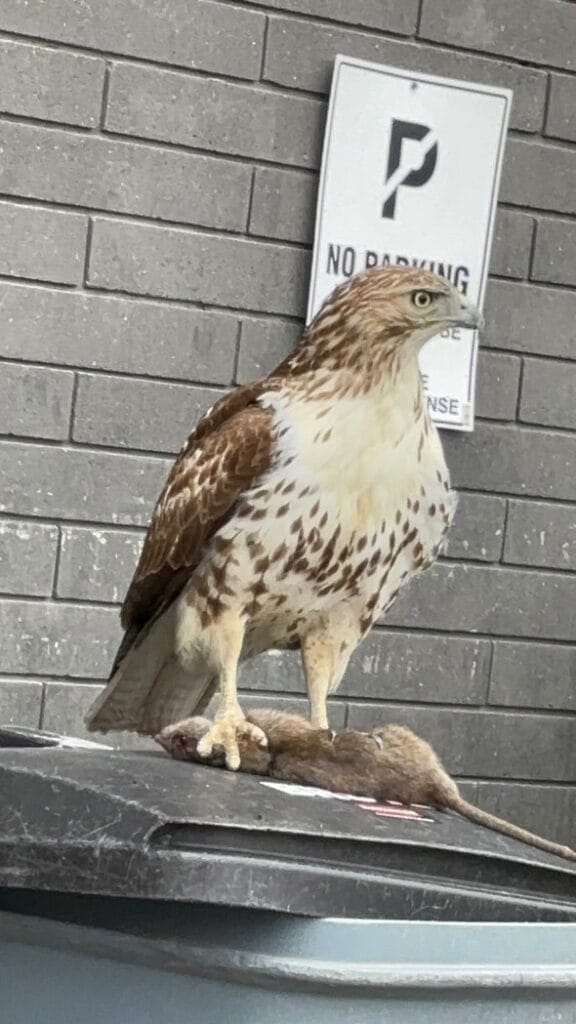
I’ve said it before and I’ll say it again, release more hawks and/or black rat snakes!!
From DC Health:
“DC Health Rodent Control Division has noted an increase in the number of rats across the District.
This increase may be due to:
New construction;
Milder winters over the past decade;
Trash not being stored properly.
To prevent further growth in the rat population, residents are encouraged to follow these ten tips.
Store garbage in metal or heavy plastic containers with tight lids.
Place trash outside shortly before pickup; don’t leave plastic garbage bags out overnight.
Remove weeds and debris near buildings and in yards; don’t give rats a place to hide.
Store opened food in metal or glass containers with tight lids when storing in your home.
Don’t leave extra pet food out; store it in a secure container.
Sweep up food remains, litter, and trash inside and outside your home.
Inspect your basement and house for cracks and holes; seal them with mortar.
Make sure you have screens on windows; inspect windows and screens for holes.
Keep outside doors closed; use metal trim to prevent rodents from gnawing and entering underneath.
Don’t provide hiding places for rodents; store materials such as lumber and boxes on a rack with a clean, open area underneath. Get rid of unused materials and junk.
If you observe rats, or see any signs of rat activity, please call 311. The Department of Health’s Rodent Control Program will schedule an inspection and abatement at the site.”
“Rodent and Vector Control Division
Mission:
To protect the public health and safety of the residents and visitors of the District by reducing rodent activity and other vectors through proactive surveys, inspections, baiting, enforcement, community outreach and distribution of educational materials.
Vision:
To be the public health guardian of the District, its residents and visitors by controlling rodent and vector activity through advance and innovative means.
DC Health has established a comprehensive, sustainable and responsive rodent control and animal disease prevention program. This program will use an integrated approach that includes community outreach, surveys, abatement, enforcement and cooperation with other District agencies to protect human health and the environment.
The new model includes a centralized program core in DC Health and defines enforcement services for the Rodent Control and Food Protection Programs.
This program includes interagency communication to assure a citywide enforcement structure where each agency participates in achieving neighborhood goals for cleanliness, safety and healthy environments.
The Rodent and Vector Control Division conducts citywide outreach and education efforts through printed materials, TV, radio and print media using schools and public and private partners for distribution.
Rodent and Vector Control Division staff alerts the Division of Food and Division of Community Hygiene of specific areas where waste food sources contribute to rodent activity in residential neighborhoods or commercial neighborhoods. DC Health Food Protection Program will initiate enforcement at food establishments if needed.
DC Health abatement efforts utilize registered products to bait rodents in outdoor burrows on public property. DC Health also will bait private property if residents obtain signed petitions.
For complaints about rodents, residents should contact the Citywide Call Center at 311. When you contact the Citywide Call Center, please request the report to be sent to DC Health, and DC Health will receive the complaints (electronically). Control numbers are assigned to track DC Health responses over time.”