

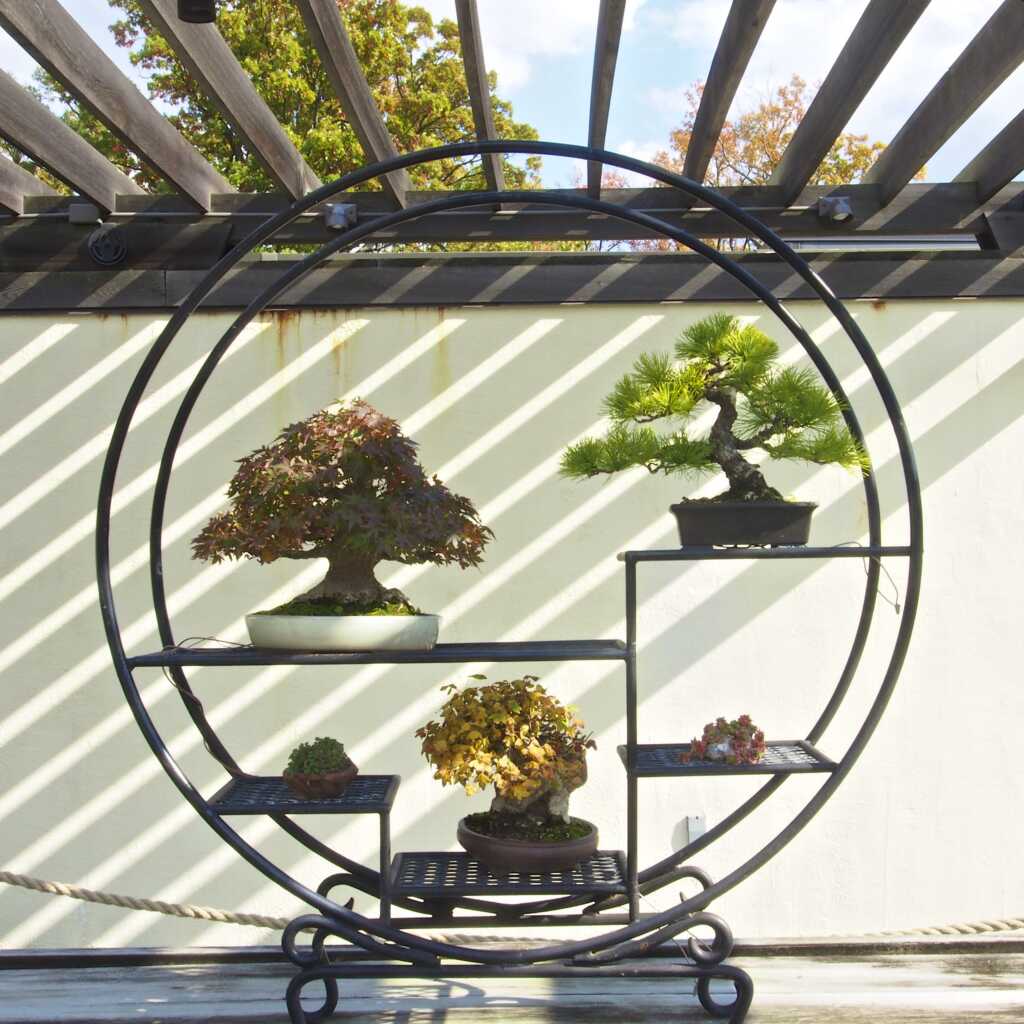
 photo by Miki Jourdan
From the U.S. National Arboretum:
“This year marks 50 years of bonsai at the U.S. National Arboretum’s (USNA) National Bonsai & Penjing Museum in Washington, DC. The museum opened its doors as part of the 1976 Bicentennial festivities and is the nation’s oldest public collection of bonsai and related arts.
“As we mark the National Bonsai & Penjing Museum’s 50th anniversary, we celebrate a unique chapter in the U.S. National Arboretum’s history and a lasting symbol of international goodwill,” said USDA Under Secretary Dr. Scott Hutchins. “Throughout the past five decades, the museum continues to connect people through art, horticulture, and cultural exchange, and I celebrate this golden anniversary as we honor both the extraordinary trees in our care and the friendship that brought them here.”
The National Bonsai & Penjing Museum began with the “original gift” of 53 bonsai and 6 viewing stones, 200th birthday presents from the people of Japan to the people of the United States. The gift was shepherded by then-USNA director Dr. John Creech. Why 53 trees? Bonsai artists from across Japan had collaborated to donate 50 trees, in honor of the 50 American states. The Imperial family gave three more trees, including one from the emperor’s personal collection—the first time such a tree had ever been allowed to leave Japan.
“For half a century, the National Bonsai & Penjing Museum has brought together art, horticulture, research, and international collaboration,” said Joon Park, Administrator of USDA’s Agricultural Research Service. “This extraordinary collection preserves decades of history, craftsmanship, and cultural exchange while serving as a living resource for education and research. As we celebrate its first 50 years, we also recognize the opportunities ahead to advance our understanding of plant health, helping to inspire new discoveries.”
Since the original gift, the museum has progressed into a comprehensive collection illustrating the artform’s adoption, evolution, and influence across geographies and throughout time. The museum’s current collection contains 200+ trees from 6 countries, including the work of North American artists as well as North American native species. It is one of the main attractions for visitors to the National Arboretum, with trees displayed in three open-air pavilions and an enclosed building to showcase viewing stones (over 270 stones collected in Asia, Europe, Africa, and North America) and temporary exhibits.
In honor of the bonsai collection’s anniversary, the USNA presents: Branching Out: 50 Years of Bonsai at the National Arboretum, with the following celebratory events:
November 6, 2026: Private ceremony to formally accept 10 bonsai and 3 viewing stones (suiseki) into the Museum’s collections, with distinguished speakers detailing the history, legacy, and impact of the Museum’s 50 years. A small reception in the Museum will follow.
November 7, 2026: A public day of celebration from 10 a.m. to 4 p.m. The day begins with a ribbon cutting at the Museum’s gates, ushering in the next half-century of bonsai education, training, and research. The day will feature the public debut of the newly acquired bonsai and suiseki and the opening of a history exhibit exploring the Museum’s history. Activities include docent-led museum tours, bonsai maintenance demonstrations by the 2026 National Bonsai Apprentice, screenings of the documentary Bicentennial Bonsai: Emissaries of Peace, and children’s activities.
November 7, 2026: At 6 p.m., the USNA is hosting its first-ever science café (tickets required). Guests will enjoy beverages and a series of engaging, short presentations by scientists revealing the scientific mysteries of bonsai growth and maintenance. Guests can also enjoy an evening stroll in the Museum, a rare opportunity.
The USNA has a dual scientific and public horticulture mission. It is administered by the USDA’s Agricultural Research Service. In the next 50 years, the USNA aims to advance the scientific understanding of bonsai horticulture—the important yet un-studied practical complement to the artistic and cultural significance of bonsai and penjing collections. By recognizing and acting on the scientific opportunities within the Museum, the USNA deepens the educational opportunities and provides a significant benefit to the bonsai community.
Visit the USNA website (www.usna.usda.gov) or follow the Friends of the National Arboretum (www.fona.org) for additional details.”