

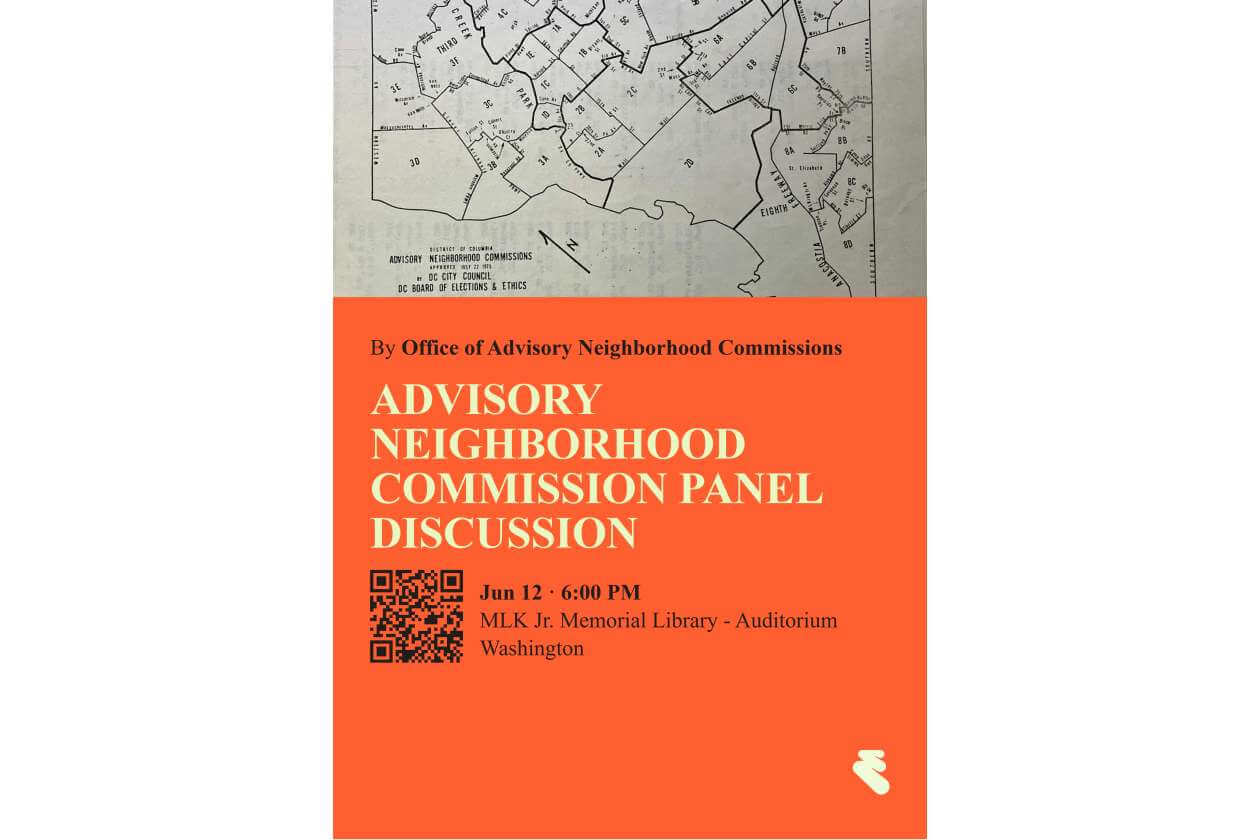
On Friday, June 12 at 6 pm, the Office of Advisory Neighborhood Commissions is hosting a panel discussion of early ANC Commissioners and advocates in celebration of 50 years of Advisory Neighborhood Commissions. The panel will explore the achievements and challenges associated with the early years of ANCs.
Perhaps the most significant innovation in urban governance during the 1970s was the formation of official neighborhood councils or commissions. These commissions were official components of urban government to provide community-based input to urban policy making. In the District of Columbia, a pioneering outlet for citizen participation is the Advisory Neighborhood Commissions, which came into being under section 738 of the Home Rule Charter.
After the Council of the District of Columbia established 36 neighborhood commission areas in July 1975, 5% of the voters of each neighborhood area needed to sign petitions expressing their desire to establish an ANC. Through this process, 30 ANCs were established following the first ANC election on February 3, 1976. Five additional ANCs were established following the ANC election on November 2, 1976, and the last of the original 36 Commission areas was established following the November 8, 1977.
Today, the District is served by 345 Commissioners elected to serve on 46 Commissions representing every neighborhood. The Commissions are independent bodies that advise the District government on policy issues affecting their neighborhoods. These issues include traffic, parking, recreation, street improvements, liquor licenses, zoning, economic development, police protection, sanitation and trash collection and the District’s annual budget. In fact, virtually no public policy area is excluded from the purview of the Advisory Neighborhood Commissions.