

Visit the Forum >>
Visit the Classifieds >>

NEWER POST

Fri. Afternoon Rental Option - Hill East

OLDER POST

From the Forum

A Good Way to Combat “unsightly renovations”?


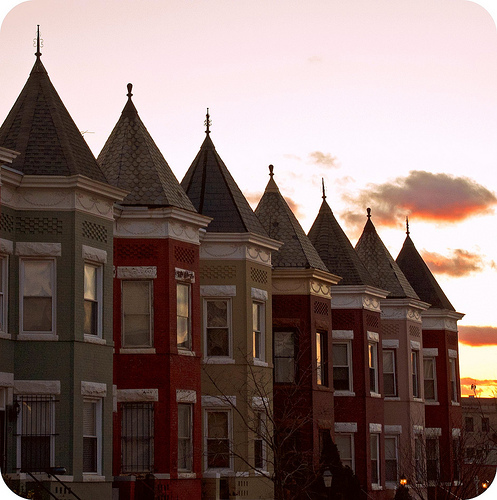
Photo by PoPville flickr user Vileinist

A resident on the Columbia Heights listserv asks an interesting question:

“Anyone out there interested in working on a project to help south Columbia Heights get Historic Status? This status can protect our homes from some of the unsightly renovations we are seeing.”

Do you think having your neighborhood declared a historic discussion is a good way to combat “unsightly renovations”? Anyone live in a historic district?

Category: Architecture

By: | 17 February 2012 2:30 PM | 59 Comments

  • FreedomOfExpressionFTW

    Historic districts are a great way to allow busybodies and snooty types to use their subjective sense of aesthetics to keep other people from doing what they want with their property.

  • While I will reserve my thought of this is “NIMBY” in deguise…. but some follow up questions:

    Why would “south” Columbia Heights deserve such status?

    What specific area would that include?

    Renovations are generally perceived as an upgrade, or improvement… which are being viewed as “unslightly”?

  • Anonymous

    I don’t know, it’s really not that special in terms of history. And its most memorable history of being burnt to the ground by the very people who lived there isn’t something anybody wants to preserve.

    • KenyonDweller

      You don’t know what you’re talking about. Columbia Heights was one of the early suburbs of the L’Enfant core and was built by notable architects and developers such as Harry Wardman (who also built the Wardman Hotel in Woodley Park).

      But, no, I don’t want CH to become a historic district. I like being able to get my windows replaced without going through hell.

  • I’ve never heard of South Columbia Heights before. What are the boundaries?

  • styglan1

    As an owner in S. CoHi I am adamantly opposed to this. I think the neighbor who responded very quickly to this email said it eloquently enough that I will cut and paste it here:

    Be careful what you ask for! The consequences of becoming a Historic
    District are substantial, and in recent years, Lanier Heights and Chevy
    Chase have successfully fought off such designation. Why? Because it
    locks you into the current appearance of your house, forevermore,
    whatever your personal needs. Because it makes routine repairs costly
    and difficult. Because it hands control over your house to a band of
    historic preservationists who care only about the appearance of your
    house, not the well-being of anyone living in it. You will be prohibited
    from making improvements to your own home, because the historics will
    insist that it look just as it did the day it was built.

    Forget cost vs. benefit considerations. Historic can command you to do
    what they want, and cost does not enter into the equation, barring the
    truly poor. There’s no “unreasonable hardship” unless the historic
    demands render your property unusable for any purpose whatsoever, making it a “taking” by the DC government.

    Historic Preservation regulations supersede zoning regulations,
    including safety regulations. A Mount Pleasant resident was instructed
    to rebuild her front porch exactly according to its original dimensions,
    even though those dimensions violated DCRA safety regulations. And,
    parking: zoning requires a certain number of off-street parking spaces
    for the construction of multi-unit dwellings, but in a historic
    district, no developer has to provide any off-street parking.
    And once you’re designated historic, it is forever. Nobody ever comes
    back and asks if you’re happy with it. There’s no going back.

    For more of the nightmares of historic district
    designation:http://dcjack. org/histpres. html

    http://dcjack. org/Walbridge% 20ramp.html

    • Annons

      I disagree. Being in a historic district does not makes routine repairs costly and difficult, does mean that you’re prohibited from making improvements, doesn’t mean you hand over control of your house, etc. This is simply incorrect information

      • Anonymous

        Actually, it does. I have a home in a DC historic district. It cost me twice as much to replace my old, drafty, crumbling wood windows with windows “approved” by the historic society.
        -Cost to replace windows with “regular” energy efficient windows: $5000
        -Cost to replace windows with historic district “approved” windows: $10,000 plus four months of meetings with the historic society

  • styglan1

    As a south CoHi homeowner I am adamantly opposed to this. I think the neighbor who responded to this said it best so I will cut and paste his response here:

    Be careful what you ask for! The consequences of becoming a Historic
    District are substantial, and in recent years, Lanier Heights and Chevy
    Chase have successfully fought off such designation. Why? Because it
    locks you into the current appearance of your house, forevermore,
    whatever your personal needs. Because it makes routine repairs costly
    and difficult. Because it hands control over your house to a band of
    historic preservationists who care only about the appearance of your
    house, not the well-being of anyone living in it. You will be prohibited
    from making improvements to your own home, because the historics will
    insist that it look just as it did the day it was built.

    Forget cost vs. benefit considerations. Historic can command you to do
    what they want, and cost does not enter into the equation, barring the
    truly poor. There’s no “unreasonable hardship” unless the historic
    demands render your property unusable for any purpose whatsoever, making it a “taking” by the DC government.

    Historic Preservation regulations supersede zoning regulations,
    including safety regulations. A Mount Pleasant resident was instructed
    to rebuild her front porch exactly according to its original dimensions,
    even though those dimensions violated DCRA safety regulations. And,
    parking: zoning requires a certain number of off-street parking spaces
    for the construction of multi-unit dwellings, but in a historic
    district, no developer has to provide any off-street parking.

    And once you’re designated historic, it is forever. Nobody ever comes
    back and asks if you’re happy with it. There’s no going back.

    • I wonder if Lanier Heights has any second thoughts now that this “one of these rowhouses is not remotely like the others” pop-up/pop-out has been created:

      http://www.princeofpetworth.com/2012/01/judging-pop-ups-update-on-2714-ontario-road-nw/

    • Anon

      Just curious, but what happens if you say no to the demands (such as rebuilding front porch)? You get hit with fines until you are forced out? Who would the fines be payable to? Could you still just choose not to pay them and not make the updates?

    • Mari

      I agree and beware that historic districts borders have a way of growing as Dupont Circle did as well.
      The thing I hate is that it has very little to do with ‘history’ and more with looks. Everyplace has history.

    • styglan –

      Funny I read your post several times and all the reasons you say are bad are exactly the reason I think its a great idea.

      When you own a historic property in a historic neighborhood/city you take on the moral obligation to make your property better – adding to the history of this place at very least. What you do , “to accomodate those living inside, is up to you.

      When the designation comes your way, and it will one day, then sell.

      I for one look forward to it and it will be the second time I have been through it.

      Not to mention there are folks out there willing to pay big bucks for homes -inside a historic district.

  • Anonymous

    Yes a historic district would be a great way to combat “unsightly renovations”. The area IS being over run with hack job flippers but the area is in transition from long time residents who want to sell, developers who want free reign and not enough people who care about the great architecture of the area to out weigh all that money being made cramming X condos into row houses. Unfortunately.

  • Anonymous

    Yeah, Mount Pleasant has one of those. Mount Pleasant has become a nightmare. (Yeeeah, you’re gonna have to go ahead and remove those efficient vinyl windows. Only clunky wooden windows will do here.)

    I’ve never heard of south Columbia Heights either, except that I assume I must live in it, because the area south of Irving seems to be excluded from the “North Columbia Heights Civic Association (http://www.northcolumbiaheights.org/about-2/), which I’ve always assumed exists in order to distinguish itself from the area with all those low-brow public housing and section 8 projects, and black people.

    • The % African-American is actually pretty similar across different census tracts in the neighborhood. Check the stats: http://www.neighborhoodinfodc.org/censustract/census.html for 29 & 25.02 vs 35, 36, 30 or so. I think the NCHCO is just another manifestation of DC’s tendency to have waaaaay too many citizens’ associations for a given area.

    • Anonymous

      You don’t have to remove vinyl windows if they are already installed. You are expected to replace windows with something similar.

      I’d prefer real wood to vinyl anyway. Vinyl is crap.

  • Mt. Pleasant is an historic district, and the restrictions are not as awful as some presume. There is no restriction on things like paint color, for example. However, you do have to follow some rules on the type of windows you put in—for example, mullions (sp?) versus non.

    I actually appreciated it and in 18 years, never felt oppressed by nosy, persnickety neighbors. And you never have to worry about some ugly-ass pop-up going in next door.

    • Oh, and one more thing. We had our sunporch torn off and rebuilt using plans that had to get approved, but it did not really add to the cost of the project. We hired a permit expediter for that ($250, I think). We also had new roof put on our garage—non-issue. These projects, however, did not involve substantially changing the look of the house. We extended the porch out by 18 inches, but that was it.

    • Have other Mt. P-er’s had problems with the historical designation?

      • yes. we ended up getting our front windows (original to the 107-year-old house) rebuilt because the historic covenant would have required custom-made windows to look exactly like the originals, which would have been more expensive than the 15k that rebuilding cost. they are gorgeous, but it would have been nice to have a less-expensive alternative. we also had our front porch fixed in a piece-meal fashion because we were scared off from the required specifications for replacing it.

        we’ve also looked into replacing our transom window (clear glass with painted numbers that have chipped off) with stained glass that has the numbers leaded in so we wouldn’t have to worry about paint lasting, and were told we couldn’t because the houses next to us don’t have stained glass. (despite the fact that houses on the next block over – still within Mt. Pleasant – have stained glass transoms)

        • My neighbor put in double-paned wood windows that met the specifications. I didn’t recall that the cost was that unreasonable, but I don’t know. Sorry to hear about your difficulties. Do you thus think the designation is not a good idea?

      • I haven’t had any issues w/Mt P being a historic district. I refurbished my original wood windows with great results – the cost was comparable to (or less than) getting new windows.

  • We already have historic preservation in Columbia Heights in the fact that people are willing to pay a huge premium to live here because of the wonderful architecture & housing stock. The occasional ghastly pop-up or bad reno is not going to change that. Even when developers carve up row-houses into 4 tiny condos, they aren’t generally changing the exterior.

  • anonymous

    I grew up in VT where the winters are brutal. My parents owned a house that had been designated historic by the town. Because it was historic we were not allowed to put energy efficient windows, remove the radiators or replace the wood burning furnace (not fireplaces, furnace…we used to chop, lug and stack a couple cords of wood every winter). Mind you, none of the changes we wanted would have affected the historic look and feel of the house/neighborhood. We were even going to special order windows to fit the traditonal sizes, not just the standard lumber yard windows.
    The town wouldn’t let us do it, because it was historic…and, apparently, back in the day, everyone had drafty windows and finicky radiators, so we were stuck with them too.

    • Ha, as a former Vermonter I appreciate this post. I don’t think any place in the nation takes it’s traditions as seriously as Vermont. I had a home in a historic district of Vermont that had been sided with vinyl siding on the front of the house prior to the designation. I wanted to add vinyl to the sides of the house to match the front, because the 90 year old wood siding was just done. The city said no, that I had to replace the vinysl siding already there with wood siding or hardiplank siding – a very expensive option that I ultimately chose. But I did appreciate the protection from some crazy renovation on my block….

  • anon

    I live in Lanier Heights and if a historic district desgnation would have prevented developers from turning a small house next door to me into a shodily-built 4-story + pop-up that blocks out all sunlight and rendered useless all balconies and porches from the entire west side of my co-op building, then I’m in favor of historic districts.

  • What are the penalties for not observing historic standards? Can a stop work order be issued? What about for completed work — can the board compel someone to undo recently done work, and if so, by what means can they compel them?

    I guess the broader question is, how is historic preservation legal — say, in the case of new homeowners weren’t in the neighborhood when the board was created?

    • Yes, they can issue a stop work order, and depending on the severity of the violation, they may even make you undo the work you have already done. However, any existing structures that did not meet historical standards at the time that the historic district came to be would likely be grandfathered in. In other words, the city wouldn’t make you rip out your vinyl windows if they were installed before the historic district designation was in place.

    • The penalties for historic preservation violations are heavy:
      (a) Criminal penalty. Any person who willfully violates any provision of this act or of any regulation issued under the authority of this act shall, upon conviction, be fined not more than $1,000 for each day a violation occurs or continues or be imprisoned for not more than 90 days, or both.

      And yes, you may be compelled to undo whatever changes you made:
      (b) Civil remedy. Any person who demolishes, alters or constructs a building or structure in violation of sections 5, 6, or 8 of this act shall be required to restore the building or structure and its site to its appearance prior to the violation.

  • When I first moved to MtP, I was very leery of moving into a historic district, but after having lived here a few years, I’m very glad I did. Walking around the neighborhood, I’m regularly captured by its idyllic charm, and I know that such charm would not exist if these homes were allowed to be infected by pop-up epidemic that is plaguing so many other parts of the city. Yes, historic preservation can be a pain; and when done badly, it can lead to ridiculous consequences, but let’s recognize that when done right, it creates beautiful, unique, and vibrant communities that people want to live in.

  • No NO NO!

    I live in the 14th St historical district and freeze in my living room and bedroom every winter as the wind blows through my old single glass plane front windows. Too expensive too replace with double pane wooden windows.

    Contrast that with the warm rooms on the back side of my house with their double panel, energy efficient windows.

  • Anonymous

    Readers should note that many areas in Mount Pleasant and other communities are in Commission of Fine Arts areas. Basically, structures that are near Rock Creek Park and other federal property need to have CFA approval before DCRA can issue any building permit. This is just as much as a headache as being in a historical district.

  • ATX Reprezenta

    The OP didn’t define “unsightly” renovations, and to agree with a number of other posts, this seems a very thinly veiled attempt at NIMBYism. Ive lived on 13th and Kenyon for years and love the vast majority of the colors, yards and individual houses as a whole for the entire neighborhood. Seems to me that the OP is incredibly biased in his/her views and wants to pursue an irresponsible course of action to combat the perceived “unsightly” renovations.

    • Anonymous

      BS – if you want to be a libertarian go and try to elect Ron Paul President.

      I think a lot of the people posting here who are anti-historic preservation are just anti-authority and just don’t want anybody telling them to do anything.

      • Trixie

        Perhaps it is anti-authority to not want to be told what to do with your own property, but I don’t particularly care.

        I have no problem with keeping things as lovely and historic as possible, but when we went to go reside our rotting house we got a permit and went about rebuilding it EXACTLY as it has looked for the last thirty years. Except nicer. With expensive wood siding.

        Well, when we ripped down the previous wood siding, there was OTHER wood siding under it. And the historic association had an absolute FIT. And then there were costly delays and enormous amounts of hassle, and they were threatening to yank the licenses of our (innocent) contractors. And you know what? After that debacle, I don’t especially want to ever be told what to do with MY property again.

        I am very pro historic preservation, but holy hell, that was obnoxious. And expensive. And the house still looks gorgeous.

  • Historic Status in South Columbia Heights! This is great and I’m all for it 100%. My home like others around me are 100yrs+ and it would be great if they can last another 100yrs and let other generations live and enjoy the homes in Columbia Heights. Good quality materials, and craftsmanship are not cheap. As for hassle… well I’ve had my share of DCRA, Zoning, Homeowner Center headaches, because in the end it was worth it. If I wanted a cookie cutter split-level ranch house that I can add-on and build out, I would go to the ‘burbs for that. Where Do I Sign-up?

  • Petworthnewbie

    Yes! I fully support. And let’s do the same with Petworth. These neighborhoods are beautiful, historic and deserve to be taken care of

  • MTP

    Gee, does anyone ever wonder why Mount Pleasant doesn’t have hideous third-floor pop ups and why its property values have held/gone up?

    • Anonymous

      Maybe because most of the homes are already three stories and quite large sqft-wise? You don’t have to add more space to a house that’s already large enough to accommodate your needs.

      • Trixie

        How would you know what someone else’s needs are?

        • Anon

          Well, since you read that the wrong way, here goes. Ugly pop ups often result because the owner needs/desires more space. Same person buys a big house that’s the size of a smaller house + pop up, no need to add ugly additions.

  • anon

    Horrible idea. Dc makes its residents jump through hoops enough as it is we don’t need another. People have to be able to modify their homes ro fit their needs. I have yet to see an unsightly renovation. I would like to know what credentials people have to declare what an unsightly renovation is.

  • I live in Mt P. I originally thought buying in a historic district was great. Looks nice. Then I thought owning in it sucked – expensive. Now, I am ambivalent. The people that man the historic desk at DCRA are generally reasonable, as long as you know the rules for your proposed work before you get there. I have been alllowed to replace a painted door with a painted door – the underlying material could change.

    However. If you are in a historic district, you cannot get a post card permit for anything. Interior work that historic doesn’t care about and everyone else can get on line? Nope, down to DCRA to waste your afternoon and pay some money.

    The downside of historic districts, to me, is that some people cannot afford basic home repairs, and their houses crumble. They often won’t go get the permit themselves, and cant pay someone to do it for them. Being designated makes it worse. The other drawback is that anything which makes permitting more inconvenient will disuade owners from getting a permit. I think more work is done without any permit.

  • Anonymous

    Lobby for better regulations, no need to get historic.


NEWER POST

Fri. Afternoon Rental Option - Hill East

OLDER POST

From the Forum

68

COMMENTS

53

COMMENTS

53

COMMENTS

12:00pm

I hope it's good, because people will not wait in line to get in if it isn't.

Tadich DC Coming to former TenPenh Space at 10th and Pennsylvania Ave, NW
11:59am

It's not a matter of even knowing what it means. It's a matter of so broadly applying to...

Vendetta Bocce Bar and Italian Restaurant Opens Tues. on H Street, NE
11:59am

DC is humid at certain times unlike Louisiana where emmaleigh504 is from that is humid...

Random Reader Rant and/or Revel
11:59am

oh my god i love sapa. that is the most beautiful place i've ever been.

PoPville T-Shirts Continue to Travel the Globe – Myanmar and Vietnam
11:58am

I can't wait to get back to Vietnam. The country is experiencing a real renaissance these...

PoPville T-Shirts Continue to Travel the Globe – Myanmar and Vietnam